Author: admin

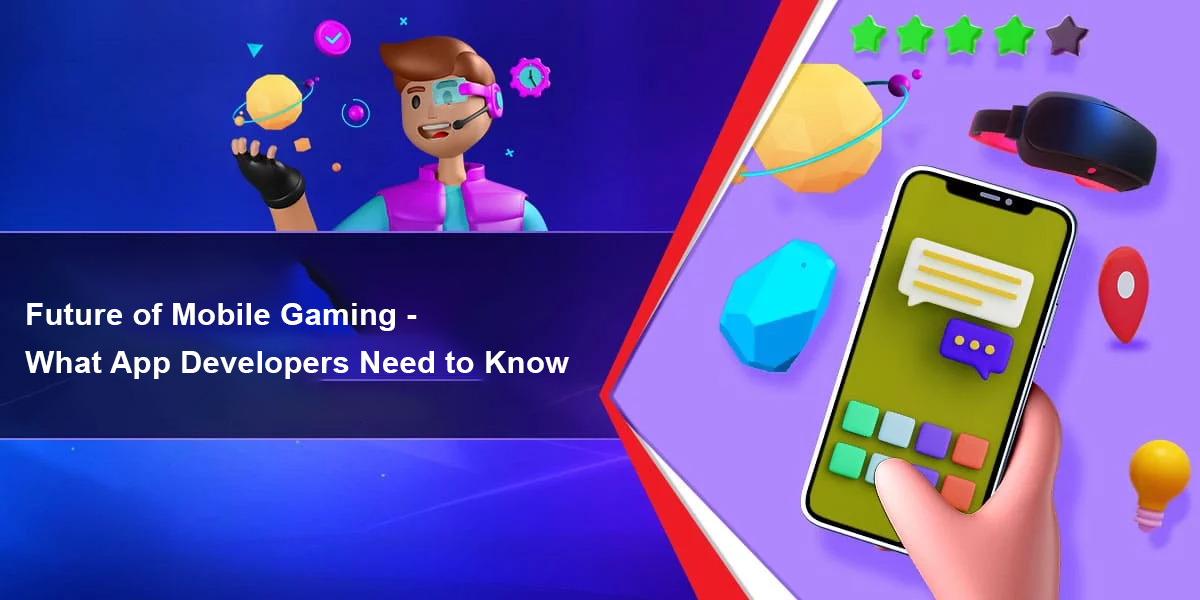
  • Future of Mobile Gaming – What App Developers Need to Know

    Future of Mobile Gaming – What App Developers Need to Know

    In recent years, the development of 5G technology has been a game-changer for the mobile gaming industry. With its increased speed and lower latency, 5G is poised to revolutionize the way we play games on our mobile devices. Here are some things that app developers should keep in mind as they navigate this new landscape:

    Faster Speeds

    One of the most significant benefits of 5G is its lightning-fast download and upload speeds. This means that games can be downloaded in a matter of seconds, and updates can be pushed out to players almost instantly. As a result, app developers can create games with larger file sizes, more complex graphics, and Virtual Reality-based games without worrying about slow load times.

    Lower Latency

    Latency is the time it takes for a signal to travel from a device to a server and back. With 5G, latency is significantly reduced, which means that players will experience less lag and delay in their games. This is crucial for first-person shooter games and racing car or bike games that require players to make split-second decisions and reactions that can the difference between victory and defeat.

    Increased Connectivity

    With 5G, more devices can be connected to the network simultaneously without sacrificing speed or performance. This means that multiplayer games can support larger numbers of players, and online tournaments can become even more competitive and exciting.

    New Possibilities

    5G opens up new possibilities for app developers to create innovative games and experiences that were previously impossible. For example, Augmented Reality games could become even more immersive and interactive with 5G’s lower latency and increased connectivity. Additionally, 5G technology will also drive innovation in the creation of affordable, smartphone-compatible VR headsets, unique new games and more. 

    Potential Challenges

    Despite the many benefits of 5G, there are also potential challenges that app developers need to be aware of. For example, not all areas have access to 5G yet, which means that developers will need to ensure that their games are still playable on older networks. Additionally, 5G technology is still relatively new, which means that there may be compatibility issues with certain devices.

    In conclusion, the advent of 5G technology has opened up exciting new opportunities for app developers in the mobile gaming industry. By keeping these key points in mind, developers can take advantage of 5G’s many benefits and create engaging, high-quality games that will thrill players

    Mobile gaming has witnessed an exponential growth in popularity in recent years. With advancements in technology, app developers have been able to create more sophisticated games that are accessible to players on their mobile devices. As we look to the future, there are several trends that app developers should be aware of to stay at the forefront of this rapidly evolving industry.

    Augmented Reality and Virtual Reality

    Augmented reality (AR) and virtual reality (VR) have been gaining popularity in the gaming industry, and this trend is expected to continue. Artificial Reality-based games like Pokemon Go have already shown the potential of this technology, while Virtual Reality-based games like Beat Saber offer a fully immersive experience. 

    App developers can take advantage of this trend by creating games that integrate AR and VR technologies. For example, they could create games that use AR to overlay game elements onto the real world. They can also create games that enables players to enjoy a fully immersive experience that transports them to another world with the help of VR headsets. As AR and VR technologies continue to improve, we can expect to see even more sophisticated games in the future. These factors will also boost the innovation and availability of technology that allows users to access AR and VR based games. Users can buy VR headsets that are smartphone compatible and affordable in order to experience a better quality of gaming. 

    Cloud Gaming

    Cloud gaming has been gaining traction in recent years, and it’s expected to continue to grow in popularity. With cloud gaming, games are streamed to a player’s device over the internet, rather than being downloaded and stored locally. This eliminates the need for powerful hardware and allows players to access high-quality games on any device with an internet connection.

    App developers can take advantage of this trend by creating games that are optimized for cloud gaming. These games should be designed to work seamlessly on a variety of devices and internet speeds, with minimal lag or latency. As cloud gaming services continue to improve, we can expect to see more app developers offering cloud-based games in the future.

    E-sports

    Esports has exploded in popularity in recent years, with professional gamers competing in tournaments for huge prizes. This trend is expected to continue, with more players and fans joining the esports community. App developers can take advantage of this trend by creating games that are optimized for esports. These games should be designed to be competitive and balanced, with clear rules and guidelines for tournament play. Developers can also create features that make it easier for players to organize and compete in their own tournaments, such as built-in matchmaking and ranking systems.

    Social Gaming

    Social gaming has become increasingly popular in recent years, with games like Among Us and Fall Guys attracting millions of players. Social games are designed to be played with friends or other players online, often featuring cooperative or competitive gameplay.

    App developers can take advantage of this trend by creating games that are optimized for social play. These games should be designed to be easy to pick up and play, with intuitive controls and mechanics. Developers can also create features that make it easier for players to connect and play with their friends, such as built-in friend lists and voice chat.

    Mobile Games as a Service

    Mobile games have traditionally been sold as one-time purchases, but this is changing. App developers are increasingly offering games as a service, with ongoing updates, new content, and in-game purchases. This trend is expected to continue, with more developers offering games as a service.

    App developers can take advantage of this trend by creating games that are designed to be updated and expanded over time. These games should be designed with long-term player engagement in mind, with new content and features added regularly. Developers can also create in-game purchase options that offer players additional content or perks, while also generating ongoing revenue for the game.

    In conclusion, the future of mobile gaming is bright, with new technologies and trends emerging constantly. App developers who stay on top of these trends and create games that take advantage of the latest technologies will be well-positioned to succeed in this rapidly evolving industry. By creating games that are optimized for AR, VR, cloud gaming, esports, social gaming and more, app developers can create vast new opportunities for their businesses by developing new and more immersive experiences for online gaming enthusiasts to enjoy.

  • From Concept to Launch: How Our Web Development Company Can Help You Build Your Dream Website

    From Concept to Launch: How Our Web Development Company Can Help You Build Your Dream Website

    Your business can be successful if you build the right website. However, creating a website can be simple or complex based on your business goal. A basic website with a few features is easier to build with a CMS like WordPress. However, a more complex website requires specialized knowledge to be developed.

    No matter your goal, a professional web development company can fulfill those needs. The company has the expertise and resources to develop a custom website that would resonate with your audience.

    How Does a Web Development Company Help You Build Your Dream Website?

    A website doesn’t just provide an online presence; it’s also the first point of contact for your business. To attract and engage the target audience on your website, you need to make it look professional and appealing. Software development agencies often partner with a white label web development company to build a website. They can resell the website with their branding after the development. 

    The company helps you evaluate your requirements and choose the right tech stack to build the website. Here is the process for web development.

    Planning and Consultation

    In the initial phase, the project scope is defined while working with the client, besides finding the goals and objectives. Information about the target audience and competitors is also gathered.

    In many cases, entrepreneurs are not completely aware of their requirements, and a technology partner helps them work on this aspect. Once you hire web development team, they will provide consultation to guide you in building the right solution for your business.

    The planning and consultation cover the following:

    • Understanding the requirements of clients.
    • Helping them choose the right tech stack.
    • Setting budget and timeline requirements. 
    • Identify business objectives.
    • Features

    Wireframing and Sitemap Creation

    At this stage of the web development lifecycle, developers will create a structure that will decide how the website will look like. It is a hierarchy of different menus and options that allow you to visualize how and where content will be displayed on a website or web app.

    It is important to understand the structure of the website to determine what you need to build. The sitemap defines the relationship of different pages, there can be a drop-down menu option that will show further options, for example. Your website will be built strategically if you hire web development team.

    Sitemap offers the structure of a website, but it doesn’t describe the user interface. Sometimes, you need to verify your work by taking approval from the customer that everything is fine. In that case, a wireframe or mockup needs to be created to get it verified.

    Development and Approval

    The next phase is the development stage, where your website takes shape and life. In this stage, the sitemap works as a roadmap to build your website. It helps a white label web development company determine the structure of the website. Which pages will come where is decided based on the sitemap. Graphics elements like images, icons, logos, etc, are created.

    Also, if you provide a design for your website like PSD, Sketch, Figma, Zeplin, or any other format, it is converted into a visually appealing theme. A web development and mobile app development company will create the layout and build the initial version of the site so that you can review it and send your feedback. The cycle of review and feedback continues until you are completely satisfied. 

    Coding is a part of the development stage. It is the step where all the graphics made are used to develop the actual site. You can hire dedicated web developers to create a website from scratch or use a CMS like WordPress, Drupal, Magento, etc. Also, you may want a custom website or use a pre-built template. 

    Testing 

    Testing is a crucial step in developing websites and apps because it decides whether the final product is ready to go live or not. It’s crucial to engage with your website or mobile app development company to get an impeccable solution. Give your feedback when necessary and check all the functionalities thoroughly when they provide the product to you for testing. Before the launch, a website is thoroughly tested on various aspects like usability, performance, appearance, compatibility with various devices, and so on. Besides this, the QA engineers will also check various links on the website to make sure there are no broken links. 

    Every script and every form are checked. Also, possible errors are intercepted with automated bug testing. The team at the white label web development company will use code validators to make sure that the website follows current web standards.

    Launch

    After all tests and assessments, you can launch your website once all the steps are completed successfully. Also, it is time to upload the website to a server. The web development company will use FTP (File Transfer Protocol) software to deploy your website to the server. Once all the files have been deployed on the server, run another test to make sure everything is installed properly. Website launching is a crucial part and should be done properly to ensure that everything is functioning well.

    Maintenance

    The web industry is constantly evolving, and updates are common. Keeping your website updated with the latest features and functionalities is essential. Moreover, websites need regular maintenance to ensure their smooth functioning and to update them to the latest features.

    Over time, websites might develop issues like slow loading speed, errors, and other issues that require special attention. Fixing those problems as fast as you can is of the highest priority. Quality maintenance service is provided when you hire dedicated web developers that help you keep your website up-to-date and functioning. 

    Let’s wrap up!

    Today, websites are important for all types of businesses no matter their size or business domain. A website is not just a face of a business on the web, but it also helps them in their brand awareness and reaching the target audience. Our web development company can help your business create the right website based on your unique business needs. Our company will help you build a website from concept to launch.

    Author Bio

    Emily White is a veteran web developer at CSSChopper – a web development company with a decade of experience. She has worked on lots of web development project and have knowledge of various technologies. She also likes to write content on trends and technologies in her free time.

  • A Guide for Conversion of Website Into a Mobile App: 7 Must-Know Steps

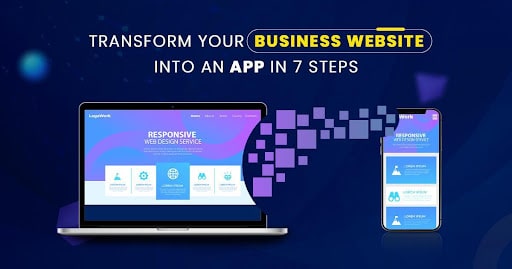
    A Guide for Conversion of Website Into a Mobile App: 7 Must-Know Steps

    Revolutionizing the world, one tap at a time – Smartphones’ impact is simply sublime!

    The corporate world is also not spared. That is why even small companies prefer mobile app development. Besides, smartphones can help in getting access to features and functionalities that can help boost your brand’s awareness amongst end-users.

    In this blog, we will understand the necessary Whys & Hows of converting a website into a mobile app. Consider this article your essential guide for app optimization.

    Hence, without wasting time, let’s start by knowing the need to integrate an app into your business.

    Benefits of Converting a Website Into an App

    There are enormous advantages that can be brought to customers and businesses by creating an app. With the help of a web application, the pace becomes faster toward the business goals for companies:

    • Improved User Experience

    The app is better if we compare the website to a mobile app experience. It gives a clear view to the end-users about the services and provides them with ease of usage without any further barriers.

    • Increased Engagement

    The app creation will increase the app’s visibility, mainly boosting user attention and retention rate, which will serve the purpose of more user engagement for the company. And it remains quite distant for the end-users when using a website. Besides, nowadays, the app means smartphones which are available to them 24/7, so app access becomes quite easy for customers.

    • Better UI & Functionalities

    The website can offer general information, but to get easy access to better UI and functionalities, the companies should put their steps forward toward creating an app, irrespective of the market. The best UI and features offered to the end-users can provide a better go-to experience and elevate the brand’s image in front of the customers.

    • Boost In Brand Visibility

    That shift from a website to an app can improve brand visibility. The best example of this statement is McDonald’s or Domino’s. They were successful but uplifted their image and profits even more after implementing the app creation strategy. Now they are the best in the business, which was legitly possible because of the conversion from the web to the app.

    • Opening Doors For New Revenue Streams

    As we discussed, access to services becomes quite easy, so if we align features with services, it becomes quite easy to boost revenue through them. And you can also set up multiple ways to provide your services easily, which can attract customers through this strategy.

    We hope you might be interested in learning about the whole process of mobile app conversion, so without any further ado, let’s dive deep into these conversion steps.

    7 Steps To Convert Website Into An Mobile App

    Firstly, being an app owner, it should be very clear whether you are willing to go for mobile or tablet app development – go with the one that suits your business industry the most. After this, you can easily go on to learn step-by-step about turning your website into an application:

       1. Know App Requirements & Features

    If you have reached this stage, you are probably interested in making an app for your business. And before app development, it is important to sort out the features and functionalities as per the target audience and their needs. It can also help you predict the approximate app development cost.

    Listing out the features prior is crucial so that you don’t get carried away, mainly thinking about the possible functions and features later on. Besides, you can align your features to the business goals to know the exact purpose of integrating them into your app.

       2. Choose The Apt Development Approach

    After features, it is necessary to choose the appropriate app development approach, whether it can be a native or hybrid app. It mainly depends on the target audience’s mobile device usage, whether they are using Android or iOS.

    During this market research, know what your audience uses precisely and go for that approach in mobile app development.

       3. Develop A Prototype & Design UI

    The first step towards app development is always UI/UX design, after which it is crucial to design a prototype for stakeholders, clients, and potential users. Because developing a prototype will help gain an overview, it can be considered a tester so that the final product is made without any hindrances.

       4. Integrate Mobile App Features

    As per the choice of native or hybrid, it is time to integrate the listed features in the app and know their functioning. Ensuring that the development team does the same efficiently and precisely is crucial.

       5. Test The App

    As the features are integrated, the final step is to test the app in real time mainly; you will need a Quality assurance officer for this step. It will ensure that before the final submission, the app’s UI/UX is seamless or that any bug is left, then it can be solved at this prior stage before the launch.

       6. Submission to App Stores & Launch!

    The last step is to submit the app to App Store or Play Store, but ensure you remember the guidelines before the launch. One of the best examples is that in the Android app, all the apps need to be digitally signed before they need to be installed, and many more. Hence, ensure that you follow each guideline before submitting the app.

       7. Maintain The App With New Features

    Here, your work does not end, as the user will expect the new updates and features that enable automation in the future. Therefore, maintenance and adding new features will be a better way to enhance your app also make it even more user-friendly for the app users.

    Alright, Wrapping It Up!

    Today, people are more engrossed in mobile apps than websites. Therefore, it is an optimum decision if you are shifting towards an application. With this creation, you can bring more audience to your app and give them your services through automation.

    In this guide, as we have provided, you can attain all the necessary information to convert your current website into an app. Therefore, create a better user experience for your end-users.

  • How to Develop a Top-notch Ai App?  Step-by-Step Guide!

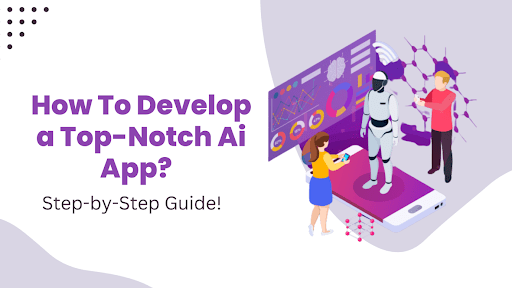
    How to Develop a Top-notch Ai App? Step-by-Step Guide!

    You’ve probably heard a lot about artificial intelligence (AI) and machine learning (ML) lately. They are the newest buzzword that is sweeping the globe.

    Even elite businesses like Amazon, Apple, and Google have recognised the effectiveness of AI and are now using it to enhance their apps.

    The AI industry is expected to reach the benchmark of $309 billion by the end of 2025, with a valuation of $136 billion in 2022. Every year, the market is predicted to increase by about 100%. Even 83% of businesses anticipate incorporating AI into their operations.

    Given these remarkable statistics, if you’re interested in learning how to create an AI programme, then our AI app development guide has come up with this guide for you.

    Keep reading to know more about it!

    Build an Artificial Intelligence app – Explained in 6 easy steps! 

    Building an AI app can be a complex process, but following a step-by-step approach can make it easier and more manageable.

    Here is a detailed step-by-step process for AI app development:

    Define the Problem:

    The first step is identifying the problem you want to solve with AI. This problem can be related to any field, such as healthcare, finance, education, or manufacturing. You should clearly define the problem, specify the desired outcome, and set measurable objectives. It’s important to understand the problem thoroughly to ensure that AI is the right solution.

    Collect and Prepare Data:

    The second step is to collect and prepare the data needed to train the AI model. You should gather relevant data from various sources, such as public datasets, proprietary data sources, or user-generated data. You should also ensure that the data is clean, accurate, and relevant to the problem you are trying to solve. This step is crucial because the data quality directly impacts the AI model’s performance.

    Choose the right technology & platform. 

    Making a decision on your app’s programming language and framework is the next stage in Artificial Intelligence app development.

    Python and R are the two most used programming tools for creating neural networks. Both of these are open-source platforms available to develop an interactive AI model. It provides great libraries for time series analysis and has easy platform-wide installation procedures.

    TensorFlow, PyTorch, and Keras are the most well-liked deep learning platforms because they give you the most freedom with the least amount of code.

    You can connect with a leading AI mobile app development company in Delhi to choose the best framework. 

    Train the AI Model:

    The fourth step is to train the AI model using the prepared data and the chosen algorithm. This process involves feeding the data into the algorithm and adjusting its parameters until the model can accurately predict the desired outcome. Training an AI model can be a time-consuming process, and it requires a lot of computing power.

    Test and Validate the Model:

    The fifth step is testing and validating the AI model to ensure it can generalise well to new data. This involves evaluating the model’s performance on a separate dataset that was not used for training. If the model performs well on the test dataset, it means that it can accurately predict the desired outcome for new data.

    Integration & Deployment 

    The last step is the integration & deployment of the AI model. Before deployment, you need to first integrate the trained AI model into an app. It involves creating an interface that allows users to interact with the AI model and receive the predicted outcome. The app should also handle data input, model output, and any errors or exceptions that may occur.

    Then comes the deployment stage. It involves setting up the necessary infrastructure, such as servers, databases, and APIs, and ensuring that the artificial intelligence in the mobile app can handle a large number of users. It’s important to monitor the app’s performance and make any necessary adjustments to ensure that it runs smoothly.

    To conclude 

    In conclusion, AI app development involves a step-by-step process that requires a deep understanding of the problem you want to solve, the data you’ll need to train the AI model, and the AI model itself.

    Following the outlined steps, you can develop an app that uses AI to solve a specific problem or perform a particular task. However, creating an AI app is an iterative process, and you may need to refine your model and update your artificial intelligence app continually. With persistence and dedication, you can create an AI app that delivers value to users and solves complex problems.

    If you are looking for the right guidance and partner to help you with interactive AI app development, Sufalam Technologies; top mobile app development company in Delhi can help you!

    Author Bio:

    Pranav Thakker is the CEO of Sufalam technologies- a leading mobile & web app development company. He strives to spread the vast knowledge of he gained in the field of IT. Whether it’s about AI app development, Pranav Thakker never fails to post an article on latest app development trends.

  • 10 Popular AngularJS Frameworks For Web Application Development

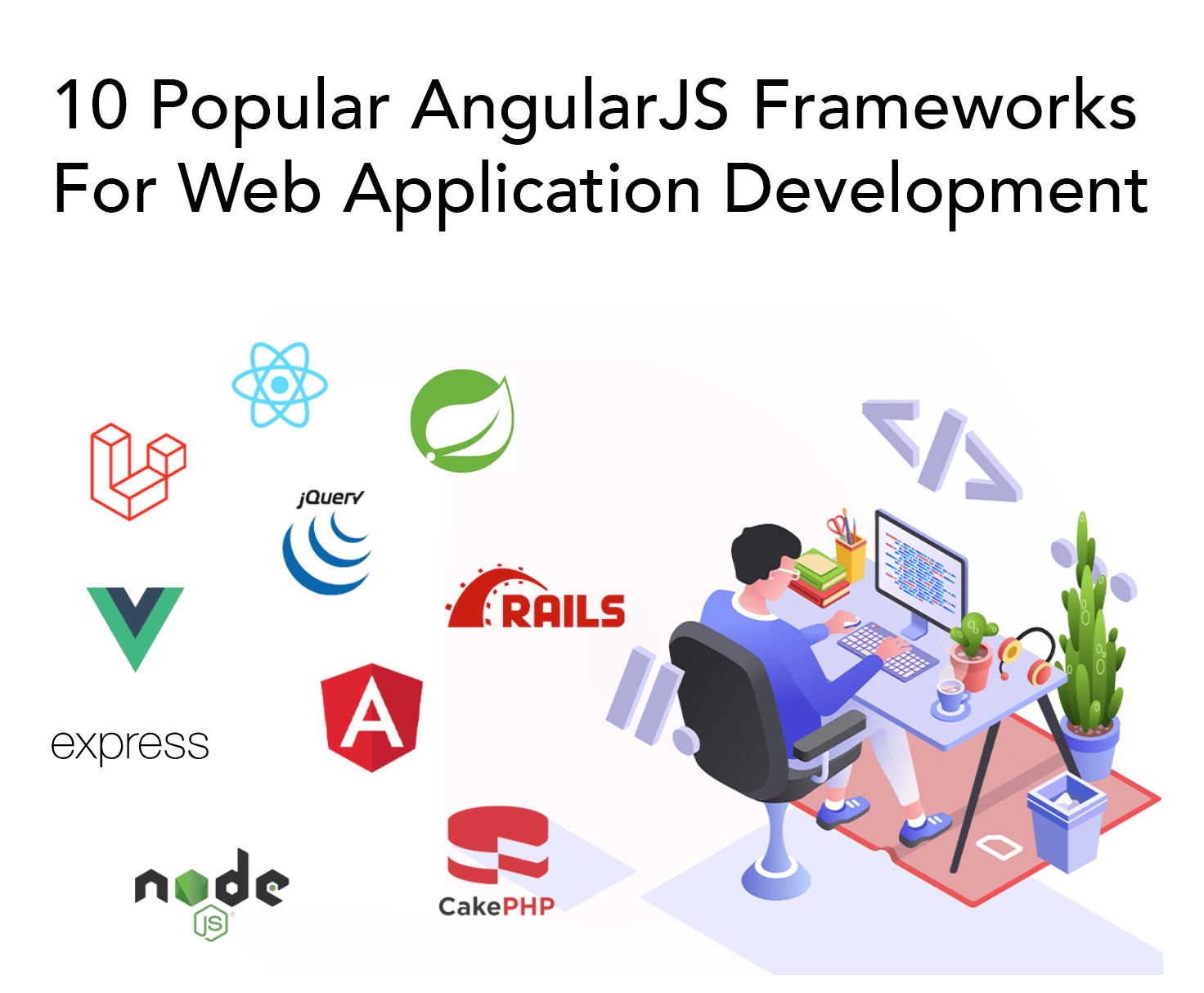
    10 Popular AngularJS Frameworks For Web Application Development

    Angular development services have truly turned quite popular in recent years because of the advantages that Angular imparts to developers. Angular.JS is known for being initially introduced by Google in the year of 2012. The best thing is that it has since truly been widely adopted by developers in the context of creating beautiful online and mobile applications. Here, we are going to truly mention this in a detailed manner. Let’s check it out 

    1. UI Grid

    UI Grid was previously regarded as “ng-grid”. The Angular UI Grid holds zero jQuery dependence since it is completely written in AngularJS. UI Grid comes up with a central grid module as well as all its traits explain the Angular modules as well as directives. The Angular UI Grid comes up with a component on the basis of the Angular UI suite as well as Angular UI Bootstrap.

    1. Mobile Angular UI 

    Have you worked with Twitter BootStrap & AngularJS? If yes, then you might already be aware of Mobile Angular UI. Toggles, scrollable regions, sidebars, and fixed top, as well as bottom navbars, are quite tricky mobile components that Mobile Angular UI introduces above Bootstrap 3. 

    To impart the ideal excellent experience for mobile users, Mobile Angular UI relies on robust frameworks such as fastclick.js and overthrow.js. The most important thing is that developing cross-platform mobile applications development for Android and iOS platforms would soon be a realistic possibility.

    1. Ionic 

    If you truly want to create a new web app, Ionic is indeed an ideal Angular js framework. It imparts a collection of creating blocks that will probably be used to create unique UIs and UXs. According to professional Angular Development, Ionic’s native compatibility follows a wide array of mobile hardware as well as operating systems making it a highly convenient tool in the context of creating hybrid mobile apps which run smoothly on different devices. Ionic is a sort of framework coming up with the amalgamation of individual parts working together to impart the entire potential of mobile platforms.

    1. LumX 

    Following UI development frameworks on the basis of Google Material Design, LumX is regarded as the right one among the prominent options. Moreover, it is also used by some of the prominent Angular JS development firms today. It is because it dramatically shortens the time needed to create visually pleasing apps. 

    Moreover, this Framework facilitates building bespoke web applications which go with Sass AngularJS, Neat, Bourbon, and JQuery. You may also go ahead with the option of LumX in order to optimize your files mechanically for you. Moreover, in the form of a side effect, it probably encourages the app’s performance.

    1. Quantum UI 

    A front-end development framework is built on Angular-JS, Quantum UI comes up with over 60 rest services as well as server-friendly UI components which can easily be used to build applications with ease. Moreover, it also uses an MVVM framework as well as can truly generate CSS files in a Bootstrap such as format. All of the hosting, as well as upkeep regarding this Angular testing framework, is handled by GitHub.

    1. Angular UI Bootstrap 

    In order to create a user interface, the highly popular Angular framework UI Bootstrap relies on Bootstrap. The best thing is that many also contemplate the best front-end technology. It is built going with a variety of libraries including Angular animate, Angular Touch as well as BootStrap CSS. 

    Web Development is sped up when AngularJS new age version and UI BootStrap are used together. Going with the highest new age Angular Development service providers, a new age instruction such as color picker, drop down, carousel, and so on. Following many cases, the new age directives are indeed shorter in comparison to the original JavaScript. It is considered a prominent top Angular framework.

    1. Angular Foundation 

    In the context of new-age front-end frameworks, Angular Foundation is available at the top of its game truly. Foundation’s HTML and CSS components are regarded as the backbone in the context of the Framework’s many available directives. To put it in simple words, the progress bar, alert, interchange, dropdown menu, and pagination all belong to this category.

    1. PrimeNG 

    The next on the list is PrimeNG. Here, it needs to mention that the Angular Framework’s declarative user interface design streamlines the front end of a mobile app development company in Delhi. The following seventy user interface elements are available in PrimeNG. The most important thing is that developers of a project probably make use of Angular’s native themes as well as pre-built widgets. 

    PrimeNG is regarded as an industry-oriented front-end framework in the context of building websites as well as web applications and it also simplifies the entire process of integrating graphical elements including inputs, overlays, charts and menus. Open-source widget under the MIT license is introduced at no cost.

    1. Quantum UI

    Quantum is known for streamlining the front-end development process having 60 rest service along with quite server friendly UI components. It holds MVVM architecture as well as support in the form of Bootstrap-oriented CSS structure. 

    GitHub is importantly responsible to host as well as maintain this Angular testing framework. It does not require any sort of need to write JS for Quantum UI since you would be able to configure it only by properties as well as attributes.

    1. Angular UI Tree 

    It is regarded as another popular Angular UI framework primarily used in order to sort nested lists. It also does not need to go with jQuery and introduces drag-and-drop functionality allowing you to easily make any sort of changes in the context of items of a tree. In order to data binding, Angular UI Tree goes with native AngularJS scope as well as it also helps components to ignore child nodes.

    Conclusion 

    So, what are you waiting for? It is time to go with the ideal AngularJS frameworks for Web Application Development indeed truly. You must not compromise when it comes to choosing the right platform truly.

  • Which’s Better? App Builder Vs. Mobile App Development Company

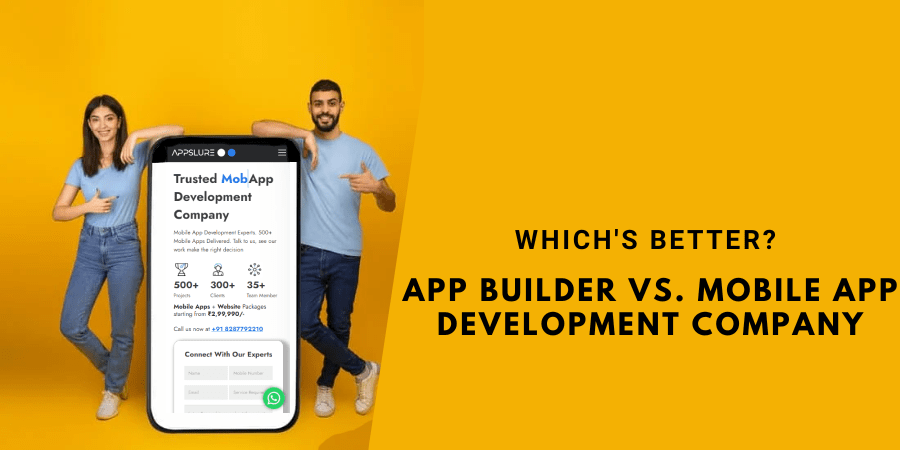
    Which’s Better? App Builder Vs. Mobile App Development Company

    The world is functioning through apps; that is what it is at present! No matter whether you want to shop, order food, transfer/receive money, book travel tickets, listen to music, watch movies, and the list goes on…

    Along with these scenarios, there are business apps that are meant for customer service and promotion purposes. 

    This means that you cannot ignore apps if you want to compete, survive and thrive in 2023. Developing an app requires a lot of hard work, starting from inception to launch on the app store. You must choose between an app builder or hiring an app development company.

    Pros of an App Builder

    There are pros and cons to all things, and an App builder is no exception. Let’s have a look before deciding on whether to go for an app builder or an app development company.

    Cost Cutting

    Hiring a team of app developers can be costlier than you think. The app builder is comparatively cheaper to buy and is suitable for projects that have tight budgets. It is also suitable for startups and entrepreneurs.

    No need to know to code

    One of the biggest advantages of App builder is that it can be used by anyone. You don’t need to know even basic coding to use it. The “What You See is What You Get” approach is used in an app builder.

    This means that users can preview the changes they make to the app in real time. 

    Shorter Duration

    You don’t have to start from scratch while creating an app using app builder. It has in-built components like templates & designs, which you can use while building your app.

    This reduces the overall time required to launch the app in the market.

    Cons of an App Builder

    The pros were good, but that is just one side of the coin. Cons present you with another side of the coin. So, let’s go through the cons of using an app builder.

    User Experience

    Developing a mobile app using an app builder can affect User Experience. App users want to have a seamless experience while navigating the app

    In the case of an app created using app builders, it may happen that interface and usability of your app are not consistent across platforms. 

    Limited Features

    App builders provide drag-and-drop elements which can be selected by the users based on their requirements. Although this may seem to be an advantage, you are restricted to using only those elements which are available and cannot add your own.

    Low Stability

    Web browsers are updated regularly. This makes it necessary for web apps to be updated, or else they will function differently than intended. 

    As a result, apps, including those built using app builders, require regular bug fixes and updates. This becomes a difficult task if there is no in-house team for app development.

    Having seen the pros and cons of app builders, let’s have a look at some of the popular ones around.

    Popular App Builders

    Jotform Apps

    It is a no-code app builder, which helps in creating fully customized apps for free. You have access to a large number of free templates. If you have to collect payments, it can easily be done through the many widgets they offer. 

    Jotform is suitable for all business needs, including gathering feedback from customers or creating a portal for a new firm. 

    Shoutem

    Shoutem puts a lot of emphasis on design, and your app will look attractive with its templates. 

    If you want to create visually appealing apps, Shoutem would be an ideal choice. It has very clear instructions, and a beautiful layout, and gives a preview of how the app would function. 

    It also provides several options to customize so that if you create multiple apps using it, each can have its unique design. 

    It also provides great options for retail businesses. 

    Appy Pie

    This is one of the most popular apps in the market as it allows complete novices to create their app. It comes with unique features that allow users to add:

    • In-app purchases
    • Upload eBooks
    • Ads
    • Instant Messaging apps

    It is preferred by small and medium-sized businesses as it offers a large number of plans for getting started for free. Once they get used to the app builder, they can migrate to paid plans. 

    Appy pie also offers an exhaustive list of tutorials to help their customer solve every issue they may face while using the app. A live chat option is also available if you are facing any issue which needs to be resolved immediately.

    AppMakr

    AppMakr offers great solutions to small businesses, not-for-profit organizations, and individuals. Over 2 million apps have been developed using AppMakr. It offers both free and paid plans. 

    A user who has no experience in programming can build an app in under 20 minutes. The process involves adding text, video, audio, and HTML. 

    AppMakr also allows users to undertake quality assurance with some powerful tools. You can also update the app after it has been launched. 

    One of AppMakr’s most remarkable features is the simulator which can show the results in real time as you build the app.

    BiznessApps

    BiznessApps allows you to add unique features and also access the app’s source code. It also has other sophisticated customizations available. Having a drag-and-drop interface, it makes creating and designing your app as easy as you can imagine.

    BiznessApps has many in-built templates, including those for eCommerce, events, and businesses.

    The company provides good customer service in the form of email and phone support. However, the pricing of the plans is on the higher side. 

    Advantages of Hiring a Mobile App Development Firm

    We should also look at what a Mobile app development firm can offer that an app builder cannot. This will help us make the final decision.

    Quality Product 

    You will get a quality product if you hire a good app development firm. They have qualified and experienced developers who will incorporate all your requirements and also test the app from the user’s perspective.

    Information Security

    A reputed mobile app development company is far more reliable than an app builder as far as information and data security are concerned.

    The app development company always protects their client’s sensitive data like project details, expansion plans, or any new product launch information.

    Quick Troubleshooting

    This is the most important advantage of a mobile app development firm; in case you face an issue with the app, they will help you almost immediately. 

    The app development firms will assign a dedicated employee who will keep you updated about the project. Once the project is handed over to you, new bugs which come up will also be fixed by them.

    No legal Issues

    A professional app development company will work according to the terms agreed upon. In the case of an app builder, there is no such specific contract. Thus, there can be legal issues in case an unexpected situation arises.

    When to Go For an App Builder and When Not To?

    There is no fixed answer to this question, and it depends on the context. App builders are easy to use and allow you to develop apps quickly. You can go for mobile app builders in the following situations:

    • Want to create a simple product with minimum viable features
    • Not planning any major changes shortly
    • App builder’s template and architecture suit you well
    • Want to do some testing before developing an authentic app

    In case you have to expand your app shortly, you will end up hiring the service of an app development company. 

    So, if you are planning to develop an app, which needs to be scaled up in the future, it will be better to go for a mobile app development company.

  • 7 Best Frameworks for Building Hybrid Mobile Apps

    7 Best Frameworks for Building Hybrid Mobile Apps

    Introduction

    Businesses are actively refocusing their attention on their mobile company strategy to get their products and services visible because smartphones are becoming so efficient in people’s lives. In today’s fast-paced world, mobile applications have become ubiquitous companions of modern human and social life, providing instant access to everything at your fingertips.

    Apps frequently target various platforms, including wearables, tablets, and smartphones. Writing separate code for each is repetitious and time-consuming, but hybrid app development may break up this monotony. 

    What is a hybrid app, exactly?

    Hybrid applications can be best described as digital chameleons that combine the flexibility of online apps with the power of a native app shell, creating a unique user experience. The shell connects to whatever capabilities the mobile platform offers using a browser incorporated in the app when consumers download and install it locally from an app store.

    The term “hybrid app development” refers to the combination of native and web app development. The finest Cross-platform app development frameworks is required since hybrid programs are created for several platforms. HTML, JavaScript, and CSS are web technologies used in developing these applications.

    Some benefits of hybrid mobile app development platforms include cost savings and the ability to create each app using a single code base that can be used to develop apps for many platforms.

    It would be best if you had powerful and cutting-edge frameworks to get the most out of hybrid mobile app frameworks. 

    If you’re looking to develop a hybrid mobile app for your business, it’s important to partner with a reliable and experienced mobile app development company that has expertise in leveraging such powerful and cutting-edge frameworks.

    We give you options for selecting the hybrid framework that best suits your needs. Let’s get started with this fantastic list of possibilities we offer you. I hope you enjoy it. Happy reading!

    Top 7 Frameworks for Building Hybrid Mobile Apps

    1. Ionic

    Ionic is a top hybrid app framework that powers millions of practical applications for companies like NHS and Southwest Airlines. You can create hybrid mobile apps with only one code base for several platforms. Ionic provides a collection of JavaScript, HTML, and CSS backdrop patterns suited for mobile devices. These are crucial resources for creating engaging, cross-platform applications.

    With this potent front-end Software Development Kit (SDK) you may use many tools to build aesthetically beautiful hybrid apps with this potent front-end Software Development Kit (SDK). Any Javascript framework, including Vue, React, and Angular, may be integrated with Ionic to increase an app’s capabilities. Any JavaScript mobile app framework, including Vue, React, and Angular, may be combined with Ionic to improve an app’s capabilities.

    It offers a robust front-end construction toolkit and first-rate user interface components, allowing developers to build outstanding PWAs. Moreover, it enables app developers to produce stunning visuals and designs. A developer with the Ionic mobile hybrid framework may accomplish UI design elements like picture design and layout, typography, creative themes, etc.

    Features and Benefits

    1. It allows you to write code once and then execute it everywhere.
    2. Ionic is simple to use and has a shallow learning curve.
    3. Provides for the high-end integration of a large number of customizable plugins.
    4. Simple and practical app testing procedure.
    5. There are several UI components.
    6. When essential technologies are used, app development time is reduced.
    7. Strong community support from foreign developers and contributors.
    8. It uses well-known technology, which saves money on hiring specialist developers.

    Use Cases

    • Mobile App Dev.
    • Mobile CI/CD.
    • Mobile Micro Front-ends.
    1. React Native

    Cross-platform mobile apps are created using the JavaScript technology React Native. For creating user interfaces, this frame features a unique language called JSX that enables you to utilize React to generate HTML and CSS. Moreover, it has user interface elements that give consumers a quick and delightful experience.

    The appealing feature of React Native is its capacity to reflect modifications you make to your application immediately. Unlike most other development tools, this one doesn’t require you to restart the program or recompile the code. 

    Because React Native uses the JavaScript engine on each platform, so you’ll have access to a vast ecosystem of open-source tools and libraries. Using this method, you can move a portion of your app’s code to a different platform.

    For those looking to create engaging user experiences, React Native can be a great choice, and pairing it with the animation app for iPad can help bring your mobile app to life. 

    It enables developers to create cutting-edge mobile apps with only one JS codebase. Swift and Java-proficient programmers adore working with the React Native framework. It includes Native modules and components that enhance an app’s performance.

    Features and Benefits

    1. Because of its increased popularity, it has the largest community.
    2. Outstanding native-like performance.
    3. It has live and hot reloading, which makes it easier to see the effect of code changes.
    4. Its intuitive modular architecture makes upgrades and updates simple.
    5. Almost 90% of the code may be applied to iOS and Android platforms.
    6. The Node Package Manager allows for a quick installation process (NPM).
    7. Up to 40% of overall development expenses can be saved by reusing codes.
    8. App development takes less time.

    Use Cases

    • Cross-platform compatibility.
    • Reusable code and pre-built components.
    • Unlocks a faster development process.
    1. Xamarin

    Although Xamarin is natively built, its recent debut in the market is essential. This framework enables the creation of high-performance apps while maintaining their original appearance and feel. Before Microsoft bought it in 2016, Xamarin was an open-source project. Since then, it has gained popularity as a tool for creating apps within the Microsoft environment.

    For the creation of apps, it uses the C# language and other native libraries from the.NET layer. High-end apps for several platforms are deployed with native libraries using Xamarin without losing performance. 

    It offers a noticeably better user experience than some well-known hybrid frameworks. To create hybrid apps for iOS, Android, Windows, and more, utilize Xamarin. It is well recognized for providing native app-like speed and user experience.

    Performance issues with Xamarin are one of its drawbacks, especially compared to native programs. There may be better options for more complicated programs. As this framework does not support hot reloading, some features may not update instantly on all platforms. 

    Notwithstanding these drawbacks, Xamarin is a solid option for your hybrid development requirements. Its robust resources, support, and comprehensiveness enable it to function almost as well as natively for your application.

    Features and Benefits

    1. Across the leading platforms, Xamarin applications may share up to 90% of their codebase.
    2. To mimic the excellent feel of native applications, apps operate almost as well as native ones.
    3. A complete collection of tools for developing mobile apps.
    4. Updates, testing, and maintenance are simple.
    5. Support for IoT, Televisions, and wearables.
    6. The ability to reuse code results in a quick time to market and low cost.
    7. Offers testing resources.

    Use Cases

    • To build high-performance mobile applications.
    • To bring about maximum code sharing between different platforms.
    • To build mobile solutions for enterprises.
    1. Flutter

    Flutter, according to Google, strives for native-like speed while granting you control over the various parts of your app thanks to an easy-to-use UI toolkit. To enhance the native experience, Flutter offers new user interfaces and plugin libraries. Flutter reaches a larger audience because it is used for more than just Android or iOS apps.

    The Flutter app builder lets you combine and contrast functionalities. The development process is facilitated by its hot loader function, which allows you to make immediate changes while you debug your code. 

    Flutter employs Dart, a less-used language for developing apps. Therefore it could be challenging for novices. Moreover, built-in widgets make its programs rather significant, and the lack of third-party libraries necessitates additional code.

    Since Flutter has a single codebase for Android and iOS, developers may use it to create apps with a high level of productivity. It enables the production of highly imaginative UIs with adaptable designs and captivating interactions that result in the development of excellent MVPs (prototypes). Large companies prefer Flutter to create their apps because of this. 

    Flutter has been used by well-known brands like Alibaba, Birch Financial, Hamilton Musical, etc., to develop effective, captivating apps. Also, because it enables learning a whole novel language (Dart), it has generated a lot of buzz and employment opportunities. 

    Flutter is being used by more and more app development businesses to create user-friendly, engaging hybrid apps.

    Features and Benefits

    1. Hot reloading is supported, resulting in faster code authoring.
    2. Flutter has a quick mechanism for accelerating time-to-market.
    3. Rich widgets that can be altered, or you may develop your own.
    4. A single codebase can make testing go more quickly.
    5. Applications seamlessly adjust to various displays.
    6. It uses a UI-first approach and offers a wide variety of ready-to-use widgets to make creating interactive elements simple.
    7. Apps with simple initial setup and strong execution performance.

    Use Cases

    • Product Design.
    • Java.
    • Mobile Development. 
    • Product Management. 
    • Cloud Application Development. 
    • Cybersecurity.
    1. PhoneGap

    Due to Adobe and the Cordova framework’s support, PhoneGap is often referred to as Apache Cordova. Unleashing the full potential of web technologies, a top-notch hybrid app framework empowers developers to craft cutting-edge apps with a blend of JavaScript, CSS3, and HTML5. 

    PhoneGap offers trustworthy cross-platform compatibility with just one piece of code for all platforms. Developers’ efforts are reduced. As a result, they are making it more straightforward for them to advance.

    It’s affordable and a perfect option if there are financial restrictions on the development of apps. Some noteworthy characteristics of PhoneGap include better access to Native APIs, robust backend support, well-known UI frameworks that may improve the user interface, and many more. Most importantly, Adobe trusts it.

    ‘Build’ is a fascinating feature of PhoneGap. Its cloud compiler, known as the build, allows programs to be compiled even without installed SDKs. Using the PhoneGap mobile development framework, a developer may create a feature-heavy and customizable Hybrid mobile app development tools.

    These applications work perfectly and can reach a larger audience in specific ways. The optimal usage of PhoneGap is when a developer creates mobile web apps that are simple to use and comprehend rather than sophisticated. What better option is there if money is tight than PhoneGap?

    Features and Benefits

    1. It is simple to learn.
    2. It uses a single codebase for iOS, Android, and Windows 7 platforms.
    3. The authoritarian backend system.
    4. Because it supports HTML5, JavaScript, and CSS3, it is incredibly versatile.
    5. It uses the system’s hardware components, such as the camera, accelerometer, navigation compass, and so on, without interfering with the design elements.
    6. Quick testing is simple to carry out.
    7. Straightforward to work with in terms of plugin architecture.

    Use Cases

    • It helps build hybrid applications.
    • The container provides a bridge between the native APIs to the web view.
    1. Framework 7

    To create hybrid mobile applications, web apps, and progressive web apps (PWAs) with a native appearance and feel, Framework7 is a free and open-source mobile HTML framework. Moreover, you may create native desktop programs using it in conjunction with other technologies like Electron and NW.js.

    Framework7 is a top hybrid app framework that is open-source and free and used to develop desktop, mobile, and web-based apps with a native feel and look. Such UI elements are provided by the top hybrid app development platform and work effortlessly across all platforms. You may use whatever tools you choose with this finest hybrid app development framework, except HTML, CSS, and Javascript.

    This hybrid app architecture may be a crucial prototyping tool for presenting functional app prototypes as soon as feasible. The finest user experience and simplicity are brought by focusing on iOS and Google Materials design. Like other hybrid app frameworks, Framework7 provides a wide range of parts for well-known JS frameworks like Vue, React, and Svelte.

    Features and Benefits

    1. It is scrolling in the native language.
    2. Library-agnostic.
    3. Animation of page transitions.
    4. Multiple views are supported.
    5. CSS3-based hardware-accelerated animations.
    6. Pages are routed using XHR in conjunction.
    7. Caching.
    8. Preloading and history of the browser.

    Use Cases

    • Free and open source framework.
    • An indispensable prototyping tool.
    • To create hybrid mobile apps.
    1. NativeScript

    NativeScript is the ideal hybrid mobile framework for people who want their cross-platform apps to be developed in JavaScript, TypeScript, or Angular. Users may access both iOS and Android device APIs using it. JavaScript or any other programming language that transpires to javascript, such as TypeScript and Angular, is used to construct NativeScript apps.

    NativeScript has the appealing feature of updating your app in real-time without requiring you to refresh. NativeScript does not make use of web technology, unlike the majority of other hybrid frameworks. A framework is a popular option for developers since it provides features that guarantee a hassle-free experience. It’s not just feature-rich but also simple to use and reasonably priced.

    NativeScript apps are entirely native and employ the same APIs found in Xcode or Android Studio. CocoaPods, Maven, and npm.js apps may interface with this third-party library without the requirement for a wrapper. The handling of native API endpoints through reflection is another noteworthy aspect. 

    NativeScript makes advantage of meditation to gather data and metadata about native platform APIs rather than requiring additional binding layers between NativeScript and mobile platform APIs.

    Features and Benefits

    1. Enables developers to write code once and run it on several platforms.
    2. Across all platforms and devices, NativeScript offers a native user experience across all platforms and devices with a developer-friendly CLI (Command Line Interface).
    3. Users may have direct access to all iOS and Android APIs.
    4. Similar to HTML, it employs an XML-Esque-based markup language.
    5. Based on JavaScript, a developer-friendly language.
    6. You can utilize JavaScript frameworks like Vue, React, Angular, Svelte, or even Vanilla JavaScript with NativeScript since it is frame-agnostic.
    7. Simple and fast app debugging.

    Use Cases

    • Unusual platform-specific components for iOS and Android.
    • To create hybrid mobile apps.
    • To design mobile solutions for companies.

    FAQs

    Q: What is a hybrid mobile app, and how does it differ from native apps?

    Hybrid apps often called hybrid mobile apps, are programs developed using online technology. This covers scripting languages like JavaScript, HTML5, and CSS. Since they combine features from both native and online apps, they are known as hybrid apps. 

    Hybrid apps are quick to build, cost less money to produce, and take up less time. Native applications are created for a single platform, whereas hybrid apps are designed for many platforms. It is impossible to utilize a native app developed for one platform on another. For instance, Android cannot run an Objective-C-written program.

    Q: Are there any limitations to using a hybrid app framework?

    Depending on the app’s method, specifications, and functions, the development of a hybrid application may take less than six months. The hybrid program is unable to create photographs of a good caliber. Also, there are issues with aesthetic quality. The glitchy way that mixed apps load material is another issue. Sometimes, loading takes a long time. In comparison, native apps run more fluidly.

    Q: How does the development cost compare between a hybrid app and a native app, using the same framework?

    Hybrid apps are less expensive to produce than native apps. As they support several platforms, hybrid apps are more affordable. At a cheaper cost, hybrid apps deliver the same functionality and user experience as native apps.

    Conclusion

    The best hybrid frameworks offer distinctive selling characteristics appropriate for various uses. As a result, you should carefully analyze your needs and the unique features of each framework. The best framework for you may depend on criteria like concurrent testing, compatibility, drawbacks, and cost.

    Tell us about your experiences creating hybrid apps and the framework you are using. Open up your systems and start generating now that you know the top and hottest hybrid frameworks for 2023.

    If you still need to choose the finest framework, let your company’s demands determine which hybrid app development framework is proper for you. Please list your company criteria and rank them in order of importance.

    We appreciate you taking the time to read this article, and we hope you’ll remain in touch so we can bring you more in the future.

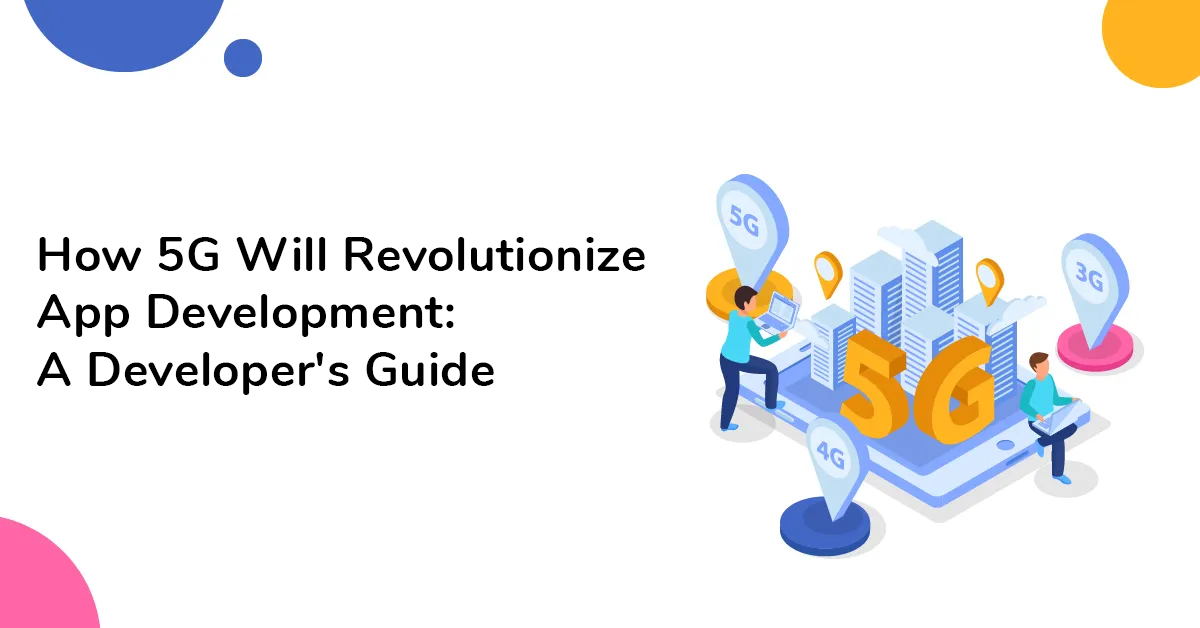
  • How 5G Will Revolutionize App Development: A Developer’s Guide

    How 5G Will Revolutionize App Development: A Developer’s Guide

    The transition of the world towards 5G technology brings forth a revolution in the realm of app development. It has already been established that 5G technology will transform the way we use our mobile devices since it can now enable lightning-fast upload and download speeds, ultra-low latency, and much more like never before. 

    With the introduction of the 5G SIM card which can facilitate the wider availability of 5G technology to more users, app developers too can now leverage the benefits of this new technology to create more powerful, faster, and responsive applications.

    Let us gain a deeper understanding of how 5G technology will revolutionize app development by exploring the benefits of 5G technology and how they will impact the future of app development in the 5G future. Along with the impact of 5G on app development let us also look at the new features and technologies that developers can use to create more engaging, responsive, and immersive applications. 

    What are the benefits of 5G technology?

    Low Latency

    Latency refers to the delay between sending a request and receiving a response. A key benefit of 5G technology is low latency which is expected to be as low as 1ms. This is significantly lower than the current latency of 4G technology which peaks at 40ms. 

    Low latency is essential for applications that require real-time data processing and immediate response, such as online gaming, video streaming, and Augmented Reality (AR) and Virtual Reality (VR) applications. With 5G technology, developers can successfully create applications that respond quickly and smoothly, providing users with a seamless experience. 

    High Bandwidth

    Another crucial benefit that 5G technology can offer is higher bandwidth than its predecessors. Bandwidth refers to the amount of data that can be transmitted over a network in a given amount of time. With 5G technology, the bandwidth is expected to be up to 20 times higher than the current 4G bandwidth. 

    High bandwidth is essential for applications that require large amounts of data to be transmitted, such as high-quality video streaming, cloud-based gaming, and big data analytics. With 5G technology, developers can create applications that can handle large amounts of data without any lag, providing users with a more immersive experience.

    Faster Speeds

    With peak data speeds of up to 20 GBPS, 5G is several times faster than 4G. This means that developers can create apps that can deliver content faster and more efficiently than ever before. For example, video streaming services could deliver high-quality 4K and 8K video without buffering or slowdowns. This will allow developers to create more immersive and engaging content for their users.

    But faster speeds also mean that developers can create apps that can process data more quickly. For example, image recognition apps could identify objects in real-time, without the need for a lengthy processing time. This will enable developers to create apps that are more responsive and accurate.

    Improved Network Connectivity

    Finally, 5G technology is expected to provide improved network connectivity, with a more extensive network coverage and better signal strength. This means that users will be able to access high-speed internet and data services in areas where it was previously not possible, such as rural areas, underground tunnels, and inside buildings.

    Improved network connectivity is critical for applications that require constant internet connectivity, such as IoT devices, mobile payments, and remote health monitoring. With 5G technology, developers can create applications that can function in areas with limited network connectivity, providing users with a more reliable and seamless experience.

    What will be the impact of 5G technology on app development? 

    Now let’s dive deeper into the benefits of 5G for app development and explore some examples of how it has already impacted the industry.

    Enhanced User Experience

    With 5G, app developers can create apps that offer an improved user experience. Apps that require real-time data processing, such as gaming or video streaming, can offer a more seamless experience with faster load times and reduced buffering. Additionally, apps that utilize Augmented Reality and Virtual Reality will be able to offer more realistic and immersive experiences that would have been impossible with previous network technologies such as 4G LTE. 

    For example, the developers behind the popular augmented reality game Pokémon Go, have already begun exploring the potential of 5G. In a partnership with a major software and technology corporation, the developers of Pokémon Go have been testing 5G-enabled AR experiences that can be accessed from within the game. These experiences allow players to interact with virtual objects in real-time and in a more realistic manner.

    Another example is the collaboration between a major telecom network company in the United States and the NFL. Using 5G technology, the operator was able to create a mixed reality experience for football fans. This experience allows fans to view real-time player stats and game highlights in augmented reality, creating a more immersive and interactive experience for fans.

    Opportunities for Innovation

    5G will also provide a plethora of new opportunities that drive innovation and leverage the features of 5G in app development. With faster speeds and greater bandwidth, developers will be able to create apps that utilize technologies such as machine learning and artificial intelligence more effectively. This will enable the development of apps that can learn from user behaviour and offer personalized experiences in real-time. 5G will be able to boost innovative use cases and applications for highly advanced app development in the following sectors-

    • Cloud-based Gaming

    Cloud-based gaming requires high bandwidth and low latency to provide users with a seamless experience. With 5G technology, developers can create cloud-based gaming applications that can handle large amounts of data without any lag, providing users with a more immersive gaming experience.

    Cloud-based gaming also has considerable implications for the gaming industry, as it allows users to access high-quality games without the need for expensive gaming hardware. With 5G technology, developers can create cloud-based gaming applications that can be accessed from anywhere, providing users with a more accessible gaming experience.

    • Internet of Things

    The Internet of Things (IoT) is a rapidly growing field, with billions of connected devices. The increased bandwidth and lower latency of 5G networks will provide the necessary infrastructure to enable more devices to connect to the internet and communicate with each other. App developers will be able to create more sophisticated and intelligent IoT devices that can communicate with each other in real-time, leading to the creation of more efficient and sustainable cities, homes, and workplaces.

    The Internet of Things requires constant internet connectivity and low latency to function properly. With 5G technology, developers can create IoT applications that can function in areas with limited network connectivity, providing users with a more reliable and seamless experience.

    For example, a 5G-powered IoT device can be used for remote health monitoring, allowing doctors to monitor patients’ health in real-time. This technology has remarkable implications for the healthcare industry, as it allows for remote monitoring of patients, reducing the need for hospital visits.

    • Entertainment

    5G technology will also have a strong impact on app development in the entertainment sector by providing the ability to stream high-quality content in real-time. This has expanded the potential of video and audio streaming apps, allowing them to offer users a seamless and immersive experience. For instance, OTT apps and music streaming platforms will be able to deliver high-quality streaming of audio-visual content without any buffering or lag.

    Moreover, 5G technology will also enable app developers to create more immersive and interactive experiences. By leveraging the low latency and high bandwidth of 5G networks, Augmented Reality (AR) and Virtual Reality (VR) apps can now provide users with a more realistic and captivating experience. Gaming apps can now offer real-time multiplayer experiences with enhanced graphics and faster response times.

    • Mobile Payments

    Mobile payments require constant internet connectivity and low latency to process transactions quickly and efficiently. With 5G technology, developers can create mobile payment applications that can handle large amounts of data, providing users with a more seamless, secure, and reliable experience.

    • Ecommerce

    The impact of 5G on app development for ecommerce is expected to be highly consequential. With the faster data transfer rates and lower latency of 5G, developers can create applications that offer a seamless and intuitive shopping experience to users. This can include features such as Augmented Reality (AR) and Virtual Reality (VR) that can enhance the online shopping experience for customers. Additionally, with the increased reliability and security of 5G networks, developers can create more secure ecommerce applications that protect user data and transactions.

    • Smart Cities

    5G technology will enable the development of smart city applications that can help cities become more efficient and sustainable. With the higher network capacity and faster data transfer rates of 5G, developers can create applications that enable real-time monitoring and analysis of city data.

    With 5G, cities can connect a variety of devices and sensors to create an intelligent network that can monitor traffic, air quality, and other factors that affect city life. This can help city officials to make informed decisions and optimize city services such as traffic management, waste management, and public safety. App developers can also use the collected data to create apps that provide real-time information to citizens, such as optimal travel routes or updates on air quality levels.

    • Fleet Management

    With the higher network capacity and faster data transfer rates of 5G, the development of fleet management with real-time tracking and monitoring of vehicles and assets in the fleet will be provided with a strong push. This can help fleet managers to optimize routes, reduce fuel consumption, and improve overall efficiency. Additionally, with the increased reliability of 5G networks, fleet managers can rely on these advanced new applications to provide accurate and up-to-date information.

    • Telemedicine

    The development of telemedicine applications is expected to benefit significantly from 5G technology. With the higher network capacity and faster data transfer rates of 5G, developers can create applications that enable real-time video consultations between doctors and patients. This can help to improve access to healthcare, especially in remote areas. Additionally, with the increased reliability and security of 5G networks, telemedicine applications can offer a secure and private environment for patients and doctors to communicate.

    Another example is the development of telemedicine apps. With 5G, healthcare providers can offer remote consultations and monitoring that are as effective as in-person visits. This technology can enable more people to receive medical care, regardless of their location or mobility. 

    These are just some of the sectors that stand to benefit from the positive impact that 5G technology is expected to have on the future of app development. 

    New Revenue Streams

    5G also presents new opportunities for app developers to generate revenue. With 5G, developers can create apps that utilize subscription models or in-app purchases more effectively. For example, developers can create apps that offer high-quality video streaming or gaming experiences for a subscription fee or offer additional features or content for a one-time purchase. These services already exist but with the advent of 5G, they will be more accessible for customers and easily deliverable for enterprises. 

    Additionally, 5G enables app developers to create apps that offer more personalized and relevant advertising experiences. With the ability to process more data in real-time, developers can create ads that are tailored to each individual user, increasing the likelihood of engagement and conversion.

    5G is set to revolutionize app development, offering developers the ability to create faster, more immersive, and highly personalized experiences for their users. With its new and improved features, 5G will enable developers to create apps that were previously held back. From real-time Augmented Reality experiences to remote healthcare consultations, the possibilities for innovation with 5G are endless.

    As a developer, it’s important to understand the potential of 5G and how it can be utilized in your app development process. Whether you’re looking to create new revenue streams or offer a more personalized user experience, 5G can help you achieve your goals. With the introduction of 5G SIM cards, it will be easier than ever for users to access this new technology and experience the benefits for themselves. So don’t wait, start exploring the possibilities of 5G in your app development process today.

  • Flutter For Mobile App Development: Reasons Why It Is Best for Developing Apps

    Flutter For Mobile App Development: Reasons Why It Is Best for Developing Apps

    INTRODUCTION

    Flutter is a framework that has taken the app development industry to another level. Approximately 42% of developers use Flutter for mobile app development, according to a study done in 2021. Here the question arises: it’s been just a few years since it was introduced, but what makes it so popular? So, the reason behind its popularity is that it has a creative approach. 

    It is an open-source SDK platform that allows developers to build high-quality, natively compiled mobile applications for iOS, Android, and the Web with a single codebase. Flutter is an ideal choice for developers providing Flutter App Development Services, who want to build cross-platform apps that are visually appealing, high-performing, and easy to maintain.

    We will discuss every detail in this blog, from the basics to its key features. It will answer your concerns and give you an overview of why you should use Flutter for mobile app development. So, take a tour of this blog.

    But before anything let us clear you what flutter is…!

    Flutter: What Is It?

    Google created the open-source framework known as Flutter. It was first presented in 2015 and then made available in 2017. Using a single codebase to create cross-platform and natively compiled applications is beneficial. Both native and web programming are supported. It also provides access to robust tools like the Flutter SDK, App Engine, and Firebase, enabling developers to build high-quality mobile applications.

    It is also used to create front-end and back-end applications with various programming languages, such as Dart, Java, and C/C++. In short, it simplifies the process of mobile app development.

    WHAT IS THE BASIC PROGRAMMING LANGUAGE OF FLUTTER

    The basic programming language of Flutter is Dart. Dart is an object-oriented, class-based application that is also developed by Google. It optimizes for client-side development of mobile apps and web apps. Dart is simple for developers with expertise in those languages to learn because its syntax is similar to that of other well-known languages like Java and C++. It is made to function effectively with Dart. tight integration of the Dart language and the Flutter framework, enabling developers to develop good, easy-to-use apps.

    WHY TO CHOOSE FLUTTER FOR MOBILE APP DEVELOPMENT?

       1. Cross-Platform Capabilities

    Cross-Platform capabilities is one of the main reasons for FLUTTER’S popularity. It enables programmers to make applications for a number of platforms, including desktop and iOS. This means that they can create one codebase for their app and deploy it across different platforms, this can help to save time and resources.

       2. Rich and Customizable Widgets

    Flutter has a rich set of pre-built widgets that developers can use to create suitable interfaces for their apps. These widgets are highly customizable. It allows developers to create their own custom widgets by combining existing widgets, this enables developers to create unique UI elements that fit their specific needs. The widget library of Flutter includes a wide range of different use cases, such as buttons, text fields, lists, navigation bars, and more. Developers can alter these widgets using a variety of features and options. Due to this key feature developers tend to use Flutter for mobile app development.

       3. High-Performance

    Flutter is high-performance and impressive. It is based on the compiled Dart computer language, which offers quick and effective performance. It uses a just-in-time (JIT) compiler during development and an ahead-of-time (AOT) compiler during deployment, which results in fast execution and a smaller app size. The reactive programming paradigm used by Flutter also enables seamless animations and transitions. So, if you hire Flutter app development services or developers to develop an app, you will get a faster start-up time and better overall performance for your app.

       4. Access to Native Features

    Flutter uses platform channels to communicate with native code, allowing it to access platform’s specific features and APIs. This means that Flutter apps can access native features like camera, sensors, storage on both Android and iOS devices. In addition to platform channels, Flutter also provides a set of plugins that simplify accessing common platform- specific features like locations, network. The Flutter community maintains these plugins. Developers can easily add to a Flutter project via pub package manager. 

       5. 1 UI for Different Platforms 

    Flutter allows developers to create a single UI codebase that can run on different platforms, by using its platform-agnostic widget system. Meaning that it provides a set of pre-built widgets that can be customized to match the design and functionality of both iOS and Android platforms. 

    Flutter’s widgets are built using a 2D rendering engine called Skia. It allows developers to draw directly onto screen without the need for a native platform widget. It makes it possible for the same UI code to operate on various platforms.

    Flutter also provides a set of pre-built widgets that follow Google’s Material Design guidelines and Apple’s Cupertino design language.This makes it simple to design platform-specific UIs that are visually stunning. These features make a Flutter mobile app development process faster.

       6. Strong Support From Google

    Google actively develops Flutter and provides a wealth of resources, tools, and libraries to help developers to make better apps with Flutter. This includes Flutter documentation, APIs, SDKs, Plugins, and Plugins for popular development like Android Studio and Visual Studio Code. Strong support from google makes it a great option for you to use Flutter for mobile app development. 

       7. Cost Effective

     Flutter has lower development costs as compared to other frameworks. Which is because it allows developers to use a single codebase for multiple platforms, allows for faster development, has pre-built widgets, and uses an open-source library. As you can see, Flutter applications can be used on various platforms. So, you must prefer this to different applications for different platforms. 

    Flutter’s ability to reduce development time and costs while still providing a high-quality user experience makes it a cost-effective solution for developing a mobile app. 

       8. Good Documentation

    Flutter provides very comprehensive documentation. The official Flutter documents are well organized and have very detailed explanations. They also use illustrations to describe their features and functionality. It covers a wide range of topics including installation, setup, basic widgets, navigation, state management, animations, testing and their updates of new versions.

    The Flutter documentation also includes a set of tutorials that helps developers to learn how to build a complete app from scratch using Flutter. These tutorials cover various topics and are intended to provide practical knowledge. So, it is a good option to use Flutter for app development.

       9. Large and Active Community Support

    Flutter provides very comprehensive documentation. The official Flutter documents are well organized and have very detailed explanations. They also use illustrations to describe their features and functionality. It covers a wide range of topics including installation, setup, basic widgets, navigation, state management, animations, testing and their updates of new versions.

    The Flutter documentation also includes a set of tutorials that helps developers to learn how to build a complete app from scratch using Flutter. These tutorials cover various topics and are intended to provide practical knowledge. So, Flutter is a good choice for app development.

       10. Hot Reload Feature

    The most important feature of Flutter is hot reload. It enables programmers to quickly reload the app’s UI. Also allows to test any changes developers have made to a code without restarting an entire app. When developers make changes to code and save it, They can simply press the “R” key twice in the terminal or press the “Reload” button in the Flutter DevTools, and the app will reload with the updated code. 

    This can be particularly useful during the development process, as it allows developers to see the impact of code changes in real-time and quickly iterate on the designs and functionality. It is faster than restarting the entire app which can save development time. Overall, the Hot Reload feature is convenient for developing an app with Flutter.

    CONCLUSION

    As you read, we include all the key features and specialties of Flutter. If you are looking for a good framework for a mobile app development project, Flutter is the perfect choice. Its rich pre-built widget library, Hot Reload feature, customizable widgets, and high performance make it a good choice, but it also makes it clear that you can create the best app by using Flutter. It will save development time, costs, and efforts.

  • How Can I Create a BodyFast-Like Intermittent Fasting App?

    How Can I Create a BodyFast-Like Intermittent Fasting App?

    Nowadays, there are healthcare app solutions for almost anything, and intermittent fasting (commonly known as IF) is no exception.

    The practice of intermittent fasting has grown in acceptance recently because of its alleged advantages, which include enhanced metabolism and gut health. The evolution of humans has included periods of fasting. We did not have the conveniences of a refrigerator, ready-to-eat foods, or stores during the hunter-gatherer age. But if you look past the shiny surface, IF isn’t really that straightforward. In the real world, it can be challenging to follow an intermittent eating regimen.

    It was also difficult to find year-round food. This adapted our bodies to remain ravenous for extended periods of time. Hinduism, Buddhism, Christianity, Islam, and other major world religions all place a high value on fasting.

    People are preoccupied with keeping their weight in check so they can live long, disease-free lives. As a result, there is a growing demand for healthcare app solutions for fitness. And if you weren’t reading about how to make an app that records your health and intermittent fasting, you would be aware of it.

    If you are a professional dietician or a startup in fitness and wellness and you want to enter the fasting app market and adopt an intermittent fasting lifestyle but aren’t sure whether to do it or not, read on. This article is helpful. 

    What is Intermittent Fasting App? 

    You can practice intermittent fasting by experimenting with different eating and fasting schedules. One could go for the traditional 16:8 schedule, for instance. In this case, the person would have to practice a fast for 16 hours before being allowed to eat for the final 8 hours. As people’s bodies begin to adjust to the fasting process, they might instill various fasting regimens.  

    Applications for sporadic fasting To keep track of your fasting duration, use graphs and charts. When it’s time to eat or fast, they also act as a reminder, which, in Miller’s words, “may keep you motivated and dedicated to sticking to your eating window,” Consider them like accountability partners that you can hold in your hand, she says.

    Intermittent fasting apps’ business models 

    We need to know exactly how a given application will bring in money. There are several opportunities for an app development company in the health and fitness sector to establish a reliable source of income. The following are the ways that app development companies will make money.

    The user will register and complete the survey. A number of inquiries about the user’s physical characteristics and prospective objectives would be included in this survey. The IF applications’ Freemium edition gives users access to certain basic functions including time monitoring, body data, water intake management, and a few more. 

    Although the app would be ready to use, it would only include a few fundamental IF-related functionalities. To access the complete software, one would need to pay for the premium features.

    Features are available to premium subscribers.

    You can include exclusive films, audio segments, and essays about fasting, weight loss, and other fitness-related topics in your premium content. Additional elements can be added, including daily lessons, physical exercise, nutrition advice, and many others. This app can be used to track a person’s mental health in addition to their physical health. In addition, guided meditation sessions will support finding the right equilibrium between physical and mental wellness.

    By including a questionnaire on their experiences fasting, a user would be able to observe changes or improvements in their mental health. Fasting zones can be used to track bodily alterations that take place throughout different fasting stages.

    The benefits of the prior improvements are simple but powerful. Exercise routines with videos and meal plan with recipes. Customers of the freemium version might be persuaded to select the premium one as a result. 

    Intermittent fasting app BodyFast for novices and seasoned fasters

    • Tracking and timing your fast
    • Apple Health integration
    • Over 10 fasting schedules, such as 16-8 or 5-2
    • Blogs on intermittent fasting that are educational
    • Simple water intake monitor
    • Track your physical measurements and weight.
    • Several alternatives for notification
    • Without advertisements

    Intermittent fasting apps’ features

    • Log in or Register
    • An intuitive dashboard
    • Individual user
    • Statistics on fitness and health
    • Blogs, articles, and videos about fitness
    • Integration of social media and community sharing

    How Can I Create a BodyFast-Like Intermittent Fasting App?

    The above features can be most effectively and easily mapped by an app development company. It is crucial to develop a distinctive app for fitness app developers that supports intuitive learning and is promoted in a way that appeals to the intended group. As Numerous applications currently exist that offer fitness and health regimens. 

    By doing surveys and research, you can find out more about the problems that your audience is facing. You can develop a practical digital solution by hire app developers that come up with suggestions for these problems.

    Create a working prototype of your app idea and test it on the market before developing a fasting and health tracker app like BodyFast. Based on user feedback, you can improve the final version of your app.

    How much does it cost to create a BodyFast-like app for intermittent fasting?

    So, you might need between $200,000 and $25,000 to design and deploy your basic intermittent fasting tracking app. It is not a set price. The price to design a mobile app depends on the specifications of your project.

    Because fasting is not a new concept, but digital tracking is. It is quickly getting worse. The sector is growing thanks to cutting-edge GPS wearable technology. Fasting has entered a new business thanks to popular tracking programs like BodyFast, Zero, and Fastient. Investments in the health and fitness sector are wise.

    Conclusion

    Creating mobile and web applications has proven to be a period of opportunity and a learning curve over the years for any app development company. 

    The time is now to begin planning the creation of a fasting app. To start your intermittent fasting experience, you can create your own fasting app with exclusive features, functionalities, and intriguing concepts.