Author: admin

  • Crucial Tips to Hire the Best Mobile Development Company for Your Business

    Crucial Tips to Hire the Best Mobile Development Company for Your Business

    In today’s digital world, all businesses are not competitive unless they have a mobile app for their products and services. A well-designed and user-friendly mobile app can help enterprises acquire more clients, increase brand awareness, and boost company sales; nonetheless, developing a mobile app is not an easy task. 

    Enterprises must hire a professional and reliable mobile development company that can work on business objectives to deliver a high-quality mobile app. But how do you find the best mobile development company for your business? Is it project specific? Is it budget specific? Is it region specific? Say, a mobile app development company in Delhi? Or A mobile app development agency in Mumbai?

    In this blog, we will share some crucial tips to help you hire the best mobile application development company irrespective of your region or project type. Ultimately, the goal is to meet your expectations and budget.

    Important tips to hire best mobile app development company

    There is the significant importance of mobile app development, and hiring the best mobile app development company can be a challenging task for any business. There are several steps to consider such as the portfolio of the mobile app development company, their total experience, brand value, pricing quotes, and communication skills. 

    Here are some tips to help you find the right partner for your mobile app project:

    Define your mobile app goals and requirements clearly

    Defining your mobile app goals and requirements clearly is crucial for the success of your project. Businesspersons should possess a clear vision of what they want to achieve with their app. Also, businesses must know the target audience and measure the app’s performance.

    Here are some steps to help you define your mobile app goals and requirements:

    • Start with a problem statement: Identify the main problem that your app will solve for your users and how it will benefit them.
    • Define your app’s value proposition: Explain how your app shall deliver an exclusive solution to the concerns and what makes the app different from competitor apps in the market.
    • Set SMART goals: SMART or S.M.A.R.T. is acronym that stands for Specific, Measurable, Achievable, Relevant, and Time-bound. 
    • Create user personas: The user personas are fictional representations of your ideal users based on their demographics, behaviors, needs, and preferences. They help you understand your users better and design your app accordingly.
    • Write user stories: User stories are short descriptions of how users will interact with your app and what they will accomplish. User stories help you define the features and functionalities of your app from the user’s perspective.
    • Prioritize your requirements: Based on your user stories, you need to prioritize your requirements according to their importance and urgency. You can use a matrix or a list to rank your requirements from high to low priority.

    Research the mobile development company’s portfolio and reviews

    One of the best ways to evaluate a mobile development company’s expertise and quality is to research its portfolio and reviews. A portfolio showcases the company’s previous projects, including the features, design, and functionality of the apps they have developed. A review provides feedback from the clients who have worked with the company, including their satisfaction, challenges, and recommendations.

    To research the portfolio and reviews of a mobile development company, you can follow these steps:

    • Visit the company’s website and look for a section that displays their portfolio or case studies. You can also ask the mobile app development agency to get you some examples of their previous work relevant to your project.
    • Check the app stores (such as Google Play or Apple App Store) and download some of the apps that the company has developed. Test them for compatibility, usability, and performance with different devices and operating systems.
    • Read the reviews and ratings of the apps on the app stores and other platforms. Search for positive and negative reviews, as well as common concerns or issues that reflect the users’ feedback.
    • Contact some of the clients that the company has worked with and ask them about their collaboration. You can ask questions such as: How was the communication and project management? How did the company handle changes and challenges? How satisfied are you with the final product and its results?
    • Compare different mobile development companies based on their portfolio and reviews, as well as other factors such as cost, timeline, and technology stack.Depending upon that choose the company that best suits your expectations and requirements..

    Check their technical expertise and experience in your industry

    One of the most crucial things to deliberate when hiring a mobile app development company is gauging their technical expertise and experience in the industry you deal with. You can check these aspects by reviewing their portfolio, asking for references, conducting interviews, and requesting a technical proposal.

    Here are some tips:

    • Review their portfolio: Look at the apps they have developed and see if they match your requirements, design preferences, and target audience. It is advisable to download and assessa couple of their apps to assess their user experience through functionality and performance.
    • Ask for references: Contact some of their previous or current clients and ask them about their satisfaction level, communication skills, project management, and problem-solving abilities. You can also check their online reviews and ratings on platforms like TopDevelopers.co, Clutch, or GoodFirms.
    • Conduct interviews: Schedule a meeting with the company’s representatives and ask them about their development process, tools, technologies, methodologies, and quality assurance. You can also ask them to demonstrate some of their relevant skills or knowledge by giving them a technical challenge or a scenario.
    • Request a technical proposal: Ask the company to provide you with a detailed proposal that outlines the scope, timeline, budget, deliverables, and milestones of your project. You can also ask them to include a prototype or a mockup of your app to see how they envision it.

    Compare their pricing and delivery time with your budget and timeline

    When you are looking for a mobile app development company to hire, you need to consider two important factors: pricing and delivery time. Pricing is simply much mobile app development company charges for their services. You should compare these factors with your budget and timeline, which are your own constraints and expectations for app development.

    Here are some steps to help you compare mobile app development company pricing and delivery time with your budget and timeline:

    • Do some research on the market rates and average durations for similar app projects. This will give you a baseline to evaluate the offers from different companies.
    • Request quotes and proposals from at least three companies that match your requirements and preferences. Compare their pricing and delivery time estimates, as well as their portfolios, reviews, and credentials.
    • Negotiate with the companies to get the best value for your money and time. You can ask for discounts, flexible payment plans, or faster delivery options. You can also suggest changes or compromises in the scope or features of the app reduce the cost or time.
    • Choose the mobile app development company that offers the best balance between pricing and delivery time, while also meeting your quality standards and expectations. Make sure to sign a clear and detailed contract that outlines the terms and conditions of the project.

    Communicate your expectations and feedback regularly

    Communication is a key factor for the success of any mobile development project. To ensure that your expectations and feedback are clearly understood and implemented by the mobile development company, you should follow these steps:

    • Define the scope, goals, and deliverables of the project in a detailed document and share it with the company before starting the development process.
    • Establish regular communication channels and methods such as email, phone, video call, chat, etc., and agree on the frequency and format of the updates and reports.
    • Provide constructive and timely feedback on the progress, quality, and functionality of the app, and highlight any issues or concerns that need to be addressed or resolved.
    • Avoid changing the requirements or scope of the project midway, unless absolutely necessary, and communicate any changes clearly and promptly to the mobile app development service provider.
    • Appreciate and acknowledge the achievements and efforts of the mobile app development partner and celebrate the milestones and successes of the project.

    Wrapping up

    On the Internet, you can find the best mobile development companies for your business, but selecting the best from the bests is not an easy task. You need to consider many factors, such as the company’s reputation, experience, portfolio, and pricing. However, if you follow the tips we have shared in this blog, you can make an informed and confident decision. 

    Remember that your mobile app is a reflection of your brand and can make or break your customer loyalty. Therefore, choose wisely and invest in a reliable and professional mobile development company that can deliver high-quality results.
  • Integrating PostgreSQL with Cloud-Based Software Development Platforms

    Integrating PostgreSQL with Cloud-Based Software Development Platforms

    What is PostgreSQL?

    Postgres, or PostgreSQL, is a robust open-source, free-to-use, object-relational database management system. It is one of the most popular database systems currently in use. Moreover, the ability that sets PostgreSQL apart from other RDBMs is its management of complex data structures and queries while maintaining high-performance levels.

    PostgreSQL is highly customizable and flexible, apart from its robust functionality. Its modular design enables us to integrate it with other applications easily. Also, it allows users to add extensions and custom functions as required. Thus, these features make it an ideal choice for developers looking for a reliable and scalable database solution that can adapt to their unique needs.

    Integrating PostgreSQL with Cloud-Based Software Development Platforms

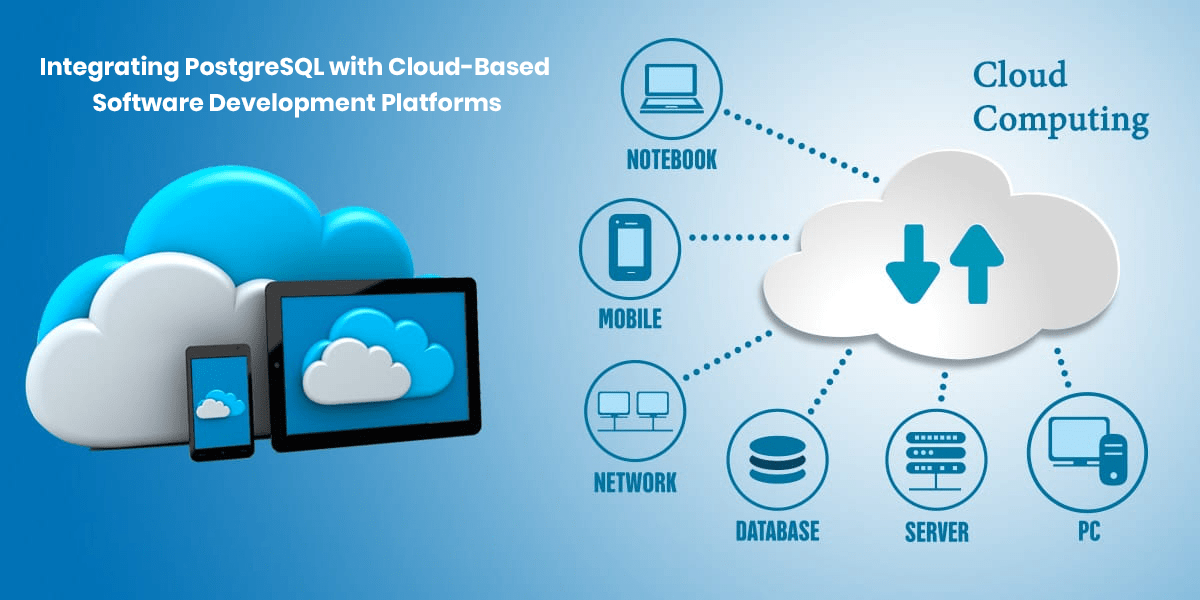
    PostgreSQL is a popular open-source RDBMS offering advanced data security, flexibility, and scalability. Many cloud-based software development platforms such as AWS, Microsoft Azure, and Google Cloud Platform (GCP) provide a range of cloud computing services. These include IaaS, PaaS, and SaaS offerings. PostgreSQL integration with cloud-based software development platforms can provide several benefits, including improved scalability and flexibility, enhanced security and reliability, and smooth workflows.

    For this integration, there are multiple methods that we can use, such as using a managed PostgreSQL service, setting up PostgreSQL on a cloud-based VM, or using a containerized PostgreSQL deployment. Further, other best practices can be followed, including ensuring data stability and integrity, optimizing database performance, applying backup solutions, and monitoring and alerting for database-related issues.

    However, some successful case studies of integrating PostgreSQL with cloud-based software development platforms exist. For instance, AWS offers a fully managed PostgreSQL service – Amazon RDS for PostgreSQL. It includes features such as automatic backups, software patching, and built-in monitoring. Similarly, GCP offers a managed PostgreSQL service– Cloud SQL for PostgreSQL, which offers automatic failover, backups, and point-in-time recovery.If You want build Your career inPostgres, Then Our PostgreSQL Training  upgrade your skills

    Methods to Integrate PostgreSQL with Cloud-Based Software Platform

    1. Using a managed PostgreSQL service

    This service is an effective way to smoothen your cloud-based software development process. With a managed service, you can minimize the time and resources required to set up, configure, and manage your PostgreSQL DB. It typically includes features like automated backups, scaling options, and monitoring tools that ensure your database runs effectively

    The benefit of using this managed PostgreSQL service is that it can help improve database security. Further, these services often come with built-in security features like encryption at rest and in transit, network protection, and regular vulnerability checks. These measures can help protect sensitive data from unknown access or cyber-attacks.

    1. Setting Up PostgreSQL on a cloud-based virtual machine

    Setting up a PostgreSQL database on a cloud-based virtual machine is the favored method of integrating PostgreSQL. This approach includes creating and configuring a VM instance on a cloud platform of your choice. You can install and set up PostgreSQL on the VM and then connect to the database from your application.

    To set up PostgreSQL on a cloud-based virtual machine, choose an appropriate cloud service provider that offers virtual machines. Some popular options include AWS, Microsoft Azure, GCP, Digital Ocean, etc. After selecting a provider, create a new virtual machine instance with the required resources to support your PostgreSQL database.

    After creating the VM instance:

    1. Connect to it using SSH or remote desktop protocols.
    2. Download and install PostgreSQL on the VM instance by following the instructions provided by your cloud service provider or through PostgreSQL’s official documentation.
    3. Configure the firewall rules to access your PostgreSQL server over the internet and open ports as required to allow access.

    Using a containerized PostgreSQL deployment

    It is one of the most effective ways to integrate PostgreSQL with a cloud-based software mobile app development company in Delhi development platforms. A containerized deployment offers a reliable, scalable, and secure way to run PostgreSQL within the production environments. It also provides flexibility and portability to move your database instances between different environments quickly.

    Moreover, the primary benefit of using containerized PostgreSQL deployment is that it allows you to differentiate concerns between app logic and data storage. Additionally, when you use containers, each instance runs in a different environment by accessing the necessary resources.

    Case Studies: Examples of Successful Integrations

    Ex-1 Integrating PostgreSQL with AWS

    Integrating PostgreSQL with Amazon Web Services (AWS) opens up opportunities for business entities. AWS is a popular cloud computing platform that offers scalable, flexible, and reliable infrastructure services. It is the perfect platform for companies to reduce their IT costs and smoothen their operations. By integrating PostgreSQL with AWS, businesses can take the benefits offered by both platforms.

    When Postgres is combined with AWS, it becomes even more powerful. With AWS’s managed database services like Amazon RDS, you get automated backups, software patching and upgrades, and monitoring abilities. All this makes your PostgreSQL database management much more accessible and simpler.

    Ex-2 Integrating PostgreSQL with Microsoft Azure

    As organizations move towards cloud computing platforms, they often face the challenge of integrating their existing databases with cloud platforms. One such platform is MS Azure, which offers various services for building and deploying cloud apps. Integrating PostgreSQL with Microsoft Azure can benefit companies looking to modernize their data storage strategy.

    PostgreSQL is a popular fee-to-use relational database management system due to its scalability and reliability. By integrating PostgreSQL with MS Azure, users can use the platform’s powerful tools for managing cloud data. It includes the best features like automatic backups, high availability, and disaster recovery abilities.

    Further, integrating PostgreSQL with Microsoft Azure allows developers to leverage the platform’s advanced analytics services. Using the Azure Data Studio, users can quickly build dashboards and reports that provide real-time insights into their data.

    Ex-3 Integrating PostgreSQL with Google Cloud Platform (GCP) 

    Integrating PostgreSQL with Google Cloud Platform (GCP) is an excellent way for businesses to benefit from scalability, reliability, and cloud computing security. By utilizing GCP’s many managed services and features, such as high availability, automatic backups, and robust network encryption, companies can ensure their key data is always available and protected against cyber threats.

    For integrating PostgreSQL with GCP, there are multiple steps involved. First, you must create a VM instance on GCP that will host your database server. Then you have to install PostgreSQL on the instance and configure it per your needs. Once the database is up and running, you can use various tools GCP offers, such as Cloud SQL Proxy or pgAdmin, to manage it effectively.

    Conclusion:

    Thus, integrating PostgreSQL with cloud-based software and mobile app development platforms is a great way to ensure that applications are built and managed cost-effectively and efficiently. By using these platforms, developers can access the most updated versions of PostgreSQL and its features. Also, they can get high scalability, flexibility, and security levels. Companies should consider taking the benefits of these options when designing and developing their software applications.

  • How to Develop an MVP That Generates Money for Your Mobile App

    How to Develop an MVP That Generates Money for Your Mobile App

    Mobile apps have taken over and have become a catalyst for digital convergence. They are helping enterprises offer exceptional customer service, setting new standards, and ensuring structured digital expansion like never before. 

    Start-ups and scaled IT organizations are aggressively using MVP as an initial step to develop a successful mobile app. MVP is used to create a fundamental product with a minimum feature set. If the initial version is effective, then it will help you build a full-fledged and scaled product. 

    ​​As per the industry stats: 

    • Almost 42% of start-ups fail due to a lack of market demand.
    • Approximately 29% of start-ups fail because they run out of cash.
    • If scaled properly, a start-up can grow 20 times faster than conventional companies.
    • Almost 50% of entrepreneurs realize that their product is not getting any traction as their hypothesis was wrong, and that too after spending months on the development process. 

    App development is an expensive affair, and to meet up the cost of app development, an entrepreneur needs serious and constant funding. It is important to prevent going all-in approach with a new idea, instead, business owners must test and validate the product beforehand. Developing an MVP is certainly the best option under such circumstances. 

    What does an MVP mean?

    MVP is also known as Minimum Viable Product, which is an initial version of the mobile application that encompasses minimal features that can meet the user requirements and helps you fetch the early user data to validate the app’s usability. 

    Building an MVP aids your business to evaluate the mobile app and business idea with the bare minimum cost. MVP focuses on the core functions for future app development.

    Why should you consider building an MVP for your mobile app?

    Building an MVP is a structured process of developing a fresh software product with the core functionality and a minimum number of features possible. It conducts user response testing and evaluates the overall viability of the system and business idea.

    Here is why you must consider building an MVP for your mobile app:

    • Speed up the information needed to develop an MVP solution.
    • Assess product hypotheses with the minimum resources.
    • Deliver a product quickly, which can solve at least one problem for early users.
    • Saving development efforts and time, deliver an app to a “workable” state.
    • Develop a benchmark to analyze user behavior and drive business in the right direction.
    • Perform groundwork for other projects.

    Benefits of developing an MVP

    MVP comes with a plethora of benefits, and that is the reason why it has become the most popular add development methodology among start-ups and even scaled businesses. 

    Let’s check out some important benefits of MVP development:

    • It will help you in capturing user requirements and market demand.
    • It helps you to have a clear corporate vision for a specific mobile app.
    • The MVP app development allows you to develop and launch your product with minimal cost and effort.
    • It enables you to concentrate on the app’s underlying functionalities and understand what works and what does not.
    • It will enable you to communicate with clients early and accomplish the intended outcomes as quickly as possible.

    How to Develop an MVP for Your Mobile App

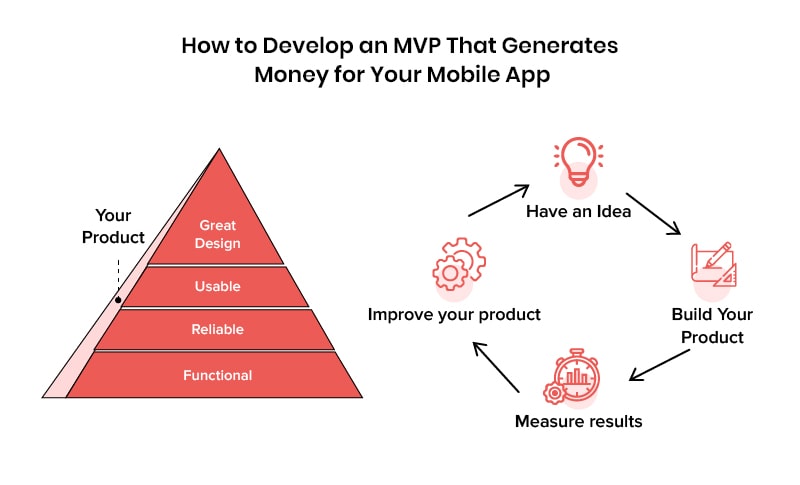
    To develop a successful MVP for your mobile app, you must follow this product development lifecycle:

    Kickstart with Market Research – 

    At times, an innovative and unique idea fails to address market needs. To prevent such a situation, you must kickstart in-depth market research to determine the target users and ensure your idea fulfills their needs. 

    Market research could be conducted using surveys and online Q&A sessions. While conducting a market survey, you must keep a close eye on your rivals, their products, and their strategies.

    Ideate on Value Addition – 

    A product must offer adequate value to the user; it must provide some sort of benefit to its end user. The value proposition of your MVP must be clearly defined, as that will help you keep your product development on track. 

    As far as an MVP is concerned, it must provide a certain value to the user in its basic state. In this stage, you must outline your users, and their expectations, which will help you develop a suitable MVP solution.

    Map Out User Flow – 

    This is the design phase, and it is very important for your app’s development. You must look at the app from the customer’s perspective and accordingly create workflows and wireframes. The user flow must be maintained, as it will help you develop the capabilities in the future. 

    While defining the user flow, you must define all the necessary steps to accomplish the main objective of your mobile app. 

    You must remain focused on adding the basic tasks and some innovative features as well. Once the procedure stages are well defined, you can go ahead and define the features and functionalities of each intermittent step. 

    Prioritize MVP Features – 

    At this step, you must prioritize all the functions and features your MVP is going to support. To perform it, you should ask some questions like: What do the users need? Is this mobile app offering something valuable to its users?

    Now you need to classify all the MVP features based on low, medium, and high priority. Once this is completed, you must arrange the features in the product backlog. This is the point when you will get an initial look at your MVP prototype, From this point on, you can work on MVP development using technology and tools.

    Develop and Launch MVP – 

    Once the user requirements and features are determined, you can kickstart the product development lifecycle process. You must use a technology stack to build the software, and you must ensure the MVP is a high-quality product with fewer features but still needs to cater to the customer’s requirements. 

    The MVP must be engaging, suitable for the users, and very easy to use.

    Iteration of Build, Measure, and Learn – Once the mobile app is developed and launched in the market, you must get user feedback and make the necessary course corrections wherever required. 

    This is a constant process where app developers, software testers, quality assurance experts, and deployment professionals work together to optimize the existing product. It will help you to evaluate the competitiveness and acceptance of your app based on users’ comments.

    How does MVP development help you raise funds easily? 

    When discussing fundraising with investors, MVP gives you leverage. Here are three leverages an MVP provides you:

    Product development with minimal risk and investment 

    It is too risky to invest in full-fledged mobile app development. A large part of funds is spent on the product development lifecycle, but at the same time, it is vital to determine if your product is functionally accurate and market ready.

    With an MVP, you get an alpha version of your mobile that has been developed at a fraction of the cost with maximum advantage. It also lets you reduce the app improvement cost, as you can discover the flaws at the early stages. 

    Early evaluation of your concepts –

    The benefits of building an MVP for a mobile app idea cannot be overstated, especially if you are looking to launch your business as a Mobile app development company in Delhi. By developing an MVP, you can gain valuable insights into your target market, analyze competition, and optimize your app based on user feedback.

    An MVP helps you to test your concept, identify weaknesses, and enhance your app’s user experience. By conducting user testing on your MVP, you can gain valuable insights and feedback that can be used to improve your final product. 

    This, in turn, can help you build a better final version of your app that meets the needs of your users and stands out from the competition among the best mobile app development companies.

    Initial feedback – 

    Getting feedback from your early users plays a pivotal role in the success of your mobile app. User input at an early stage helps you determine if your app development is on the correct path or not. With initial user feedback, you can swiftly pivot, mitigate gaps, resolve concerns, enhance security, and make your app better.

    How to Get Investors Onboard While Developing an MVP?

    Now that you have developed an MVP of your mobile app, it’s time to raise the necessary fund to support further app development activities. You must do the following while looking for potential investors:

    Envision the future – 

    It is important to envision the future in your mind while marketing your idea to potential investors. You must emphasize the potential, ability, scalability, and future expansion of your app to instill confidence in your investors. 

    Find potential investors. It doesn’t matter if you have a unique idea, it always takes time and effort to get funds for new products, services, or mobile applications. It is important to find possible investors at various forums. You must study their vision, corporate objectives, and past MVP investments before you can kickstart the next phase of pitching.

    Make an appealing pitch to potential investors – 

    Once you have the potential investors, you must be ready to pitch your idea to them. You should be capable enough to showcase the MVP features, potential ROI, potential challenges, and various other aspects to generate interest in your investors.

    Fortify your capital base- 

    You must optimize your cash position and other financial aspects before showcasing your concept to potential investors. You must calculate your burn rate and monthly cash flow to ensure that you have sufficient cash in hand to sustain your business in the event of unavailability of funds.

    Your funding partners post MVP stages

    Let’s have a look at the primary sources of funding you must approach during the seed funding and pre-seed funding rounds:

    Friends and family – They are the first source of funding for anyone, and they are the first person who believes in your idea and remains supportive of the entire product development process. However, you must remember that they are taking a huge risk by investing in your idea. Hence, you must give them adequate respect and treat them as investors.

    NGOs and finance institutions – NGOs and other small financial institutions usually invest in businesses to create jobs and improve economic development. They prefer to invest in business ideas that can benefit the LMI (low to moderate-income) communities. You can prepare your pitch accordingly to make it a success.

    Venture capitalists and angel investors – Venture capitalists and angel investors are usually HNIs (high-net-worth individuals) who prefer to put their money in early-stage companies in trade for equity. Such individuals usually prefer high-growth organizations, and they can certainly fund your idea if they envision high potential in your MVP.

    Government Agencies – State, federal, and local governments run a wide range of programs and offer various financial incentives to stimulate economic development and entrepreneurship. You can pitch your idea and expect financial assistance in the form of grants and loans.

    Crowdfunding – It’s a comparatively new method of raising funds by pooling small amounts of money from a sizeable number of people. You can create an interesting story about your business idea and showcase its business case and potential to generate excitement and interest among potential investors.

    Conclusion

    An MVP development is a critical step that ensures adequate funding for your mobile app development. You must develop an on-demand food delivery app that not only helps you draw the interest of your investors and early users but also secures the necessary funds to help you with app development and other activities. 

    There are various organizations, such as WhatsApp, Uber, and Airbnb, that began as MVPs and have now transformed into highly successful products down the line. In a nutshell, an MVP assures that you can offer an extendable and scalable mobile app to your customers.

  • Top 10 Mobile App Developers in Dubai, UAE

    Top 10 Mobile App Developers in Dubai, UAE

    Developers of mobile apps in Dubai and elsewhere have been inspired by the rise of cloud computing and Internet of Things technologies to push the envelope further. 

    The way consumers view technology now is different than it was in the past. Many business owners are focusing on building cross-platform, Android, and iOS apps to improve their customer experience.

    Want to turn your vision into a reality but need assistance locating the most suitable mobile app development firm in Dubai? You’ve come to the right website. 

    With the help of the best app development firms in the UAE, you can create the ideal custom apps for your business no matter its size, sector, or specific needs.

    Through this article, we promise to make your search for the best mobile app developers in Dubai easier by curating a list of Dubai’s top 10 app development companies. But before that, here are a few factors you should always consider before finalizing your development partner firm.

    What to Look for in a Reliable UAE-Based Mobile App Development Firm.

    If you are planning to develop an app, finding a mobile app developer in Dubai requires a smart approach to looking at some key parameters. Your tech partner’s track record and credibility matter greatly if you want to take your app development to the next level.

    With previous experience, it can become easier to right source a mobile app development company in Dubai for your business app. 

    But that’s what we are here for. If you consider these factors, your search will be a breeze.

    • We’ve already discussed how an agency’s track record in digital marketing may make or break your app. For this, you can explore Clutch and other B2B review ratings platforms like GoodFirms, DesignRush, and others.
    • These days, communicating your idea to a third party without signing the NDA is not recommended at all. Before you initiate the discussion, it’s best to filter the companies considered on this basis.
    • It is also essential for business owners to check the app development companies’ design portfolio to ensure they have a certain standard and that the final product will be of high quality. 
    • It is also important not to choose a company solely based on low prices because it may result in bizarre consequences down the line. Choose a firm that clearly understands your app needs and budget restrictions.
    • Fixing technical issues should be a top priority, and the development team should take every precaution to ensure that the final products are bug-free before being submitted to app stores.
    • Security concerns such as uncertain deployment, insecure storage, and data leaks can adversely affect an application’s life expectancy. Therefore, while looking for a development agency, you should always prioritize picking one that creates applications with secure code.

    Now that we’ve taken care of the groundwork, it’s time to select a development firm. So without further ado, let’s continue.

    Some of the best mobile app developers in Dubai to think about

    1. Appslure WebSolution LLP

    Appslure is a mobile app development and design company operational since 2013. More than fifty of the industry’s best full-stack mobile app developers, designers, and functional consultants make us one of the most in-demand firms in this space.

    No matter how complicated your requirements are, we can develop a fantastic app for you. Their team of mobile app developers is so reliable that we can promise you a problem-free delivery or your money back. Over 90% of their first mobile app development clients still use their services.

    1. Suffescom Solutions Inc.

    Regarding creating mobile applications, Dubai-based Suffescom Solutions Inc. is the best option. Suffescom has done better than its ancestors and its offspring combined. They have the perfect blend of skills and experience to help any business thrive.

    They are on top of what’s happening in the industry and plan to use cutting-edge tools to make amazing mobile apps for their customers. For businesses in sectors as varied as healthcare, education, food delivery, manufacturing, logistics, real estate, and hospitality, Suffescom develops custom apps for Android and iOS platforms and Enterprise Mobility Solutions, Hybrid, and E-commerce Mobile Apps. They’re also working on some AR/VR software.

    1. Branex

    Regarding digital transformation, Branex is your one-stop shop in Dubai. This Dubai-based firm is among the industry’s best. You’ve come to the right place if you’re looking for enterprise-level solutions with advanced capabilities to create a tailored customer experience. You can trust Branex to provide the best customer-centric products that bring maximum business proficiency, customer engagement, and return on investment due to their ten years of experience in the sector, thousands of satisfied clients, and hundreds of completed projects. 

    1. Techgropse UAE

    Our team of mobile developers has the experience to create responsive and cutting-edge apps. They assist businesses of all sizes, from established brands to fledgling enterprises, create robust mobile applications. To make your business idea a reality, hire mobile app developers from TechGropse. Get in touch with app developers for hire to create market-ready solutions. Their team has been developing business-focused mobile apps for over ten years. When you work with their team of mobile app developers, you can expect state-of-the-art apps and services.

    1. App Maisters Inc

    When it comes to creating apps for the iPhone, App Maisters is unrivaled. Their firm has a history of supporting a wide range of businesses, from cutting-edge startups to long-standing brands, thanks to their expertise in iOS application development spanning over a decade. To learn more about how they can help you create an Mobile app, visit their iPhone Development Page.

    1. TekRevol

    You may stop looking now that you’ve found Tekrevol because their expert team of Android app developers and business gurus is standing by to assist you with your app concept.

    They have worked with clients from all over the world to bring their ideas for Android applications to life, and as a result, they have built several unique Android apps.

    1. Blink22

    There were 178.1 billion app downloads in the first few months of 2018. Twenty percent of today’s young adults report opening an app fifty times daily. It’s safe to assume that the popularity of mobile apps is skyrocketing. Regarding functionality and user experience, mobile applications offer a rare chance to improve both without increasing headcount or relocating operations. An application can facilitate entry into a new market or streamline interactions with a current market segment, depending on the business’s goals.

    1. Emirates Graphic

    We’re a Dubai-based, multi-award-winning mobile app design and development studio. They develop games and apps that are both visually striking and functionally advanced for iOS and Android systems. Their mission is to innovate mobile technology by fusing cutting-edge tools with cutting-edge design that appeals to users everywhere.

    1. Brainium Information Technologies

    Brainium creates unique mobile apps for all major platforms using state-of-the-art development tools. They have you covered whether you’re looking for an Android app, an iOS app, or both, with their full mobile app development services. They guarantee the safety and user-friendliness of all your apps. Recruit their team of expert app developers today!

    1. Shakuro

    Regarding helping their clients expand their customer bases, Shakuro, a rapidly expanding mobile app development firm based in Dubai, UAE, is a perfect fit. Shakuro’s app developers are experts who take their work seriously and put in much effort. The company strives to be the best in its field, and its employees are constantly learning and implementing new technologies to better serve their clients. The Shakuro Company has invested in a team of highly skilled and committed Android OS and iOS app developers to earn the trust of their numerous customers.

    How much does it cost to develop a mobile app in Dubai?

    The typical cost of creating a mobile app is variable, depending on the app’s scope and complexity. App development in Dubai, UAE, is predicted to cost between AED 35,000 and AED 50,000. The first step in selecting a development firm and getting started on your app is to grasp how much app development costs in Dubai. Costs for developing an app might vary widely depending on several factors, making it impossible to provide an accurate estimate.

    • What kind of app
    • The extent and sophistication of available features and functions.
    • The sophistication of the user interface
    • Costs incurred by the developing company

    It goes without saying that the longer it takes to develop your software, the more difficult it is. For this reason, the price of such an app will be higher. You can use this quick summary of mobile app development prices in Dubai to assist in formulating a rough spending plan.

  • What is an Enterprise Software Support & Why Do You Need It?

    What is an Enterprise Software Support & Why Do You Need It?

    Enterprise software is complex but also important. Since you run your finances, sales, production, and human resources, you can cost your company a lot if your system is down. Thus, having quality support is essential.

    What is Enterprise Software?

    So what is enterprise software support and why do you need it? In a nutshell, enterprise software is software organizations use instead of individual users. Usually, companies and organizations use it to run, scale, and optimize their business’s day-to-day operations and build unique applications.

    So what are these most common types of enterprise software? This includes business intelligence, management of inventory, online payments, marketing tools, and enterprise resource planning and communication.

    Enterprise software is vital to your business’ day-to-day and mission-critical operations.

    Benefits of Using Enterprise Software

    So, now that you know the basics, here are the benefits that come with using enterprise software: 

    1. It Centralizes Your Information

    The primary purpose of having an enterprise software support is to store your company’s data in one place, letting your employees access it when necessary. You can quickly adapt when you and your team monitor this data in real-time. 

    It also involves automating your company’s processes and the equipment it uses. That way, once developments happen, everyone knows what changes must be made and how they can react to them. 

    Having this centralized information also allows several people to access the same data, and keeps it all in the same place, easing cooperation between teams. You can also quickly evaluate your stored information in a streamlined repository. Not only will your strategy be better informed, but you’ll also have quick access to data. 

    You can also easily make decisions, thanks to the information you can immediately access. This is because many types of enterprise software come with graphs, reports, and other immediate data like data visualizations. Its algorithms allow you to do real-time information analysis, giving you essential insights into how well you’re performing, what’s working, and what isn’t.

    2. It Improves Your Security

    You’re probably aware of the effects of having poor or nonexistent security measures. Cybercriminals can easily access your system and introduce malware, and as a result, your consumer and employee data can be exposed, putting them at risk and so much more. 

    In fact, even if you have strong security for your software and systems, you’re only as strong as your weakest link. In case one application is overlooked, it can still put your business at risk. 

    3. Proactively Addressing Software Problems

    Most systems need to be patched and updated regularly. There are several reasons for this, but the nature of software is that new features must be added, and your user interface must be updated to enhance usability. 

    At the same time, flaws and issues must be fixed, and vulnerabilities in your security must be addressed. 

    But the most common reason that operating and other software needs to be updated is that when the applications running or in conjunction are not updated within a specified time period, it’s where issues will start to come up. 

    4. Preparation for Potential Outbreaks

    With robust software support, it’s easy to deal with tech-related issues. You’ll also have more time to focus on other important business aspects. 

    Instead of being stuck with otherwise unavoidable issues, you’ll have more time, allowing you to focus on other essential processes and managing customers. 

    5. Decrease the Cost of Doing business

    Enterprise software support allows you to decrease the costs of running a business. This means you’ll have more budget to focus on enhancing your customer service or invest in other aspects that can improve the overall customer experience. 

    A great example is inventory control because keeping too much or too little of your inventory can significantly affect your business’s bottom line. 

    6. Helps Streamline your Efforts to Collaborate and Communicate

    Your organization couldn’t function without solid collaboration and communication structures. Departments and employees should be actively working with each other; enterprise software makes it all possible. 

    Your colleagues, employees, and partner can look at the same data at once and access the same tools and files, so you don’t have to give them step-by-step instructions on accessing a particular document or application. You don’t have to send them log-in information and passwords through unsecured means like email. 

    7. It Can Reduce Human Error

    Inputting your data manually takes a lot of work, even if the best employees in your team are doing it. These errors can affect your organization’s efficiency, productivity, and workflow. 

    By having enterprise software support, you reduce having to input information manually. A lot of systems are automated, which significantly reduces the chances of errors happening. It also decreases the time you need to check and recheck your data for accuracy, affecting overall efficiency. 

    8. Immediately Address Performance Errors

    By having a centralized and streamlined system, you can spot any issues that hold you back. 

    Maybe you’re not fulfilling as many orders as quickly as you would, and there’s a long lag in response times regarding queries. Whatever issue you’re having, enterprise software allows you to spot these issues and take appropriate steps to fix the problem. 

    This can apply to anything affecting your organization, from employee performance to your marketing and promotional materials. Enterprise software gives you a more transparent overview of these errors and mistakes you might be making or issues that can stem from external factors. As soon as you know what’s happening, you can immediately address them. 

    Conclusion

    No matter your industry, having a streamlined, organized system that handles functions and tasks like payroll, customer relationships, etc., is essential. 

    Not only will you come up with a standardized process for your organization, but it also allows you to save time and money in the long run. It can decrease the potential of committing a human error and significantly enhance your relationships with customers and clients. That’s why getting the right software support and working with a reputable mobile app development company in Delhi is crucial.

  • DIY App Development: How to Make Your Own App Without a Coding Background

    DIY App Development: How to Make Your Own App Without a Coding Background

    In a world where mobile phones have become an extension of our hands, a customized app has become necessary for businesses looking to succeed in the digital age. But let’s face it, creating an app can be daunting, and the thought of getting lost in the sea of coding and programming can be overwhelming.

    However, with no-code mobile app builders, creating an app is now accessible to everyone, regardless of their technical expertise. And that’s where we come in – to help guide you through the process of creating your app, step by step.

    From defining your app idea to launching it on app stores, we will take you on a journey of discovering the endless possibilities of app development. We’ll provide you with insider tips and tricks to make your app stand out in a saturated market and help you create an affordable and effective product.

    We know that the app development world can seem intimidating, but we’re here to simplify the process and make it accessible to anyone with a great idea. So, join us on this exciting adventure, and let’s explore the app development world together!

    Step 1: Define Your App Idea

    Defining your idea is the first and most crucial step in creating an app. A clear idea is a foundation upon which your app will be built, and it will determine whether your app will succeed.

    Having a well-defined app idea will help you focus your efforts and make it easier to communicate your vision to your team or stakeholders.

    To develop a great app idea, think about what problems you could solve, what services you could offer, or what type of entertainment you could provide.

    Make a list of potential ideas and refine them based on feasibility, uniqueness, and market demand. Analyze the competition, target audience, and market trends.

    This research will help you identify whether your idea is viable and whether there is a demand for it in the market.

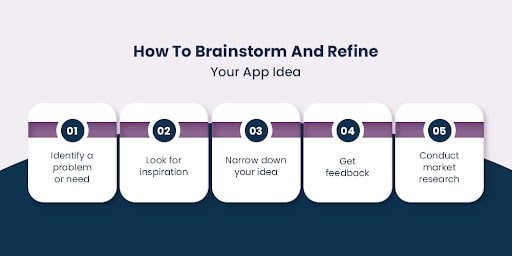
    Here are some tips for brainstorming and refining your app idea:

    • Identify a Problem or Need

    Consider an issue people face and see if you can develop an app to solve it.

    • Look For Inspiration

    Check out successful apps in the app store and see if you can create a unique twist on their idea.

    • Narrow Down Your Idea

    Once you have a list of potential ideas, choose the one that aligns with your skills, interests, and target audience.

    • Get Feedback

    Share your ideas with your friends, family, or colleagues, and ask for their feedback. This will help you identify potential flaws and refine your idea.

    • Conduct Market Research

    Analyze the competition, target audience, and market trends to validate your idea and make sure it has the potential to succeed.

    By following these tips, you’ll be able to come up with a clear and unique app idea that has the potential to succeed in the market.

    Step 2: Plan Your App

    Before you start developing your app, planning it out thoroughly is essential. Proper planning helps you to identify potential issues and avoid costly mistakes during development. By planning your app, you can ensure that it meets your expectations and is aligned with your business goals.

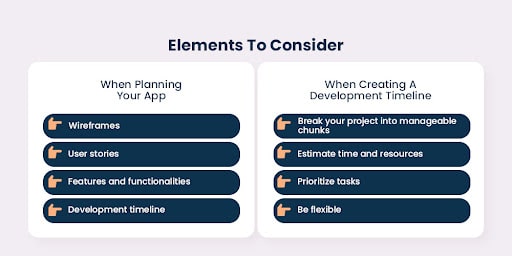
    There are several elements to consider when planning your app, including.

    • Wireframes

    Wireframes visually represent your app’s user interface. They help you map out your app’s layout and structure, including buttons, menus, and screens.

    • User Stories

    User stories describe how users will interact with your app. They help you to understand the user’s perspective and identify potential issues.

    • Features and Functionalities

    List all the features and functionalities you want your app to have. This list will help you prioritize your development efforts and ensure your app meets your requirements.

    • Development Timeline

    A development timeline outlines your app’s development and sets realistic deadlines for each stage. It helps you to track progress, set expectations, and avoid delays.

    When creating a development timeline, here are some tips to remember:

    • Break Your Project Into Manageable Chunks

    Divide your app development into smaller, more manageable pieces, such as UI design, backend development, testing, and deployment.

    • Estimate Time And Resources

    Estimate how long each stage will take and what resources you need, including team members, software, and hardware.

    • Prioritize Tasks

    Prioritize tasks based on their importance and complexity. This will help you allocate resources and ensure critical tasks are completed on time.

    • Be Flexible

    Be prepared to adjust your timeline as needed. Unexpected issues can arise during development, and flexibility and adaptability are essential.

    Following these steps and creating a detailed plan ensures that your app development runs smoothly and efficiently, leading to a successful launch.

    Step 3: Choose Your App Development Approach

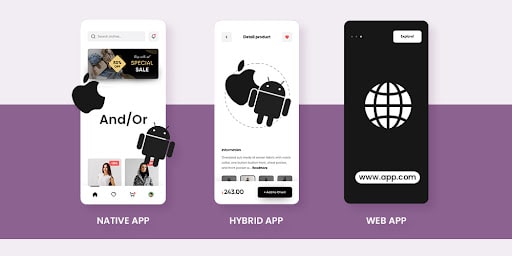
    Regarding app development, there are three main approaches: native, hybrid, and web. Each process has its own advantages and disadvantages, and the best choice depends on your app’s specific needs. Let’s look at them one by one.

    • Native App Development

    Native apps are developed specifically for a particular platform, such as iOS or Android. They are built using platform-specific programming languages, such as Swift or Java.

    Pros: Native apps provide a superior user experience optimized for the specific platform. They also offer better performance and functionality, with access to the device’s hardware and software features.

    Cons: Native apps can be costly and time-consuming, requiring specialized expertise and development for each platform separately. Also, maintenance and updates can be complex, as any changes need to be made independently for each platform.

    • Hybrid App Development

    Hybrid apps are built using a combination of web technologies, such as HTML, CSS, JavaScript, and native code. They are essentially web apps packaged within a native app wrapper.

    Pros: Hybrid apps are more cost-effective than native apps, requiring less time and effort. They also offer cross-platform functionality, as the same code can be used for multiple platforms.

    Cons: Hybrid apps can have performance issues compared to native apps, as they are not optimized for each platform. Also, they can have limited access to device features compared to native apps.

    • Web App Development

    Web apps are accessed through a web browser and are not installed on the device like native or hybrid apps. They are built using web technologies like HTML, CSS, and JavaScript.

    Pros: Web apps are the most cost-effective option, as they do not require specialized expertise or development for different platforms. They are also easily accessible, as users can access them through a web browser.

    Cons: Web apps have limited functionality and performance compared to native or hybrid apps. They also require a constant internet connection, which can be a drawback in some situations.

    To choose the best approach for your specific app idea, consider your budget, timeline, target audience, and app requirements. If you have a large budget and need maximum performance and functionality, native app development may be the best option.

    Hybrid app development may suit a smaller budget and cross-platform functionality. A web app may be the best option if your app is more content-focused and does not require complex functionality. Ultimately, the approach choice depends on your app’s specific needs and requirements.

    Step 4: Design Your App

    App design plays a crucial role in the success of an app. A visually appealing and intuitive design can significantly enhance the user experience and engagement, leading to better reviews and increased downloads.

    Here are some tips for designing your app:

    • Keep It Simple

    A cluttered and complex design can overwhelm users and make it challenging to navigate your app. Keep your design simple and intuitive, with clear navigation and a logical flow of information.

    • Use a Consistent Theme

    Consistency is key in app design. Use a consistent color scheme, typography, and visual elements throughout your app to create a cohesive and professional look.

    • Prioritize User Experience

    The user experience should always be at the forefront of your design decisions. Ensure your app is easy to use and understand, with intuitive navigation and clear calls to action.

    • Get Feedback

    Feedback from users or beta testers can be invaluable in refining your app design. Consider conducting user testing to gather feedback and make improvements to your design.

    Several tools are available for app design, including Figma, Sketch, and Adobe XD. These tools allow you to create wireframes and prototypes of your app, test different designs, and collaborate with your team. Choose the tool that best suits your needs and level of expertise.

    Overall, a well-designed app can greatly enhance the user experience and engagement, leading to increased downloads and better reviews. Take the time to plan and design your app to ensure its success carefully.

    Step 5: Develop Your App

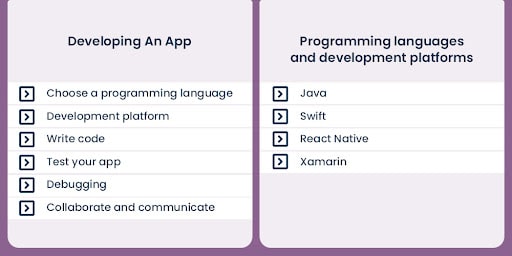
    Developing an app involves several stages, including coding, testing, and debugging. Here’s a brief overview of the development process:

    Choose a Programming Language And Development Platform

    Several programming languages and platforms are available for app development, each with strengths and weaknesses. Choose the one that best suits your app idea and level of expertise.

    • Write Code

    Coding is the core of app development. Write clean and efficient code to ensure that your app runs smoothly and without errors.

    • Test Your App

    Testing is a crucial part of the development process, as it helps you identify and fix bugs before releasing your app to the public. Test your app thoroughly on different devices and operating systems to ensure it works as intended.

    • Debugging

    The process of identifying and fixing errors in your code. Use debugging tools and techniques to identify and fix any issues with your app.

    • Collaborate And Communicate

    App development is rarely a one-person job. Collaborate with your team members, designers, and stakeholders to ensure everyone is on the same page and working towards the same goal. Communication is key during the development process.

    Regarding app development, several programming languages and development platforms exist, including

    • Java
    • Swift
    • React Native
    • Xamarin

    Choose the one that best suits your app idea and level of expertise.

    In addition, collaboration and communication are crucial during the development process. Use project management tools like Trello or Asana to keep everyone on the same page, and communicate regularly with your team members and stakeholders to ensure that everyone is aware of any updates or changes to the app.

    Removing all the hassle of these complicated procedures are the no-code mobile app builders. They have revolutionized the mobile app development process as it provides the ease of creating a mobile app with simple and easy drag and drop functionality.

    Let’s dig deep into the details to build a mobile app without coding.

    No-Code Mobile App Builders – Revolutionizing Mobile App Development Process

    No-code mobile app builders have revolutionized mobile app development, making it easier and more accessible to create apps without complex coding skills. This milestone in mobile app development has opened up a whole new world of possibilities for entrepreneurs, small business owners, and even individuals looking to create their apps.

    With no-code mobile app builders like MageNative, anyone can create their app by dragging and dropping pre-built components and templates without writing a single line of code. This has reduced the barrier to entry for app development and made it more affordable and efficient.

    Why a no-code mobile app builder

    • Cost-Saving

    No-code mobile app builders are significantly cheaper than hiring a professional developer.

    • Time-Saving

    They allow users to create an app in hours or days rather than weeks or months.

    • Easy To Use

    They are user-friendly and require no coding knowledge, making it accessible for anyone to create an app.

    • Customizable

    Despite not requiring coding knowledge, no-code mobile app builders offer a range of customization options.

    No-code mobile app builders offer a significant milestone in mobile app development. With no code mobile app builders, anyone can create an app and bring their ideas to life.

    Step 7: Launch Your App

    Launching your app on app stores such as the Apple App Store or Google Play Store is vital in bringing your app to the public. Here are some steps to follow when launching your app:

    • Register As a Developer

    To publish your app on app stores, you must register with the respective app store. This typically involves paying a fee and agreeing to the app store’s terms and conditions.

    • Submit Your App

    Once you’ve registered as a developer, you can submit your app to the app store for review. The review process can take several days to weeks, depending on the app store.

    • Optimize Your App Store Listing

    Optimizing your app store listing is crucial to increase downloads and user engagement. This includes writing a compelling app description, selecting relevant keywords, and creating visually appealing screenshots and videos.

    • Launch Marketing And Promotion Campaigns

    Marketing and promotion are crucial to noticing your app in a crowded app store market. Use email marketing, social media, and other channels to promote your app and build a community of users.

    • Gather Feedback And Make Improvements

    After launching your app, gathering feedback from users and improving your app is essential. Consider implementing user feedback and releasing regular updates to improve the user experience.

    Launching your app is just the beginning. Promoting and improving your app continuously is important to increase downloads and user engagement. Use email marketing, social media, and other channels to build a community of users and gather feedback to improve your app over time.

    Conclusion

    In conclusion, making your own app is achievable for beginners with the right guidance and tools.

    Here are the main points covered in this guide:

    • Define your app idea and conduct market research to validate it.
    • Plan your app by creating wireframes and user stories and creating a development timeline.
    • Choose the best app development approach for your specific app idea.
    • Design your app with user experience and engagement in mind, using tools such as Figma or Sketch.
    • Develop your app by coding, testing, debugging, and collaborating with others.
    • Launch your app on app stores such as the Apple App Store or Google Play Store, and optimize your app store listing.
    • Continuously improve your app by gathering user feedback and releasing regular updates.

    Remember, making an app is achievable for beginners with the right guidance and tools. Don’t be afraid to start working on your own app idea, and use this guide as a roadmap to help you along the way.

  • Checklist for Building a Successful E-commerce Website

    Checklist for Building a Successful E-commerce Website

    In today’s digital age, e-commerce has become an increasingly trendy way for businesses to reach customers worldwide. With the rise of online shopping, building a successful e-commerce website has become more critical than ever.

    However, creating a website that attracts and retains customers can be challenging. To ensure that your e-commerce website is successful, you must follow a checklist covering planning, design, development, testing, and post-launch stages.

    This article will provide a checklist of critical steps to help you build a successful e-commerce website that meets your customers’ needs and drives sales. Whether starting a new e-commerce business or looking to optimize an existing website, this checklist will provide the guidance you need to succeed in online commerce. 

    Why Do You Need an E-commerce Website?

    An e-commerce website is essential for any business that wants to grow and succeed in today’s digital world. It can help expand your business’ reach and profitability. You can open your products and services to a larger customer base and make them available 24/7. An e-commerce website can also provide customers with more convenience, allowing them to purchase items from the comfort of their own homes.

    Likewise, an e-commerce website can create a seamless user experience, increase sales, and build customer loyalty. It provides customers an effortless way to find and purchase your products or services and access valuable information about your company.

    Additionally, it enables businesses to track customer behavior and preferences, which can help them better target their marketing efforts. Plus, it is a terrific way to reach new customers.

    All these benefits make building an e-commerce website a wise investment for anyone looking to grow its sales and profits.

    Here’s Your e-commerce Store Checklist

    While having an e-commerce website can surely help your business, it is not a walk in the park. There are specific preparation, steps, and implementation that need to be followed to ensure it is successful. But with the right tools and approaches, you can guarantee your e-commerce website is optimized for success.

    As such, here is your ultimate e-commerce Website Checklist:

    Planning Stage

    Before jumping right into developing an e-commerce Website, there are aspects that you need to prepare, such as business details, strategies, etc. Here are some of them.

    A. Identify the target audience.

    One of the most critical steps when building an e-commerce website is identifying your target audience. The target audience is the basis for your design, content, and features. You must ensure it is tailored to their needs to attract leads and convert them to customers.

    Likewise, understanding your target audience enables you to develop personalized marketing strategies that will be more effective in reaching them.

    B. Conduct market research

    Market research is essential to understand your potential customers and what they are looking for. Market research can give you the necessary insight into your customer’s needs and what needs to be integrated into your website. It can also give you some content, design, and service data.

    Likewise, Market research also helps websites identify new prospects for growth and development and potential threats that could harm their business. With this knowledge, companies can make informed decisions on moving forward and staying ahead of the competition.

    C. Create a website blueprint.

    A website blueprint is an essential tool for any website owner or developer. It helps define the structure and layout of a website, as well as the content that should be included. Having a clear plan ensures that all aspects of the website are considered before development begins.

    This can save time and money in the long run by avoiding costly mistakes. It also helps ensure the website is optimized for user experience and SEO.

    D. Establish goals and objectives.

    Having goals and objectives is essential when developing an e-commerce website. It helps to define the website’s purpose, set measurable targets, and create a plan of action. Through this, e-commerce websites can focus on achieving their desired outcomes.

    Likewise, goals and objectives provide direction and motivation for the team and clarify what needs to be achieved. It ensures that resources are allocated in a way that will bring the most benefit in terms of sales, customer satisfaction, and brand recognition.

    E. Allocate budget and resource.

    When building an e-commerce website, it is crucial to consider the budget and resources. You need to allocate the right amount of money, tools, and people to ensure the website is built correctly and per your requirement.

    The cost of building a website usually depends on the complexity of the design, features, domain name, web hosting, and optimization. In addition, you need to consider the development timeline and salary of the specialist. Finally, you need to consider the website’s maintenance costs to ensure it is up-to-date and secure.

    Design and Development Stage

    Once you have every detail for your e-commerce website, it is time to design and develop your store. Here is a checklist you need to follow:

    A. Choose the right platform.

    Choosing the best e-commerce platform is the foundation of any successful online business. The website platform provides various features such as content management systems (CMS), e-commerce solutions, analytics tools, and more. These features enable companies to create a powerful online presence to reach customers and generate more revenue.

    A website platform also provides scalability so businesses can quickly expand their websites as they grow.

    Here are some of the best e-commerce platforms you can choose from:

    • Shopify
    • BigCommerce
    • WooCommerce
    • Squarespace
    • Magento

    B. Select the perfect web design.

    Designing an e-commerce website is not an easy task. It requires careful planning and consideration of user experience, SEO, and other technical aspects. Creating a user-friendly website that is visually appealing and easy to navigate is essential.

    Many things need to be remembered when designing an e-commerce website. Here are some of them:

    • Follows the branding and color of your company.
    • Matches your product or services.
    • Responsive design
    • Optimize speed and performance.
    • Good placement for product descriptions and highlights.

    C. Build a user-friendly interface.

    A user-friendly interface is essential for businesses in today’s digital world. For non-technologically inclined users, a complex user interface can be challenging to navigate.

    As such, you must simplify the user interface and use clear and concise navigation to make it easy for visitors to discover what they want. A user-friendly interface can help you increase conversions and grow your business.

    D. Integrating a secure payment gateway.

    Ensuring a secure payment gateway for e-commerce websites is essential for businesses to build customer trust. Without proper security measures, customers may be reluctant to make purchases as they fear their data or payment information could be stolen.

    To ensure secure payments, businesses should investigate implementing the latest technologies, such as encryption, tokenization, and fraud prevention tools. They should also invest in PCI compliance and the latest security standards.

    By taking these measures, businesses can provide customers with a safe and secure payment gateway that will help them gain trust and confidence in their brand.

    E. Implementing search engine optimization (SEO) strategies.

    SEO for e-commerce websites and mobile app development is necessary. It helps them to rank higher in search engine results and attract more visitors. e-commerce SEO helps ensure that your website is optimized for search engines. This increases the chances of people finding your website for products or services related to your business.

    Likewise, SEO helps improve user experience, leading to better conversions and more sales. The right SEO strategy can help you reach a wider audience, increase brand visibility, and generate more leads.

    Testing and Launching Stage

    Once developed, you also need to test your e-commerce website before launching. Here is what you need to do:

    A. Conducting user testing and debugging.

    User testing and debugging are essential steps in the development process of any product. It helps to identify potential problems and issues in the product before it is released to the public. Conducting user testing and debugging correctly can help to ensure that your product meets user expectations, is bug-free, and works as intended.

    B. Ensuring cross-device and cross-browser compatibility.

    As mentioned earlier, cross-device compatibility is essential for e-commerce sites and websites. It also helps you reach more potential customers, as people increasingly use their phones to search for information and make purchases. Your business can now cater to all potential customers, despite using various devices.

    So, before launching your website, test it on multiple devices and browsers. Ensure that your e-commerce website looks good and functions properly. You can use online tools such as BrowserStack or Sauce Labs to test your website on different devices and browsers.

    Likewise, you can also consider mobile-specific features. Mobile devices have unique features such as touchscreens, GPS, and cameras. Consider incorporating these features into your website to enhance the user experience on mobile devices.

    If you are leaning toward catering to more mobile users, it is best to consult a mobile app development company.

    C. Setting up web analytics and tracking tools.

    Web analytics and tracking tools are an excellent way for e-commerce websites to monitor their performance and ensure they reach their goals. Through these tools, businesses can track user behavior, optimize their website for better performance, and gain valuable insights into the customer journey. In addition, it can identify trends in user behavior, success of marketing campaigns, and understand how customers interact with the website.

    With this data, an e-commerce business can make informed decisions about improving the customer experience and increasing conversions.

    D. Launching the website.

    Once you have checked everything on the list, it is time to launch your website. Make sure to announce the launch via social media pages, email blasts, etc.

    Post-Launch Stage

    Developing an e-commerce website does not end after launch. You need to monitor some things to continuously improve its performance and usability. Here are some of them:

    A. Monitoring website performance and metrics

    Collecting the right website performance metrics can help businesses identify areas of improvement and make informed decisions about their e-commerce website. As such, try to collect the following data:

    • Page load times
    • Uptime and downtime
    • Bounce rates
    • User interaction

    With this information, you can gain valuable insights into how users interact with their websites and where they must focus their efforts to improve customer experience.

    B. Collecting customer feedback.

    Customer feedback is also essential to improve an e-commerce website. It helps identify improvement areas and provides valuable insights into customer preferences. It also allows website developers to make necessary changes and improvements to ensure the website is user-friendly, engaging, and meets customer expectations.

    Customer feedback can be collected through surveys, interviews, focus groups, or even by analyzing website usage data.

    Conclusion

    In summary, developing an e-commerce site is arduous and laborious. But with the right strategy and knowledge, you can easily make it. We hope that this checklist will help you on your e-commerce journey.

    And remember, creating a website takes time and resources. Do not rush it.

  • The Impact of Micro-Moments on Mobile SEO Strategy

    The Impact of Micro-Moments on Mobile SEO Strategy

    Mobile devices have become an essential aspect of our everyday lives and have revolutionized how we interact with the world around us. With more than 6.5 billion people owning a smartphone, it’s no wonder that businesses are scrambling to optimize their mobile presence. In this blog post, we will discover the concept of micro-moments, their importance in mobile SEO strategy, and how businesses can optimize for them to enhance their overall mobile presence.

    What are Micro-Moments?

    The mobile landscape has undergone a massive transformation in recent years. In 2015, Google introduced the concept of micro-moments, which refers to the idea that consumers strongly desire to act immediately on a need or want. Marketers define micro-moments as “critical touchpoints within today’s customer journey, and when added together, they ultimately determine how that journey ends.”

    Micro-moments are people’s small interactions with their mobile devices throughout the day. They are essential because they allow businesses to capture consumers’ attention at the exact moment they are most likely to engage. It can help businesses to improve their visibility, drive consumer engagement, and increase conversions.

    These interactions can be divided into four categories:

    A. I-want-to-know moments

    These moments occur when a person seeks information or answers a question. For example, “What’s the best Italian restaurant in the area?”

    B. I-want-to-go moments

    These moments occur when a person searches for a specific location or direction. For example, “Where’s the nearest gas station?”

    C. I-want-to-do moments

    These moments occur when a person seeks help with a task or activity. For example, “How do I make a perfect cup of coffee?”

    D. I-want-to-buy moments

    These moments occur when a person is ready to make a purchase. For example, “Where can I find the best laptop deals?”

    The Impact of Micro-Moments on Mobile SEO Strategy

    Micro-moments have a significant impact on mobile search behaviour. A survey by Hubspot found that 55% of users stay less than 15 seconds actively on a webpage before deciding to move on. Consumers expect quick and relevant information at the moment, and if a business fails to provide it, they risk losing the consumer’s attention and interaction.

    Furthermore, a study conducted by Think with Google found that 96% of users use their smartphones to search for information related to their immediate needs, and 67% of users say that they are more inclined to purchase from companies whose mobile websites or apps help them easily find answers to their questions.

    With this information in mind, here are nine critical strategies for optimizing micro-moments.

    Key Strategies for Optimizing for Micro-Moments

    Tip 1. Identify and target micro-moments

    Use keyword research to identify the most relevant micro-moments to your business and target them with optimized content. You may use tools like Ahrefs and SEMrush to determine which keywords are most related to the micro-moments that you want your content to target.

    Tip 2. Create content that corresponds with the user’s search intent

    Ensure that you tailor your content to meet the needs of your audience and provide value at the moment. It means understanding what your customers are searching for and creating content that addresses their needs.

    Tip 3. Optimise user experience:

    Make sure your website is mobile-friendly and provides a seamless digital experience. It includes fast-loading pages, easy navigation, and contextual relevance. You can utilize a video compressor or MP3 converter to optimize your video and image files.

    Tip 4. Use visual content

    Visual content such as imagery, videos, and infographics can be powerful material to capture users’ attention and communicate information quickly and effectively. With a professional image and video editor, businesses can incorporate eye-catching visual content into their mobile marketing strategy and drive engagement.

    Tip 5 Leverage social media

    Use social media platforms to engage with your audience and provide value. It can include sharing helpful tips, answering questions, and providing exclusive offers.

    Tip 6. Use location-based marketing

    Take advantage of location-based marketing to target consumers searching for businesses or services in their immediate area. It can include promoting your business on Google Maps, using local search ads, and running geotargeted social media campaigns.

    Tip 7. Integrate trending music

    Music is a powerful tool that you can use to connect with customers and create a lasting impression. You can leverage trending music by listening to the latest hits, utilizing an audio joiner to create playlists based on your target audience, and sharing them across social media channels.

    Tip 8. Test and iterate

    Optimizing for micro-moments is an ongoing process, and businesses must continually test and iterate their strategies to improve their effectiveness. It incorporates tools like A/B testing and analytics to track performance, identify improvement areas, and solicit user feedback to understand their needs and preferences.

    Tip 9. Outsource professionals

    You don’t need to know everything about micro-moments to succeed. Outsource professionals who can help you determine the best way to optimize your business for this new paradigm, including digital marketers, app developers and content creators. There are tons of digital marketing and mobile app development companies in Delhi and around the world that can help you with your needs.

    Five Brands Incorporating Micro-Moments on Their Mobile Strategy

    Starbucks

    Starbucks has leveraged micro-moments to create a seamless mobile experience for its customers. They have created a mobile app that allows customers to order and pay for their drinks online, reducing wait times and providing a more convenient experience.

    Nike

    The famous sneaker brand Nike has also created a mobile app that helps athletes to achieve their fitness goals. The app provides personalized workout plans, tracks progress, and offers motivational messages, assisting users in staying motivated and engaged.

    Uber

    On the other hand, the car company Uber has incorporated micro-moments into their mobile strategy by providing a quick and convenient way for customers to order a ride. The app allows users to request a ride at the moment, giving real-time updates on their driver’s location and estimated arrival time.

    Sephora

    Sephora has also created a mobile app that allows customers to try on makeup virtually. The app uses augmented reality technology to scan a customer’s face and show them what different makeup products would look like on them, helping them make a purchase decision.

    Airbnb

    Moreover, Airbnb has used micro-moments in its mobile strategy by providing a seamless booking experience for customers. The app allows users to search for and book accommodations at the moment, with real-time data on availability and pricing.

    The Future of Micro-Moments and Mobile SEO Strategy

    Micro-moments’ future is bright, with emerging technologies and trends set to shape the mobile landscape in exciting new ways. These include voice search, AI and machine learning and mobile-first indexing.

    Voice search

    With more and more individuals using voice assistants like Siri and Alexa to search for information and make purchases, voice search has been a valuable part of the micro-moments ecosystem.

    Artificial Intelligence and Machine Learning

    The future of the micro-moment will also be significantly influenced by artificial intelligence and machine learning. These technologies enable businesses to personalize the user experience and provide more relevant and timely information.

    Mobile-First Indexing

    Mobile-first indexing is another trend that will continue to shape mobile SEO strategies. It means businesses must prioritize their mobile presence and ensure that their website is mobile-friendly and provides a seamless user experience.

    Conclusion

    In conclusion, micro-moments are critical touchpoints in the consumer journey that allow businesses to capture consumers’ attention at the moment. Companies must focus on providing high-quality, relevant content that aligns with the user’s intent and optimizing the user experience for mobile devices.

    Businesses can improve visibility, drive engagement, and increase online conversions by incorporating micro-moments into their mobile strategy. As the mobile industry continues to evolve, businesses must remain ahead of the curve and embrace emerging technologies and trends to remain competitive and relevant in the ever-changing world of mobile SEO.

  • How Flutter is Revolutionizing Cross-Platform App Development

    How Flutter is Revolutionizing Cross-Platform App Development

    With the rapid growth in the mobile app development industry, cross-platform app development is necessary for businesses. With numerous frameworks in the market, it can take time for developers to choose the right one. However, Flutter, a robust open-source framework introduced by Google, has overtaken cross-platform app development. 

    As a team, we have a lot of experience working on various cross-platform app development projects and as a mobile app development company in Delhi, we have discovered that Flutter’s performance and versatility make it the perfect option for creating high-quality apps that function smoothly across several platforms.

    10 Reasons Flutter Is a Game Changer In Cross-Platform App Development 

    Here we have given 10 reasons for how flutter is changing the game in cross-platform app development.

    1. Flutter offers a single codebase that can be used across multiple platforms

    Flutter is one of the fastest-growing cross-platform app development frameworks in the market and with good reason. Flutter offers a single codebase that can be used across multiple platforms, simplifying the development process and drastically reducing the required time and resources. 

    This is achieved using the Dart programming language, which compiles native code for Android, iOS, and web platforms. This means developers can reach a wider audience and offer optimal user experience without writing platform-specific code. 

    By leveraging Flutter, developers can save time and effort by creating a visually appealing and highly functional app in less time, all while streamlining the development process.  Flutter is ushering in a new era of cross-platform app creation, where developers can seamlessly whip up stunning applications across various platforms with ease. 

    2. Flutter provides a fast development cycle, allowing for quick updates

    Flutter provides developers with an easy-to-use, reactive framework that allows for hot reload functionality, making updating app features and fixing bugs quick and simple. This implies that developers don’t need to wait for a full rebuild cycle to see modifications to their code take effect in the app. 

    This saves time and enables developers to experiment and test app features more efficiently, making the development process more agile and responsive to user needs.

    3. Flutter creates user interfaces using a reactive-style architecture.

    Flutter is a cutting-edge UI toolkit for developing fast, portable, and mobile-first apps on multiple platforms. It utilizes a reactive-style framework for developing user interfaces. Flutter’s framework is based on “widgets,” responsible for rendering components on the screen, responding to user input, and managing the application state. 

    Each widget in Flutter is immutable, meaning it cannot be changed or mutated. Instead, developers declare the user interface components they want to create using widgets, then their state changes depending on user interactions without needing external libraries or frameworks. 

    The reactive architecture of Flutter offers several benefits, including simplified state management, increased app performance, and easy customization, making it a powerful tool for developing modern and dynamic apps.

    4. Flutter is open-source and backed by a large community of developers

    One of the critical advantages of Flutter is that it is open-source, meaning that developers are an integral part of the development process. This means anyone can contribute to the framework, and the code is freely available for developers to modify and use. 

    The open-source nature of Flutter has also led to a robust and active community of developers who are constantly contributing new plugins, widgets, and other tools to the framework. This community ensures that the framework continually evolves and grows, making it an exciting option for developing robust and responsive mobile applications across multiple platforms. 

    5. Flutter allows for rapid prototyping and development

    One of the critical features of Flutter is that it allows for rapid prototyping and development. Since Flutter uses a reactive programming model with hot-reload capabilities, developers can change the code and immediately see the results on the screen. 

    This feature significantly reduces the time required for compilation, testing, and debugging. Furthermore, the hot-reload feature in Flutter enables developers to quickly iterate through different design options, thereby accelerating the development process. 

    This aspect of Flutter has made it a popular choice among developers worldwide and has significantly contributed to its success in the industry.

    6. Flutter is highly customizable, allowing developers to tailor their apps to specific needs

    With Flutter, developers can customize every aspect of their application’s interface to suit their unique needs. Flutter widgets are highly customizable, and developers can easily modify the existing components or create their own to fit the app design. 

    The platform’s flexible architecture allows developers to add and remove features, tweak the UI, and easily integrate plugins, making it a go-to choice for developers who want complete control over their app’s functionality and style. 

    Flutter’s customization level is unmatched by any other cross-platform app development platform, making it a favorite among developers who prioritize versatility and flexibility.

    7. Flutter is highly extensible, allowing for third-party plugins and libraries

    Flutter is a game-changing solution for cross-platform app development. One of its standout features is its high extensibility, which enables developers to leverage the vast ecosystem of third-party plugins and libraries. 

    This extensibility empowers developers to extend the functionalities of their apps, making them more feature-rich and easier to develop. Flutter provides an easy-to-use package management system, allowing developers to integrate third-party plugins into their app development workflow quickly. 

    By adopting Flutter, developers can use an extensive plugin library that facilitates app development with features such as authentication, maps, and payments. Additionally, Flutter’s extensibility makes it easy for enterprises and developers to create and share custom plugins with the broader community, further enriching the platform’s plugin ecosystem.

    8. Flutter integrates with native platform services and APIs

    Flutter also enables developers to work with platform-specific APIs directly, making it more straightforward for them to add native features to their applications. This results in an app that performs better and delivers a seamless user experience across multiple platforms. 

    Flutter developers can use platform-specific code using platform channels, allowing the application to interoperate with native code. This feature of Flutter makes it one of the best frameworks for building performant cross-platform applications with a native look and feel on multiple platforms. 

    9. Flutter supports automated testing for apps

    Flutter supports automated testing for apps; thanks to its testing framework Flutter Test comes with a range of built-in tools for unit and integration testing. With Flutter Test, developers can write tests to check for user interactions, business logic, and UI elements, among other things. 

    This enables developers to create and run tests quickly, leading to faster development cycles and a more stable app. Additionally, Flutter supports fast and frequent UI testing using the Flutter Driver tool, which allows for automated testing of user flows, gestures, and interactions from a single device in a single test suite. 

    10. Flutter offers access to various device features and services

    One key feature differentiating Flutter from other cross-platform app development frameworks is its comprehensive and extensive support for native device features and services.

    Developers may utilize Flutter’s complete and consistent API to access hardware and software features on iOS and Android devices, including sensors, cameras, location services, Bluetooth, and more. 

    This means that developers can leverage the full capabilities of modern mobile devices without having to write native code or use third-party libraries, resulting in faster, more efficient, and more reliable app development.

    Conclusion

    Flutter app development has revolutionized cross-platform app development by offering numerous advantages over traditional approaches, such as faster development times, lower costs, and greater flexibility.  

    With its ability to create beautiful, high-performance apps that run seamlessly on multiple platforms, Flutter is quickly gaining popularity among developers and businesses. As the platform continues to evolve and improve, we expect to see even more powerful and innovative apps that set new user experience and functionality standards.

  • Top 8 App Development Trends for the Sports Industry

    Top 8 App Development Trends for the Sports Industry

    The enticements between the sports industry and technology are getting strengthened with every transitory year as each involved person such as athletes, broadcasters, clubs, governing bodies, and famous brands is embracing new technologies and trends to go ahead of the market competition, improve their on-field business, analyze operational efficiencies along with the revenue.   

    We can take the ‘use of smartphones’ as the best example of how technology is helping the sports industry to grow. Entrepreneurs who are willing to enter the sports industry take the help of the best mobile app development company to develop a feature-rich and fast-performing app in order to earn huge benefits.    

    While developing sports mobile apps, there are several development trends and technologies to choose from. The use of the latest technologies is changing the way enthusiasts experience live sport. 69% of sports fans on average have admitted that evolving technologies had improved their complete viewing experience.  

    Hence, while making one, you must be aware of which sports app development trends can impact your business! To know about them, let’s scroll through the article-

    Top Sports App Development Trends That Will Rule 2023

    Considering the above-given information, sports app development is an outstanding choice to make in 2023 as the market guarantees massive growth and a secure future. To make that happen, let’s look at the below-listed tech trends that may dominate the sports industry in the future-

    • AR and VR Integration

    Augmented Reality (AR) and Virtual Reality (VR) are tremendously transforming the way sports enthusiasts enjoy their favorite sports while going through interactive and immersive experiences. Various top fantasy sports app development companies are integrating AR and VR into sports apps to enhance user engagement via features like interactive games, virtual tours of stadiums, and real-time data visualization. The technology can also enable coaches to observe and train athletes virtually. 

    For example, NBA has introduced an AR-powered application facilitating sports fans to experience 3D replays of any of their favorite games. Alongside, NFL has also applied VR to enable fans to see a 360-degree view of games from any chair in the stadium.   

    • AI and ML Integration

    In the sports industry, Artificial Intelligence (AI) and Machine Learning (ML) can be used to identify and predict sports performance, observe training, and detect injuries. These technologies are also used to revolutionize the industry by providing real-time insights into the strategy and performances of the players. Many businesses are taking help from the best sports app development company to integrate these advanced technologies into their sports app. And it leads their users to get benefits like personalized content such as post-match analysis and game highlights. 

    For example, the ESPN application integrates AI to enable fans to view personalized content depending on their preferences and viewing history. Also, NBA applies AI to observe player performance data and facilitate coaches with details of players’ strategies and behavior.     

    • Adding Wearable Devices

    Wearable technology has changed the way athletes get trained in the sports industry, now they get help from sensors as their coaches gather all their information right from their acceleration to sleep to heart rate. Different wearable devices comprising smartwatches, fitness trackers, and GPS-enabled systems are used to track the heart rate, movements, and other biometric data of the players. 

    For example, the Adidas Runtastic application collects data using wearable technology to deliver personalized recommendations, training plans, and coaching.    

    • Gamification

    Gamification is used to make sports apps fun for users by adding interactive, engaging, and lucrative games or game-like aspects. The technique is mainly used to encourage sports fanatics to participate in more activities that can make them win exciting gifts and offers. Ventures prefer to hire mobile app developers with rich experience and expertise to get cost-efficient and smooth gamification features in sports apps.

    Adding gamification in sports marketing also enables organizations to meet audiences’ demand and build online customer communities leading to boosting engagement, and brand image, and unleashing new revenue brooks. 

    • Social Media Integration

    No matter if you are going for a native app or cross-platform app development, it is necessary to have social media integration into the sport’s mobile application. It helps to promote sports activities, and events, and engage audiences with interesting content. Sports organizations make the best use of social media channels with a huge base of followers to announce upcoming leagues, games, events, or any new game. It has become the best way to connect with audiences and make them aware of any information in less time. Sometimes, organizations also sponsor paid advertisements to reach audiences in different segments.  

    A large sports user base also shares their achievements and rewards on their social media handles to let their friends know about it. It leads to various benefits such as promotion, boosting ticket sales, and celebrating victories.   

    • Blockchain

    The best way to integrate Blockchain technology into sports apps is to program it with tokenized digital assets. Digital assets can be dealt with outside on the public market or within a game. While having fantasy cricket app development services, businesses assure the integration of Blockchain technology to facilitate users with real-time sports betting including security and impartial outcomes. The main reason why Fantasy sports apps are embracing this technology is the added benefits such as a fraud-proof, decentralized, and fully transparent sports betting system. 

    This technology is also used in the sports industry to create Blockchain-based ticketing systems that offer real-time tracking of ticket transfers, sales, and ownership charges. Other advantages of Blockchain comprise counterfeiting, authenticity, ownership of items, enhanced user engagement, and so on.  

    • Cloud Computing

    Cloud computing is surely transmuting the way sports and games are viewed and played. It is a technology that allows the data to be stored, managed, and processed by the server hosted on the internet. Cloud computing helps in data sharing, storing, and improving the user experience by refining video streams and collecting real-time statistical data. From real-time parameters monitoring of athletes to using data to improve players’ performance, businesses are leveraging cloud computing technology by hiring the best mobile app development company in Delhi

    In Essence, 

    Similar to any other industry, the sports industry is also evolving by embracing modern-edge technologies and trends. By staying up to date with these above-defined top sports app development trends and integrating them into the solutions, players, teams, audiences, and businesses can all get benefitted. To improve overall user experience, and to make money, businesses must fulfil the current market needs and audiences’ expectations.

    If you are also thinking of entering this lucrative industry, then this is the right time to step in. Hurry up and grab the opportunity!