Author: admin

  • Securing Data Privacy and GDPR Compliance in Dynamics 365 App Development

    Securing Data Privacy and GDPR Compliance in Dynamics 365 App Development

    Dynamics 365 Services has a crucial role to play in modern businesses. It aids them to manage different aspects of their operations effectively. However, as businesses have started to utilize modern technology, it has become vital to protect sensitive information. This also means respecting individual privacy.

    In the forthcoming sections of this write-up, we will dive deep into the world of data privacy and GDPR. We will comprehend this information from the perspective of Dynamics 365 app development. 

    So, let us begin the journey to comprehensive how to protect data. All of this while taking advantage of the full capabilities of Dynamics 365 Services. Do this by affiliating with a prominent mobile app development company in Delhi!

    Comprehending Data Privacy in Dynamics 365 Services

    Just imagine you own a magical treasure chest with all sorts of secrets. You can compare this data privacy. It is all about protecting and keeping your valuable information safe and secure. In this digital era, Dynamics 365 Services can shield lots of data. 

    This includes customer details, financial records, and business insights. When you need to ensure data privacy, you must take appropriate measures. This will help keep your information safe from the prying eyes of intruders and cyber threats.  

    What Happens When Businesses Do Not Prioritize Data Privacy?

    When businesses do not prioritize data privacy, it can result in dire circumstances. Data breaches can happen. Confidential information might fall into the hands of the wrong person. This very reason makes it imperative for businesses to embrace the concept of data privacy. They need to take proactive steps to protect their hidden treasure in the form of data.

    Guaranteeing GDPR Compliance in Dynamics 365 App Development

    Now you might ask this question – What is GDPR? GDPR connotes General Data Protection Regulation. It is nothing but a set of rules created to protect the personal data of European Union (EU) citizens. However, even if your business is not based in the EU, you must pay attention to GDPR.

    In case you are dealing with the data of EU citizens, it is imperative to practice these rules. This is no matter where you are conducting your business from.

    Explanation of GDPR in Simple Language

    You can compare GDPR with a global guardian. It sets the standard for data privacy. It is important to follow these rules. This way, you can avoid hefty fines. You can also earn the trust of your customers and partners.

    Key Factors to Consider During Dynamics 365 F&O Implementation

    Now is the right time to discuss Dynamics Finance and Operations (F&O). You can compare it with a magical wand. It assists businesses in managing their resources, finances, and operations in a hassle-free manner. 

    However, while executing F&O, businesses need to remember that they are burdened with great responsibility thanks to the power they now possess.

    Things to Keep in Mind During Dynamics 365 F&O Implementation

    During Dynamics Finance and Operations Implementation, you must ensure that all the data flowing through this magical system is sheltered. It is imperative to understand who to give access to which information. 

    You should also ensure that this is done for the greater good. Taking these measures makes it possible to maintain the secrecy of your treasure chest. This way, everything will run smoothly in your business.

    Comprehending Dynamics 365 Business Central Implementation

    The next topic is Dynamics 365 Business Central Implementation. It is the master of streamlining business processes! You can consider it like possessing a bunch of magical assistants who help you organize your inventory, sales, and customer data. However, since these assistants work like magic, you must ensure they do not disclose any secrets unwittingly. 

    Be Vary of Data Privacy While Executing Business Central

    This is absolutely vital. You need to cross-verify that the customer information and other sensitive data are treated with absolute care. Once you do this, it will help your magical assistants work wonders. They will also work hard to ensure that your secret does not get revealed to anyone.

    Effective Data Privacy Measures in Dynamics 365 App Development

    Now let us discuss how to use enchanting spells to shield your data. You can count encryption as putting an invisibility cloak on your information. This will make your information unreadable to those you do not want to disclose. 

    You can consider data anonymization as a magical potion. It conceals personal details. This way, only important details are visible. 

    How to Add Effective Data Privacy Measures in Dynamics 365 App Development?

    We suggest you utilize role-based access controls. You can consider it like giving different keys to different people. Only those with the right keys will be able to unlock specific doors. And just like sorting your magical ingredients, data classification assists you in organizing and protecting data based on its importance. 

    Conclusion

    In the world of Dynamics 365 app development, data privacy and GPDR compliance are of high relevance. Protecting your invaluable data can be compared to protecting a magical treasure chest that holds the key to the success of your business. 

    So, let us weave a powerful spell of data. This will ensure that our digital endeavors in Dynamics 365 Services are safe and secure!

  • A Complete Guide To Mobile Banking App Development

    A Complete Guide To Mobile Banking App Development

    We are in that age of technology where everything is digitized, including the banking industry. It’s a time where convenience and instant access have given rise to the popularity of mobile banking. 

    This innovative development has remarkably reshaped our everyday financial tasks. If you’re thinking of diving into this flourishing sphere, our mobile banking app development guide might just be the thing for you.

    Why Mobile Banking Matters More Than Ever

    The global mobile banking market was worth $715.3 million and is projected to reach $1,824.7 million by 2026. The growth of mobile banking users worldwide has been steady and shows no signs of dipping anytime soon. What makes mobile banking apps indispensable is the ease of use, straightforwardness, and immediate access they provide to users, no matter where they are.

    Step-by-Step Guide to Mobile Banking App Development

    Creating a mobile banking app involves several stages, each demanding meticulous planning and consideration to ensure the end result is secure, user-friendly, and capable of managing diverse financial transactions without a hitch.

    1. Research and Strategize

    Initiating the development of a mobile banking app requires thorough research and strategic planning, which forms the basis of your app.

    Market Study: A detailed market analysis will give you insights into ongoing trends, leading contenders in the mobile banking arena, and their specific offerings. You should scrutinize your competitors, assess their pros and cons, pinpoint their unique features, and glean lessons from their strategies.

    Understanding Your Audience: Identify and comprehend your target user base. Learn about their preferences, demographic details, and financial behaviors. The more you know about your users, the better equipped you are to address their needs. Your app should aim to solve the problems encountered by your target audience.

       2. Wireframing and Prototyping

    After thorough research and planning, you start shaping your app through wireframing and prototyping.

    Wireframing: A wireframe gives a clear vision of your app’s structure and the interrelation of its various screens. It should effectively illustrate the primary components of the app, the user’s journey within the app, and how the app’s functionality will pan out.

    Prototyping: Once the wireframes are completed, they can be combined to form a prototype. A prototype is a basic visual model that gives a realistic impression of the final app. It’s an excellent tool to garner user feedback before the actual development process begins and is far simpler to modify than the coding involved in the subsequent stages.

       3. Design and Development

    The design and development phase is when your app truly begins to take shape. This step is very crucial and therefore it’s necessary to hire a reliable mobile app development company in Israel.

    Design: The design of your app encompasses both the User Interface (UI) and User Experience (UX). While UI deals with the app’s aesthetics, UX focuses on its functionality. Both these aspects need to work in unison to deliver a smooth and captivating user experience.

    Development: Post-designing, the coding phase commences. The app is coded, and the necessary functionalities are integrated. This phase is divided into two sections: front-end and back-end development. The front end is the user-facing side of the app, while the back end deals with data processing.

       4. Security Provisions

    Considering mobile banking apps handle sensitive personal and financial data, security is of utmost importance and should never be overlooked.

    End-to-End Encryption: The integration of end-to-end encryption ensures that the data transmitted remains encrypted, only to be decrypted by the sender and receiver. This provides an extra layer of security, safeguarding user information from potential cyber-attacks.

    Multi-factor Authentication: Another fundamental security feature is multi-factor authentication (MFA). MFA demands users confirm their identity through two or more validation methods before granting access to their accounts.

       5. Post-Development: Testing and Launch

    Upon completion of development, your app needs to undergo rigorous testing to ensure it’s launch-ready.

    Testing: This is a vital step to spot and fix any bugs, performance glitches, and usability issues. Tests should be performed under a variety of circumstances to guarantee the app’s smooth operation in all situations.

    Launch: Once the testing phase is over and all problems are resolved, the app is ready for launch. You’ll need to submit your app to the app stores, adhering to their specific guidelines. Once the app gets approved, it becomes available for users to download and use.

    Choosing the Right Technology Stack

    The performance and reliability of your mobile banking app hinges on the technology stack you choose, making this decision pivotal.

    • Frontend Development: In the Android ecosystem, Java and Kotlin are often the go-to languages, whereas iOS app development leans more towards Swift and Objective-C.
    • Backend Development: The heartbeat of the app—the backend—is where all data manipulation takes place. Popular languages include Python, Java, and Ruby, complemented by frameworks like Django, Node.js, and Ruby on Rails.
    • Database: Storing and managing data effectively requires a reliable database. Common choices range from relational databases like PostgreSQL and MySQL to non-relational databases such as MongoDB.
    • Payment Gateway: For secure transaction facilitation, payment gateways like Stripe, PayPal, and Braintree are integral components.

    Essential Features of a Mobile Banking App

    No mobile banking app development guide would be complete without discussing the primary features that ensure the app is reliable and user-friendly.

    1. User Registration and Profile Management

    User Registration: Users’ first encounter with the app typically begins with registration. This process should be quick, straightforward, and intuitive, often achieved via email registration, mobile number verification, or social media sign-ups.

    Profile Management: Users need control over their profiles, from updating personal details to setting up security questions or biometric identification. The feature should also allow users to tweak their banking details, like updating contact info, changing PINs, or adjusting account preferences.

       2. Account Management

    Balance Inquiry: Real-time account balance checking is a must. Some apps even present a visual display of balance trends, helping users to comprehend their spending habits.

    Transaction History: A detailed past transaction list, including deposits, withdrawals, and transfers, should be accessible to users. The transaction history should be comprehensive, showing date, amount, and related details for each transaction, and allowing for search and filter options for quick transaction locating.

    Managing Multiple Accounts: If users hold several accounts with the same bank, the app should enable easy account-switching.

       3. Fund Transfer 

    Internal Fund Transfer: This feature allows for fund transfers between the user’s accounts or to other accounts within the same bank.

    External Fund Transfer: Users should be able to send money to accounts in other banks.

    Scheduled Transfers: The ability to schedule future-dated transfers is especially useful for recurring payments like loan repayments or utilities.

       4. Push Notifications

    Transaction Alerts: Users should receive notifications for every transaction to bolster account security.

    Reminders: Bill payment reminders, scheduled transfer prompts, and loan due date alerts can be sent through the app.

    Updates and Offers: The app can keep users informed about updates, terms and conditions changes, promotional offers, or new bank products or services.

       5. Biometric Authentication

    To boost security, the app might include biometric authentication options, such as fingerprint scanning or facial recognition. This provides an additional layer of security and expedites the login process.

    Conclusion

    Banking’s future fits right in our hands—literally. Mobile banking apps represent more than a trend; they symbolize a significant shift in financial management. These apps, with their 24/7 access, real-time updates, and easy-to-navigate interfaces, are quickly replacing traditional banking methods.

    Our mobile app development company in Delhi highlights that creating such an app requires meticulous planning, a robust strategy, rigid security protocols, and rigorous testing. Yet, the task doesn’t cease with the app’s launch. It’s an ongoing cycle of collecting feedback, making enhancements, and staying in step with technological innovations.

  • The Future of Ecommerce: Emerging Trends and Technologies

    The Future of Ecommerce: Emerging Trends and Technologies

    The e-commerce industry is constantly evolving, and new technologies like AR, VR, and AI are emerging all the time that have the potential to transform the way we shop online. I’m excited about the potential of these technologies to make shopping online more convenient, efficient, and enjoyable. In this blog post, we will take a look at some of the most promising emerging trends and technologies that are shaping the future of e-commerce.

    Artificial Intelligence (AI)

    AI is one of the most powerful technologies that is currently being used in the e-commerce industry. AI can be used to personalize the shopping experience for customers, recommend products that they are likely to be interested in, and even answer customer questions through chatbots.

    • Personalization: AI can be used to collect data about customers’ past purchases, browsing history, and search terms. This data can then be used to personalize the shopping experience for each individual customer. For example, AI can be used to recommend products that are likely to be of interest to a particular customer, or to show customers products that are similar to ones they have previously purchased.
    • Product recommendations: AI can also be used to recommend products to customers. This can be done by analyzing customer data, such as past purchases, browsing history, and search terms. AI can also be used to track customer behavior on a website or app, such as which products they have viewed or added to their cart. This data can then be used to recommend products that the customer is likely to be interested in.
    • Chatbots: AI can also be used to create chatbots by a Shopify app development company that can answer customer questions and provide customer support. Chatbots developed by such companies can be used to answer simple questions, such as about product availability or shipping information for Shopify-based businesses. They can also be leveraged to provide more complex customer support, like troubleshooting technical issues or resolving order problems specific to Shopify ecommerce stores.

    As AI technology continues to develop, we can expect to see even more innovative and sophisticated applications of AI in the e-commerce industry. This will lead to a more personalized, convenient, and efficient shopping experience for customers.

    Augmented Reality (AR) and Virtual Reality (VR)

    AR and VR are two other technologies that have the potential to revolutionize the e-commerce industry, especially when integrated by a mobile app development company in Delhi. AR enables customers to visualize how products would appear in their homes or on their bodies before making a purchase, providing a more immersive and personalized shopping experience for users of mobile apps developed by Delhi-based companies. On the other hand, VR technology allows customers to virtually experience products in a simulated environment through mobile apps, which can enhance engagement and decision-making. The expertise of a mobile app development company in Delhi can be instrumental in implementing these cutting-edge technologies and driving innovation in the e-commerce sector, elevating the overall shopping experience for customers. 

    AR/VR benefits  in e-commerce:

    • Increased customer engagement: AR and VR can help to increase customer engagement by providing a more immersive and interactive shopping experience.
    • Improved decision-making: AR and VR can help customers to make better decisions about their purchases by allowing them to see how products would look and feel in real life.
    • Reduced returns: AR and VR can help to reduce returns by allowing customers to try products before they buy them.
    • New sales opportunities: AR and VR can create new sales opportunities by allowing customers to experience products that they would not be able to experience in a physical store.

    Voice Commerce

    Voice commerce is another emerging trend that is gaining popularity. Voice commerce allows customers to shop online using voice commands, which can be especially convenient for people who are on the go or who have difficulty using a traditional keyboard and mouse.

    Voice commerce is becoming increasingly popular as more and more people are using voice-activated devices. In fact, a recent study by ComScore found that 40% of Americans now own a voice-activated device.

    There are a number of benefits to using voice commerce. First, it is very convenient. Customers can simply speak their commands, and the device will understand what they want. This is especially convenient for people who are on the go or who have difficulty using a traditional keyboard and mouse.

    Second, voice commerce can be more personalized. Devices can learn a user’s voice and preferences, and then personalize the shopping experience accordingly. For example, a user might say “Alexa, order me more coffee” and the device would automatically order the user’s favorite brand and quantity of coffee.

    Third, voice commerce can be more efficient. Customers can make purchases without having to type anything, which can save time.

    However, there are also some challenges to using voice commerce. First, voice recognition technology is not always perfect. This can lead to errors, such as the device misinterpreting a command or not understanding what the user is saying.

    Embarking on a whispering revolution, voice commerce emerges as an extraordinary and promising technology set to metamorphose the e-commerce landscape, reshaping the very essence of online shopping and elevating it to unparalleled heights.”. As voice recognition technology continues to improve, we can expect to see even more businesses adopting voice commerce in the years to come.

    Here are some examples of how voice commerce is being used in e-commerce today:

    • Amazon Alexa allows users to shop on Amazon using voice commands.
    • Google Assistant allows users to shop on Google Shopping using voice commands.
    • Apple Siri allows users to shop on Apple’s App Store using voice commands.
    • Walmart allows users to shop on Walmart’s website using voice commands through the Walmart app.

    Blockchain

    Blockchain is a distributed ledger technology that has the potential to revolutionize the way e-commerce transactions are processed. Blockchain can be used to create a more secure and transparent system for processing payments, which could lead to lower costs and increased trust among buyers and sellers.

    Here are some of the ways that blockchain can be used in e-commerce:

    • Payment processing: Blockchain can be used to process payments in a more secure and transparent way. This is because blockchain transactions are recorded on a distributed ledger, which makes them tamper-proof. This could lead to lower costs for businesses, as they would no longer need to rely on third-party payment processors.
    • Supply chain management: Blockchain can be used to track the movement of goods through the supply chain. This can help to ensure that goods are authentic and that they have been handled in a safe and secure manner. This could lead to increased trust among buyers and sellers, as they would be able to track the provenance of their goods.
    • Fraud prevention: Blockchain can be used to prevent fraud in e-commerce transactions. This is because blockchain transactions are recorded on a distributed ledger, which makes it difficult for fraudsters to alter or duplicate transactions. This could lead to a reduction in fraud-related losses for businesses.

    Overall, blockchain has the potential to revolutionize the way e-commerce transactions are processed. By making transactions more secure, transparent, and tamper-proof, blockchain could lead to lower costs, increased trust, and a reduction in fraud.

    Drone Delivery

    Drone delivery is another emerging trend that has the potential to revolutionize the e-commerce industry. Drone delivery could make it possible for customers to receive their orders much faster than they can today, and it could also open up new markets for e-commerce businesses in rural areas.

    These are just a few of the emerging trends and technologies that are shaping the future of e-commerce. As these technologies continue to develop, we can expect to see even more innovative and exciting ways to shop online in the years to come.

    How to Stay Ahead of the Curve in E-commerce

    Conclusion

    The future of e-commerce is bright, and there are many exciting new technologies that have the potential to revolutionize the way we shop online. By staying ahead of the curve and adopting these emerging trends and technologies, you can provide your customers with a better shopping experience and stay competitive in the ever-changing e-commerce landscape.

  • Top 5 Best hotels in South Carolina

    Top 5 Best hotels in South Carolina

    Planning a tour to South Carolina? With its wide east coast, state parks, and historic towns, this US state can be a fantastic vacation destination. Along its eastern coast, it is home to some fantastic beaches. One of the most well-known of these is Myrtle Beach, the center of the grand strand. It is also the biggest resort on South Carolina’s eastern coast. Water sports like sailing and surfing are great on this smooth expanse of white sand. You may also count it as one of the greatest golfing destinations in America. If you book Southwest Vacation Packages for South Carolina, you may avail some savings. You could further check out other airlines too that provide you with vacation bundles. Try looking out for the below hotels as they are worth staying at on your next vacation.

    • Marriott Hilton Head Resort & Spa

    The Hilton Head Marriott Resort is on Hilton Head’s white sand beaches in South Carolina. After enjoying a hot breakfast, visitors can cool off in one of the three pools on the site. There are 4 restaurants and a bar outdoors at the property. This hotel offers three golf courses as well as a tennis complex. The guest rooms of the Resort have duvet coverings, floor-to-ceiling windows, and pillow-top mattresses. There is a small refrigerator and coffee maker available too. Bathrobes and free Bath and Body Works products are provided in the bathrooms. A balcony with expansive views of the Atlantic Ocean is a feature of some rooms. Get a room at this five-star property for $240+ per night.

    • The Mantissa Hotel

    Located in the center of Hartsville, The Mantissa Hotel is a boutique hotel. Here, soothing spa treatments are available to guests, and the rooftop bar offers custom cocktails. Onsite there is a high-end full-service restaurant. Every visitor is given access to free Wi-Fi. A private bathroom with bathrobes, complimentary toiletries, and a hair dryer is available in each air-conditioned room. Each room has a kitchen that is fully functional and a seating area as well. Within two minutes, you can drive to Coker College. Expect to pay $190-$200 per night for a room at the Mantissa hotel.

    Read:- Mobile app development company

    • The Dewberry Charleston

    A fantastic hotel choice for a supreme stay is staying in this hotel. The Mendel Rivers Federal building is home to the historic Dewberry Charleston, a mid-century boutique hotel. It has an American Southern brasserie-style restaurant and a handmade cocktail bar. The 696 m of indoor and outdoor event space has a rooftop venue with a glass enclosure. Every room includes floor-to-ceiling windows, a flat-screen TV, and a minibar as basic amenities. Free toiletries, slippers, and an en suite with Vermont marble are all extras. If you are wondering about the cost, be ready to spend the highest on a room. It will cost you $495 per night.

    • Country Inn & Suites by Radisson, Orangeburg

    Situated 11km away from the Orangeburg Municipal Airport, a room here will cost you $140 per night. Enjoy the heated outdoor pool or you could choose to step inside the exercise center at the Country Inn. This motel in Orangeburg gives visitors free Wi-Fi access. Stay comfortable with the cable TV and air conditioning, or relax in the private bathroom, which has a shower. For added convenience, a desk and radio are also there. The property also offers a hot tub, conference space, and laundry facilities.

    • Marriott Myrtle Beach Resort at Grande Dunes

    On Myrtle Beach’s pristine sands is where you’ll find Marriott Myrtle Resort at Grande Dunes. Visitors can unwind in the sauna or enjoy a cool dip in the outdoor pool by the beach. Direct property entry provides access to a private beach. There is a flat-screen TV in each room with cable channels. The tiny refrigerator and coffee/tea machine in each guest room are a comfort. Furthermore, at the Hibiscus Spa, visitors can get a calming facial or massage. A golf course, tennis court, and fitness center are available for recreation. The cost of a room here will demand you $240 and above.

    Bottom words:

    We have mentioned the five best hotels for different price ranges here. It’s now up to you to choose the one that is best depending on your requirement. And if you want to book a vacation package or book a flight to South Carolina, then there are various travel booking agencies that are offering low-cost deals on all the major airlines in the US for budget travel. You can get your flight reservation from them to make your eastern coast vacation adventures.

  • Streamlining Cross-Border Shipping: Challenges and Solutions for Ecommerce

    Streamlining Cross-Border Shipping: Challenges and Solutions for Ecommerce

    The phenomenal growth of eCommerce has transformed business paradigms across the globe in the last couple of decades. When it comes to cross-border shipping, eCommerce giants have set benchmarks while overcoming potential challenges.

    Do you know that cross-border Ecommerce is all set to hit the magical $4 trillion mark by 2027? This marks a phenomenal CAGR of 27.1%, considering that the figure stood at just $562.1 billion in 2018. While the numbers look impressive, eCommerce players have put in a lot of effort streamlining cross-border shipping.

    After all, cross-border shipping in ecommerce presents online retailers to expand their clientele beyond domestic borders. As you brace up to explore fresh demographics and markets, it pays to understand the challenges in cross-border shipping.

    Understanding cross-border shipping challenges

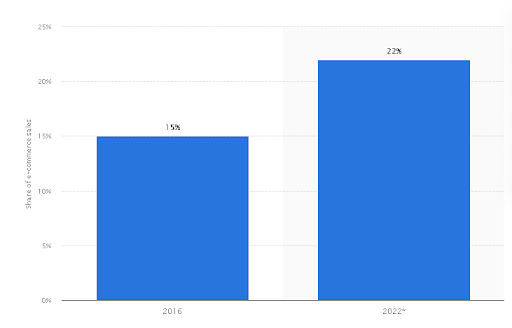
    Before taking you through the challenges that might throw your ambitious marketing plans out of track, let’s take a look at this statistic

    Source: statista.com

    This graph presents eCommerce cross-border shipping in comparison to the overall percentage of eCommerce shipments across the globe. In 2016, the cross-border market for online retailers had a 15% share, which rose to 22% in 2022.

    Besides, Statista conducted a study involving 765 e-retailers to identify challenges in cross-border shipping. Have a look at the key hurdles they identified across different categories.

    •         Problems to adhere to regulatory norms: 51%
    •         Inventory tracking of products shipped abroad: 46%
    •         Fulfilling customer’s demands with deliveries: 43%
    •         International logistics: 30%        
    •        Returning products to a different country: 24%
      Prime challenges eCommerce brands face in cross-border shipping

      Prime challenges eCommerce brands face in cross-border shipping

      Thanks to technological sophistication transforming eCommerce in the last decade, online retailers can seamlessly reach out to overseas customers. That’s what gave them an advantage over brick-and-mortar stores. With a robust cross-border eCommerce strategy, retailers are looking forward to explore fresh avenues abroad.

      Let’s take a look at the prime challenges in cross-border shipping before we bail you out with viable solutions for the same.

      1.    Regulations and restrictions in international shipping

      Although eCommerce business leaders are privileged to access a singular international market, it’s easy to run into demographic restrictions. This makes it challenging to come up with a single strategy to promote international sales and shopping. It pays to be wary of necessary permits, documentation, customs duties, and labeling formalities. 

      For example, eCommerce firms cannot ship flammable, radioactive, explosive, or any dangerous item with their weights exceeding 66 pounds to Canada.

      Likewise, the US has come up with a list of restricted items that eCommerce companies cannot ship. 

      So, while dealing with specific products, eCommerce business leaders and marketers need to understand these complexities. Respecting the legalities would help in streamlining your business.

      2.    Complex documentation processes

      Do you know that eCommerce retailers in even friendly countries like Canada and the US need to carry out extensive formalities? Documentation processes can be time-consuming and expensive while handling cross-border shipping.

      Let’s take a look at what shipping online products between these two countries involves.

      •         Shipments from the US entering Canada require a Canada customs invoice (CI1).
      •         The process involves a Bill of Landing that contains the names of items shipped. It also states the product size, weight, and contact details.
      •         Attached to this bill, there should be a commercial invoice containing detailed information on the shipment.
      •         Cross-border shipping after International online shopping also requires a signed delivery proof, validating that the intended party received the shipment.
      •         The NAFTA regulation compliance also requires a Certificate of Origin.

      Now, have you factored in the expenses associated with accomplishing these formalities?

      3.    Lack of expertise in the local market

      The lack of research on international demographics often leads to corresponding challenges with cross-border shipping. Well, while strategizing your cross-border marketing plan, you invest time and resources on research. Why not deploy the same approach while working on the freight movement?

      Shipping issues crop up unexpectedly, and these troubles can be weirdly varied from one region to the next. Once eCommerce analysts identify these patterns, they can strategize countermeasures accordingly. Consider the same tactic while configuring payment modes.

      Besides, it’s crucial to monitor online shopping trends on special days or special categories like pants that go well with black shirt. During festivals or offer seasons, the demand for delivery partners undergoes a spike. Unless you partner with a delivery agent capable of scaling their services, the chances of a bottleneck are pretty high. The last thing eCommerce retailers expect is a backlash when they fail to fulfill promised delivery deadlines

      Have a look at this statistic pointing out the major delivery issues that can put your customers away.

      Graph showing delays in deliveries continue to be the most common delivery issue faced by eCommerce brands.

      4.      Managing logistics and supply chains

      Being a player in the global eCommerce segment, you know how complicated logistics management can be. Particularly, eCommerce retailers struggle to streamline processes when it comes to managing in-transit goods, tracking orders, and meeting delivery timeframes. Border delays and multicarrier handoffs continue to bug cross-border shipping processes. For example, if you own an mobile app development company in Delhi, there are certain tools and resources you need like coding employees, appropriate IDEs, system with accurate specifications, etc. Similarly for an global ecommerce company, there are certain logistics that are mandatory for a company to have and maintain.

      5.    Basket abandonment

      As you explore customer bases beyond the border, it pays to focus on localized issues with shipment. After all, you need to deliver a domestic shopping experience to your international clientele. In this context, we would mention localizing currencies, languages, and even customer service functions.

      Even a slight deviation from this essence of localization can backfire for eCommerce retailers, as they fail to convert buyers. In an effort to streamline your cross-border shipping mechanism, focus on a powerful localized checkout mechanism. Partnering with specialized logistics and technology providers can tailor the customer experience to perfection.

      6.    Returning goods to a different country

      With globalization, customers expect flawless return policies from international eCommerce brands. To assure a satisfying online shopping experience, make sure to offer free shipping and returns.

      A customer-friendly approach to formulating your shipping and return policies ensures that you don’t lose repeat customers. At the same time, proper inventory planning takes care of your returned goods.

      One of the pain points of eCommerce retailers is their limited focus and visibility over the return process. Unless you come up with a transparent mechanism, returns can turn out to be a painstaking and expensive ordeal.Delays and longer freight movement processes are often associated with returned products. Along with these, you have tax implications, which can take a toll on your revenue.

      Resolving cross-border shipment issues: How to go about it?

      1.    Managing cross-border shipments

      What’s your counter strategy to address issues like basket abandonment and international returns?

      Successful eCommerce brands have deployed a two-pronged approach to handle the supply chain challenge. Apart from partnering with the right delivery companies for cross-border shipping, they also prioritize localized fulfillment. Compared to local shipment, cross-border shipment involves more paperwork.

       With localized fulfillment, you need to have your inventory stocked in local warehouses. These goods are to be delivered domestically to customers from these facilities. This can significantly mitigate issues like delays in freight movement across borders.

      Having logistics control towers or multi carrier software platforms in place can also simplify these challenges. This involves choosing the right plan routes and shipping partners, besides preparing export parcels before passing them on to the exporter. Working on international commercial terms management should simplify these issues. This way, eCommerce companies can reduce instances of basket abandonment.

      2.    Collaborate with a return intermediate

      Streamlining the return mechanism of shipped goods across borders requires eCommerce business minds to collaborate with end-to-end returns intermediates. As a business owner, you would prioritize protecting your costs, just as you give your customers the liberty to stick to their preferences.

      Successful eCommerce brands work with these return intermediates to facilitate parcel tracking. Deploying advanced tools, they ensure transparency and visibility in tracking supply chains. Ultimately, you need to strategize an effective cost optimization system like salvaging products, exchanging, or selling damaged products as scrap. Make sure to factor in these losses when you equate your profit margins to remain on the gaining end.

      3.    Ensure cost and taxation transparency

      Given that more than 50% of cross-border shipping issues stem from regulatory complications, it pays to ensure cost and tax transparency. Remember, people prefer purchasing merchandise from foreign eCommerce brands simply because of their convenience and price benefits. This implies that they are comfortable shelling out the price after you factor in duty fees, tax, shipping expenses, and carrier fees into the selling price of the product. All these elements influence the overall landed cost that your customers are forking out.

      To ensure compliance, be transparent and honest with the cost-break up. Customers should have complete knowledge of the overall landed cost when they make a purchase.Also, eCommerce brands should respect international regulatory norms while selling their merchandise abroad.

      4.    Automate shipment and delivery processes

      Tackling logistics hurdles during cross-border shipping calls for automation tools. Suppose, you sell a particular product to multiple overseas markets. Your website may have the same information in different languages. Why not use an automation tool for standardizing all the actions?

      Using a single tool, eCommerce brands have been controlling mail services, couriers, accounting, and warehousing systems across the globe. With this approach, streamlining operations and cross-border shipping would be easy.

      Wrapping up

      Information transparency, localization, and working closely with third-party logistics providers define the success formula for eCommerce brands. Cross-border shipping has been one of the pain points for online retailers. However, as you continue to map larger demographics, streamlining your delivery mechanism can propel you closer to success.

      Now that we have addressed all the challenges of international shipping and recommended practical solutions, how about strategizing your logistics and shipments on these lines.

  • Integrating Machine Learning into Software Development for Intelligent Applications

    Integrating Machine Learning into Software Development for Intelligent Applications

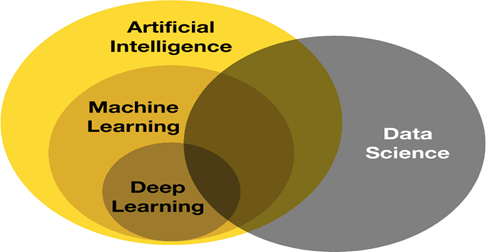
    Machine Learning is a subdivision of Artificial Intelligence. It provides computers to study data and make predictions based on the provided data. Through the analysis of large bulks of statistics and finding similar patterns, ML concepts and algorithms can support developers to design more effective, reliable, and easy-to-understand programming languages. The integration of Machine Learning into Software Development for Intelligent Applications makes it easier, faster, and more efficient. The progress of computer architecture has the potential to learn and adapt without following categorical instructions. 

    In developing software, ML can rationalize workflows, program manual tasks, and provide output to take various decisions. The implementation of ML and integration in Software supports provide huge contributions in the domain of software development and the advancement is still under development. The continuously growing technology gives a great platform for both software ad machine learning technology. The presence of huge information collections in a computer system through machine learning can save a lot of time in researching and collecting this information.

    There are various AI-based technology such as Facial Recognition, Automation based customer support systems, automatic email triggering, and forecasting based on historical data. Nowadays, these technologies and the integration of software with machine learning are continuously growing and still there is a long way to go. Artificial Intelligence and Machine Learning both are dependent and the concepts of both are interlinked. 

    There are various use cases that can give a significant impact on the integration of Machine Learning on Software Development. The clone App Development companies prefer this amalgamation of two different technology to provide better growth to software development projects. 

    Use Cases for Machine Learning in Software Development

    There are various domains where Machine Learning and Artificial Intelligence are integrated with software development. The integration provides huge support for the developers to design their codes and make the tasks easy to efficient. Here are size use cases where this integration is playing a huge role and also making things easier. 

    1. Designing Code and Optimization of Code: The best application of Machine Learning in Software Development by giving suggestions related to new code development and performing optimization on codes by implementing machine learning concepts such as by providing context-aware cipher recommendations. ML has the potential to observe the old database codes and predicts the next move of the developers and reduce the time and error in completing the codes. Developing new codes can take time whereas with the implementation of Machine Learning, it can shorten the time periods of code generation.  
    2. Testing Automation and Quality Assurance: The major critical aspect of software development which is responsible for the dependability and performance of applications. Machine Learning can provide huge support in automation testing and make it easier and more effective. Based on historical statistics, ML generates specific test cases that reduce time consumption and effort and avoid manual intervention. There are various tools that improve the testing capabilities. Automation is getting easier because ML is able to find the test cases and perform the automatic testing with better accuracy and precision. 
    3. Application Performance Monitoring: Examining the performance of applications play an important role in finding the challenges and also for better user understanding. Machine Learning can improve a large set of data and support developers by providing valuable suggestions and predictions. Machine Learning works on pattern recognition and specific performance metrics to find the bottleneck and avoid any serious issues before it can affect the user. The implementation of ML in developing software makes development easy, efficient, and cost-effective.  
    4. Decision-Making and Analytical Study: The main role of Machine Learning is predictive analysis and decision-making within the software. The probability of predicting the correct data through historical data can help developers to make the right decisions. Predictive analysis helps to proactively know the issues and resolve them as early as possible before any potential risks, For example: Based on the market standard and user inputs, ML can provide inputs for building new features to improve the opportunities and scaling it. Based on historical data, nowadays ML and AI are performing various activities and takes decisions. 
    5. Customized User Experience: In today’s software domain, personalized user experience became mandatory to fulfill the user’s individual demands and requirements. ML takes input from the user’s conduct and preferences and designs more appealing and customized experiences. Machine Learning has features of a recommendation system, adaptive consumer interface, and context-aware system which works on the input of specific users. These features provide user satisfaction and fulfill the requirement of the user correctly. The logo design company takes input from the users and customers and customizes the design based on the inputs. The ML algorithms also read the input and provide suggestions to ensure fulfillment of the user requirement. 
    6. Increase in Speed and Scale of Development: The machine learning algorithm automates several test cases and runs automatically. AI saves time and ensures good quality. It enables the system to operate on historical data and predictive analysis that reduces the failure rate and reduces the time of execution and development process. The code development requires more time to initially understand the codes and then design and generate the updates, whereas Machine Learning algorithms can analyze the previous code and based on the behavior input and data, it can automatically create the test cases and upgraded the system. 

    Conclusion: Machine Learning is changing the traditional approach of software development, providing new approaches for automation testing, and better optimization of the software. Various mobile app development companies in Delhi are implementing the ML and AI for making their tasks easier and more efficient. The role of software developers is transforming and evolving because of the integration of AI and ML. Technology is getting more progressive each day, and it will be useless to overlook the welfare that Machine Learning and Artificial Intelligence can contribute to software growth. Machine Learning can design codes and programs more efficiently. Along with artificial intelligence, it can substitute developers by programming the element placing the development of software evolution.

  • Optimizing Ad Campaigns with AI: Strategies for Higher Conversions

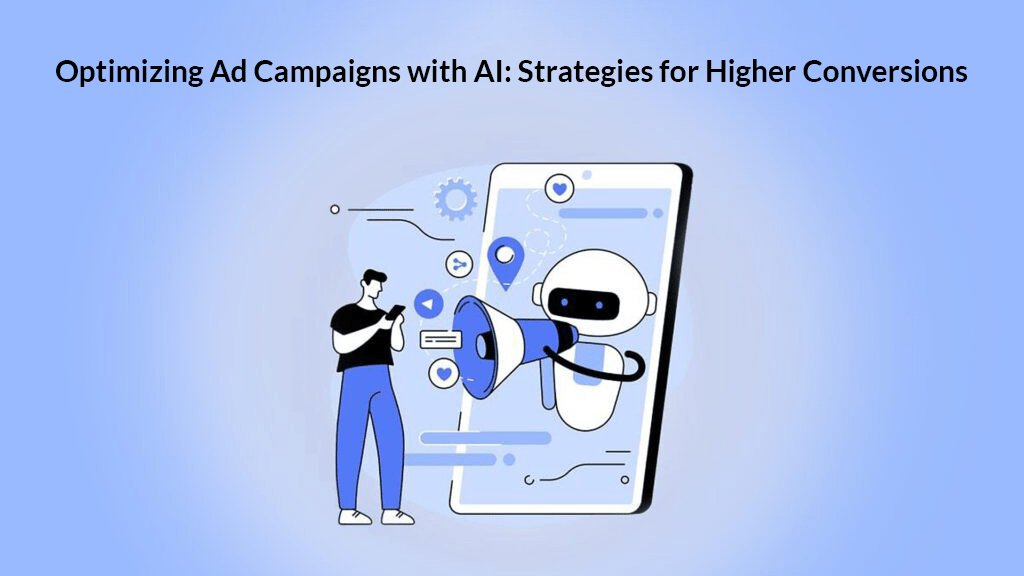
    Optimizing Ad Campaigns with AI: Strategies for Higher Conversions

    Advertising has become an ever-more-crucial tool for boosting brand recognition and sales as firms fight to stand out in a cluttered digital market. But more than simply memorable taglines and appealing pictures are needed to create effective advertising campaigns. 

    To get the best results, advertisers must continuously assess and modify their ads based on performance information. Artificial intelligence (AI) offers fresh approaches to data analysis, hypothesis testing, and ad campaign optimization in this situation. 

    This article will review effective case studies, look at obstacles and constraints, and forecast future trends while examining the best practices for applying AI in ad campaign optimization.

    The Top 5 AI Ad Campaign Optimization Techniques

    There are a number of suggested steps that companies may adhere to guarantee the greatest outcomes when utilizing AI for ad campaign optimization:

    1. Identify your objectives and advertising concept

    You can pick the best AI tools and algorithms by establishing your goals before utilizing AI to optimize your advertising efforts.

    2. Use reliable data

    The effectiveness of any AI-powered ad optimization plan significantly depends on the quality of the data. Make sure your data is correct, organized, and properly aligned. Before the data is used to train the AI models, it should be gathered from various sources and confirmed.

    3: Select the Appropriate AI Tools

    You can optimize your ad campaigns using a variety of AI technologies and algorithms. Among the well-liked ones are:

    • Predictive Analytics:

    Utilize data mining, machine learning, and other AI techniques to analyze data and make predictions about future outcomes. These insights can help you make data-driven decisions and optimize your ad campaigns accordingly.

    • Natural Language Processing (NLP):

    Leverage NLP to analyze the content of your ad copy and landing pages. This technology can ensure that your messaging is relevant and compelling to your target audience. Consider using AI-powered Content Writing & Copywriting Tools to enhance your marketing efforts.

    • Image Recognition:

    Employ image recognition algorithms to analyze the images used in your ad campaigns. This enables you to ensure that the visuals are relevant, engaging, and visually appealing to your target audience. Captivating visuals can significantly improve ad performance.

    • Audience Segmentation:

    Utilize AI to segment your target audience based on their interests, behaviors, and demographics. By understanding your audience better, you can create personalized ad campaigns that resonate with specific segments, increasing their effectiveness.

    4. Pick the Correct Metrics to Aim for

    In order to guarantee that AI algorithms can produce the best outcomes, it is essential to identify the main metrics to improve. This might be the ROI, CPA, or click-through rate (CTR) of an advertisement. When you know what to optimize for will help you ensure that your campaign focuses on achieving the results that you desired.

    5. Track and Examine Your Results

    Monitoring and analyzing your results often is crucial, even with AI-powered ad optimization. The return on ad spend (ROAS) and click-through rates are important indicators to monitor. You may then make the required changes to your ad campaigns to reflect what is and is not working.

    Case Studies

    PepsiCo:

    PepsiCo leveraged the power of AI to enhance its Facebook ad campaigns, leading to a significant boost in efficiency of 10%. Through the use of AI-driven analysis, PepsiCo was able to monitor the performance of its ads in real time and make immediate adjustments to targeting and ad creativity. Consequently, they achieved higher engagement rates and reduced costs per click, resulting in a more effective advertising strategy.

    BMW:

    BMW successfully harnessed the potential of AI to optimize their display ad campaigns, resulting in an impressive 30% increase in conversions. By leveraging machine learning algorithms, BMW analyzed extensive campaign data to identify the most impactful targeting parameters and ad creative for each audience segment. This intelligent approach enabled BMW to optimize its campaigns and deliver personalized messages that resonated with the right audience at the right time.

    Domino’s Pizza: 

    Domino’s Pizza embraced AI-powered image recognition technology to optimize its ad campaigns, yielding remarkable outcomes. By utilizing AI algorithms to analyze images of their pizzas, Domino’s identified the most appealing visuals for different target audiences. This strategic implementation resulted in a noteworthy 13.9% increase in sales and a notable 6.8% increase in conversion rates, solidifying Domino’s position as an industry leader in leveraging AI for marketing success.

    AI Ad Campaign Optimization: Challenges and Limitations

    While AI presents numerous advantages for ad campaign optimization, it is essential to acknowledge the challenges and limitations associated with its usage.

    Data Privacy Concerns 

    AI algorithms heavily rely on vast amounts of data to effectively optimize campaigns. However, this dependence raises concerns regarding data privacy and the ethical handling of user information. It is crucial for businesses to adhere to data protection regulations, ensuring that data collection, storage, and usage practices are transparent and compliant.

    Human Bias in AI Algorithms 

    Inadvertently, AI algorithms have the potential to sustain biases inherent in the data they are trained on. If the training data is biased or incomplete, the AI model may produce biased results, leading to discriminatory targeting or exclusionary practices. Businesses must be vigilant in recognizing potential biases in their data and taking proactive measures to mitigate them to ensure fair and inclusive ad campaigns.

    Technical Limitations and Implementation 

    Challenges Implementing AI for ad campaign optimization can present technical complexities and implementation challenges, particularly for smaller businesses lacking extensive technical expertise or resources. Challenges may arise due to limited access to quality data, the computational power required to run AI algorithms, and the time and resources necessary to train AI models effectively. Overcoming these hurdles often requires investment in infrastructure, talent, and ongoing technical support.

    Algorithmic Transparency and Interpretability 

    AI algorithms can be complex and opaque, making it challenging to understand and interpret their decision-making processes. This lack of transparency can hinder businesses’ ability to comprehend why certain campaign optimizations are recommended or executed. To address this limitation, efforts should be made to develop explainable AI models that provide insights into the factors influencing optimization decisions.

    Continuous Learning and Adaptation 

    Ad campaign optimization is an ongoing process, and AI models require continuous learning and adaptation to remain effective. This entails monitoring and updating the AI algorithms as campaign dynamics evolve, which can be resource-intensive and time-consuming.

    Future Trends in AI-Optimized Ad Campaigns

    Future AI-optimized advertising campaigns will see a number of significant changes. More advanced algorithms and strategies to improve campaign optimization will be developed as a result of developments in machine learning and AI technologies. This entails putting modern techniques for computer vision, natural language processing, and machine learning to use so that advertisers may make full use of AI.

    The ethical and responsible use of AI will likewise receive more attention. To ensure fairness, transparency, and accountability when employing AI in advertising, businesses will actively seek to set standards and best practices. Promoting inclusive and objective marketing campaigns will be a goal, as will addressing prejudices and discriminatory effects.

    Additionally, there will be an increase in the integration of AI with other marketing technologies. Marketers will be able to construct highly targeted and personalized ad campaigns thanks to AI’s seamless integration with customer relationship management (CRM) systems and marketing automation technologies. Personalized messaging and captivating content will be delivered as part of this connection, improving the customer experience.

    Overall, the future of AI-optimized ad campaigns holds promising advancements, ethical considerations, and integration with complementary marketing technologies, empowering businesses to achieve more impactful and successful advertising strategies.

    Final Verdicts

    Although AI is an effective tool for ad campaign optimization, human monitoring, and input are still necessary. Businesses may boost effectiveness and efficiency in reaching their aims and objectives by adhering to best practices and utilizing leading AI marketing solutions. The optimization of advertising campaigns can achieve better outcomes when human knowledge and AI-driven insights are combined.

    Are you looking to reinvent your mobile presence? Appslure – the leading mobile app development company in Delhi, provides top notch custom application development services for all kinds of businesses.

  • How Technology Help Business Growth?

    How Technology Help Business Growth?

    Introduction

    In the fast-paced and ever-evolving landscape of business, technology has emerged as a key driver of growth and success. In today’s digital era, businesses must embrace technological advancements to stay relevant, competitive, and efficient. From small startups to large corporations, integrating technology into various aspects of their operations has become a necessity for sustainable growth and enhanced customer experiences.

    This blog explores the importance of technology in modern business, highlighting its role in driving growth and providing insights into various ways it revolutionizes industries. Let’s delve into why technology is crucial in today’s aspect, how technology has become an indispensable aspect of the business world and how it helps companies thrive and excel.

    Why Technology is Crucial in Today’s Aspect?

    In the 21st century, technology has permeated every aspect of our lives, influencing how we communicate, access information, and conduct business. From smartphones and social media to cloud computing and artificial intelligence, technology has transformed the way we interact, consume, and produce goods and services.

    In the business realm, technology acts as a catalyst for growth, enabling companies to streamline processes, innovate, reach wider audiences, and stay ahead of the competition. Embracing technology is no longer a choice but a strategic imperative for organizations aiming to thrive in an increasingly interconnected and digital world.

    • Improved Efficiency and Productivity: Technology-driven solutions streamline operations, automate tasks, and boost overall efficiency, saving time and costs.
    • Enhanced Communication and Collaboration: Technology bridges geographical barriers, enabling real-time communication, efficient teamwork, and better decision-making.
    • Access to Global Markets: Digital technologies provide opportunities to expand reach, connect with customers worldwide, and drive revenue growth.
    • Data-Driven Decision Making: Technology allows businesses to collect and analyze data, gain valuable insights, and make informed decisions and strategies.
    • Improved Customer Experience: Technology enhances customer interactions, automates support, and offers convenient self-service options, increasing satisfaction and loyalty.

    How technology empowers Business Growth?

    Technology serves as a powerful catalyst for business growth, enabling organizations to streamline operations, expand market reach, make data-driven decisions, and enhance customer experiences. The following points illustrate how technology empowers businesses to thrive and achieve sustainable growth.

    • Enhancing Productivity through Technological Solutions 

    Technology offers numerous tools and solutions that significantly enhance productivity and efficiency within organizations. Here are some key areas where technology plays a crucial role:

    • Automation and Streamlining Processes – 

    One of the most significant advantages of technology in business is its ability to automate repetitive tasks and streamline processes. With the advent of artificial intelligence (AI) and machine learning (ML), businesses can automate routine activities, such as data entry, inventory management, and customer support. 

    This frees up valuable time and resources, allowing employees to focus on more strategic and value-added tasks, ultimately boosting productivity and improving overall operational efficiency.

    • Collaborative Work Environments 

    Technology has revolutionized the way teams collaborate and communicate in the workplace. Cloud-based project management tools, real-time messaging platforms, and video conferencing software have made it easier for employees to work together regardless of their geographical locations. These collaborative work environments foster better teamwork, knowledge sharing, and decision-making, leading to increased productivity and better outcomes.

    • Data Analytics and Insights 

    Access to vast amounts of data has become a valuable asset for businesses. Technology enables organizations to collect, analyze, and gain insights from data, providing them with a competitive edge. Advanced analytics tools and algorithms help identify patterns, trends, and customer preferences, allowing businesses to make data-driven decisions, optimize operations, and identify new growth opportunities.

    • Expanding Market Reach through Technological Innovations 

    Technology has dramatically expanded the reach and potential market for businesses. Here are some ways in which technology facilitates market expansion:

    • E-commerce and Online Presence – 

    The rise of e-commerce has revolutionized the retail industry, enabling businesses to reach customers beyond their physical locations. Online marketplaces and digital storefronts provide an opportunity for businesses to sell their products and services globally, 24/7. Moreover, the availability of secure online payment gateways and logistics solutions has made transactions seamless and convenient, further driving business growth.

    • Digital Marketing and Advertising –  

    Traditional marketing approaches have been augmented by digital marketing strategies, which leverage technology to target specific audiences, personalize messaging, and measure campaign effectiveness. Few of the examples are below

    • Search Engine Optimization (SEO)

    The future of SEO holds exciting prospects as technology continues to advance. With the rise of voice search and AI-driven algorithms, businesses must adapt their SEO strategies to provide seamless and relevant experiences to users. These techniques enable businesses to improve their online visibility and organic search rankings. By optimizing website content, keywords, and Meta tags, businesses can attract more visitors to their websites and increase the chances of converting them into customers.

    • Social Media Marketing

    Social media platforms have become powerful marketing tools, allowing businesses to engage with their audiences on a personal level. Through targeted advertising, content creation, and community building, businesses can build brand awareness, foster customer loyalty, and drive traffic to their websites.

    • Email Marketing

    Email marketing is a powerful tool that leverages technology to drive business growth. With personalized and targeted email campaigns, businesses can reach their audience directly, leading to increased brand awareness, higher customer engagement, and improved website traffic. Studies show that for every $1 spent on email marketing, businesses can expect an average return of $42, making it a cost-effective and impactful strategy for driving business growth.

    Search engine optimization (SEO), social media marketing, and email marketing are just a few examples of digital marketing techniques that help businesses increase brand visibility, attract new customers, and generate leads, ultimately contributing to business growth.

    • Mobile Technologies 

    The widespread adoption of smartphones and mobile applications has transformed the way consumers interact with businesses. Mobile technologies offer businesses the opportunity to engage with customers anytime, anywhere. 

    Mobile apps provide convenience, personalized experiences, and enhanced customer service. Moreover, location-based services and push notifications enable businesses to deliver targeted promotions and offers, driving customer engagement and loyalty.

    • Fostering Customer Engagement through Technological Advancements 

    Technology has empowered businesses to connect and engage with customers in more meaningful ways. Here are some key technological advancements fostering customer engagement:

    • Customer Relationship Management (CRM) Systems –

    CRM systems help businesses manage and nurture customer relationships effectively. These systems centralize customer data, track interactions, and enable personalized communication. With access to comprehensive customer profiles, businesses can deliver customized experiences, tailor offerings, and provide prompt customer support. This not only enhances customer satisfaction but also builds long-term loyalty and advocacy.

    • Chatbots and Virtual Assistants 

    Chatbots and virtual assistants have become increasingly prevalent in customer service operations. These AI-powered solutions can handle routine inquiries, provide instant support, and even assist with product recommendations. By offering quick and efficient assistance, businesses can enhance the customer experience, improve response times, and increase customer satisfaction levels.

    • Social Media Engagement 

    Social media platforms have become powerful tools for businesses to engage with customers directly. Companies can use social media to share valuable content, gather feedback, and address customer concerns in real-time. Social media listening tools allow businesses to monitor brand sentiment and customer conversations, enabling proactive engagement and reputation management.

    • Collaborating and Communicating with Remote Teams

    In the era of remote work, technology plays a crucial role in enabling collaboration and communication among geographically dispersed teams.

    • Virtual Meetings and Conferencing

    Video conferencing tools have become essential for businesses to conduct virtual meetings, training sessions, and client presentations. These tools eliminate the need for physical travel, reduce costs, and foster effective communication and collaboration across distances.

    • Cloud-Based Collaboration Tools

    Cloud-based collaboration tools, such as project management software, document sharing platforms, and team communication apps, allow remote teams to work together seamlessly. These tools enable real-time collaboration, version control, and centralized access to files, promoting efficiency and productivity.

    Expanding Market Reach through Technological Innovations 

    Technology has dramatically expanded the reach and potential market for businesses. In today’s digital landscape, businesses can leverage various technological strategies to reach their target audience and drive growth. For instance, working with a reputable mobile app development company in Delhi can help businesses capitalize on the widespread adoption of smartphones and mobile applications.

    Mobile technologies offer businesses the opportunity to engage with customers anytime, anywhere. By developing a user-friendly and feature-rich mobile app, businesses can provide convenience, personalized experiences, and enhanced customer service. Furthermore, with the help of a skilled mobile app development company, businesses can leverage location-based services and push notifications to deliver targeted promotions and offers, driving customer engagement and fostering loyalty.

    Conclusion

    Technology has become an indispensable catalyst for business growth. From streamlining operations and improving communication to driving innovation and expanding markets, technology empowers businesses to adapt and thrive in a rapidly changing landscape. 

    Embracing the latest technological advancements and leveraging data-driven insights will enable businesses to gain a competitive advantage, enhance customer experiences, and unlock new opportunities for growth. As we move forward, businesses must continue to embrace technology and harness its power to fuel their success.

  • Swift vs Flutter: Which Framework is Best for iOS App Development?

    Swift vs Flutter: Which Framework is Best for iOS App Development?

    iOS is one of the most popular platforms for mobile app development company in Delhi, which has seen a meteoric rise in popularity in recent years. The challenge of deciding which framework to use is common for iOS app developers. Swift and Flutter are two popular choices available today. 

    Professional software developers use Swift at 6.1% percent. Swift is Apple’s proprietary programming language, whereas Flutter is Google’s open-source user interface toolkit. In this post, we’ll examine the similarities and differences between Flutter vs Swift so you can decide which framework to use while creating an iOS app.

     1. Overview of Swift and Flutter:

    Swift: 

    Swift, first released by Apple in 2014, has now become the de facto standard programming language for creating apps for Apple’s iOS, macOS, watchOS, and tvOS platforms. 

    It’s an advanced language with many useful features, including type inference, optionals, closures, etc. It’s also swift and decisive. Swift’s programming language has gained acclaim for its security, clarity, and efficiency.

    Flutter: 

    Flutter is a newer framework that was introduced by Google in 2017. It enables programmers to create cross-platform applications that look and feel native on iOS, Android, the web, and desktop computers while requiring only a single code change set. 

    Flutter is an open-source mobile app development framework that uses the Dart programming language and provides various pre-made widgets, a reactive framework, and a hot-reload option.

     2. Development Experience:

    Swift: 

    Swift gives iOS programmers a language they are already comfortable with and productive. It’s easy to use iOS-only features since it works well with native frameworks and libraries. 

    Apple offers a wealth of documentation, tutorials, and example code for the Swift programming language. It also has a well-developed ecosystem with various third-party libraries and tools.

    Flutter: 

    Flutter’s “write once, run anywhere” philosophy makes it a novel platform for creating apps. Flutter’s widget technology allows developers to create highly personalized and adaptable user interfaces. 

    Developers may instantly see the effects of their work using Flutter because of its hot-reload capability. However, Flutter’s ecosystem and community support are still developing due to the platform’s youth.

     3. Performance and Responsiveness:

    Swift: 

    Swift has the benefit of being directly integrated with iOS frameworks and technologies since it is Apple’s native language. It can use platform-specific optimizations, leading to fast, responsive applications. 

    When dealing with CPU-intensive activities or displaying graphics, Swift’s speed becomes immediately apparent. Furthermore, Swift provides low-level control over memory management, which is helpful for apps that use many system resources.

    Flutter: 

    Flutter’s native rendering engine makes platform-specific UI components redundant, leading to a uniform user interface (UI) across all supported devices. Skia, a robust graphics engine, enables its excellent performance. 

    However, compared to native applications, Flutter apps may experience a modest performance hit due to the layer they run on. There is usually minimal noticeable variation in performance between Flutter releases.

     4. User Interface and Customization:

    Swift: 

    Using Swift, programmers may use Apple’s prescribed UI components and practices for iOS. Using Interface Builder or code, developers may build elegant interfaces optimized for a particular platform. Apple’s UI frameworks, such as UIKit and SwiftUI, allow for a wide range of customization and support complex animations and transitions.

    Flutter: 

    When creating user interfaces, Flutter does things differently. It offers a collection of adjustable widgets that are rendered using Skia. Using these widgets, programmers may generate user interfaces that are both versatile and aesthetically pleasing. 

    Designers may make their one-of-a-kind UI elements with Flutter since the constraints of native components don’t restrict it. However, platform-specific UI components might be difficult to recreate in their same appearance.

     5. Third-Party Libraries and Ecosystem:

    Swift: 

    Swift’s ecosystem has developed to the point that it offers a wealth of useful third-party libraries and tools. The Apple Developer community has a lot of activity, and its members contribute to many open-source initiatives. 

    Programmers may include shared libraries for communication, data storage, analytics, and more. In addition, Apple’s frameworks like Core Data, Core Animation, and Core ML are well-supported in Swift.

    Flutter: 

    The Flutter ecosystem is expanding but has gained much steam in recent years. It provides a wide variety of packages and plugins for a wide variety of purposes, including networking, database integration, state management, and more. 

    Flutter’s package ecosystem is less vast and well-developed than Swift’s, so developers may need to depend on bespoke integrations or contribute to the community to meet specific needs.

     6. Community Support and Documentation:

    Swift: 

    Apple’s dedicated developer community and comprehensive documentation are two of Swift’s many strengths. Apple offers a wealth of resources through its developer site, including documentation, sample code, and tutorials. 

    In addition, many online groups, forums, and resources are devoted only to Swift, allowing developers to discover solutions to problems or ask questions more easily.

    Flutter: 

    The number of people using Flutter has increased dramatically since its debut. A vibrant, engaged developer community regularly contributes to open-source initiatives and freely exchanges information. 

    You can find extensive resources on the Flutter website, including tutorials and instructions. Although the Flutter community is quite active, it may still be smaller than the Swift community, making it more challenging to discover targeted answers to more intricate issues.

     7. Platform Support and Future Prospects:

    Swift: 

    Swift was explicitly developed for making apps for Apple’s iOS, macOS, watchOS, and tvOS platforms. Swift is Apple’s official programming language. Therefore, the company supports it fully. Given Apple’s dedication to further developing Swift, the language is likely to continue playing a significant role in the best iOS app development for the foreseeable future.

    Flutter: 

    Flutter is a cross-platform app development framework. It can create programs for desktops, laptops, and mobile devices. The ability to share code across platforms is a huge time saver for programmers. 

    The future of Flutter is bright since it has recently increased in popularity. However, given it is not a native framework, you should be aware of the possible 

    dangers of depending on a non-native solution.

     8. Development Speed and Iteration:

    Swift: 

    Swift’s excellent IDE (Integrated Development Environment), Xcode, allows for a short iteration time during development. Xcode’s extensive development tools will enable you to create anything from the ground up, with features like code autocompletion, debugging, and a visual interface builder. The rapid iteration made possible by Swift and Xcode helps to keep development times down.

    Flutter: 

    Flutter’s hot-reload capability is a huge boon to development efficiency. This facilitates real-time experimentation, iteration, and refinement of the user interface by letting developers view the results of their coding changes in near real-time. Thanks to hot reloading, developers can quickly construct and test UI components, drastically shortening the development cycle.

     9. Learning Curve:

    Swift: 

    Swift is an accessible programming language, particularly for programmers with a C, C++, or Objective-C background. It’s a contemporary language with a strict focus on type safety and concise syntax. Since Apple gives so much in the way of documentation and resources, learning Swift is a breeze.

    Flutter: 

    Swift is an accessible programming language, particularly for programmers with a C, C++, or Objective-C background. It’s a contemporary language with a strict focus on type safety and concise syntax. Since Apple gives so much in the way of documentation and resources, learning Swift is a breeze.

     10. Maintenance and Updates:

    Swift: 

    The dedication of Apple to developing new features for Swift and its environment is a boon to the language. Apple often provides updates that fix bugs and security risks while introducing new features and improving performance. Swift’s upgrades are frequently backward-compatible, making upgrading easy while still working with old code.

    Flutter: 

    Both the Flutter community and Google are responsible for releasing new versions of Flutter. The framework has a regular release cycle that sees changes and new features added often. 

    While some revisions enhance and extend existing functionality, staying current with the modifications and ensuring backward compatibility may involve extra work. However, the Flutter community and documentation give tools to help developers efficiently handle upgrades.

     11. App Store Approval Process:

    Swift: 

    Since Swift is Apple’s homegrown programming language, applications written in Swift get official backing from Apple’s App Store standards. Apple promotes Swift and offers materials to guarantee its usage and compatibility. The approval process for Swift applications is often straightforward, with fewer constraints and fewer worries about compliance.

    Flutter: 

    iOS applications built using Flutter are reviewed like any other iOS app. Apps built using cross-platform frameworks like Flutter are generally well-received, although there have been instances of rejection or extra inspection in rare cases. While it will make little difference in approval, developers should pay attention to Apple’s criteria and ensure they’re followed.

     12. Team Composition and Skill Availability:

    Swift: 

    Since Swift has gained so much popularity, many talented iOS programmers are fluent. Due to Swift’s ubiquity and established presence in the iOS development community, finding Swift developers or adding to an existing team with Swift experience is often accessible.

    Flutter: 

    The need for developers is growing as Flutter’s popularity grows. However, the number of skilled Flutter developers may still be fewer than that of Swift programmers. If platform-specific optimizations or complex integrations are required, hiring or educating developers with experience in Flutter may be necessary.

     13. Cost Considerations:

    Swift: 

    Using Swift to build for iOS requires just the standard tools and resources already in place, such as Mac machines and an Apple Developer Program membership. As a result of Swift’s robust library ecosystem, developers may save money by not having to pay for proprietary software.

    Flutter: 

    It’s free to create apps using the Flutter framework. However, extra testing efforts may be needed when using flutter for cross-platform development to guarantee reliable behavior and performance across various devices and operating systems. When opposed to concentrating on Swift for native iOS development, this may lead to somewhat more significant development and testing expenditures.

    Conclusion 

    Choosing between Swift and Flutter for iOS app development relies on numerous aspects, including your project requirements, developer experience, performance demands, UI flexibility, and ecosystem support. Swift offers native-like performance, platform interoperability, and a smooth programming experience. 

    In contrast, Flutter boasts platform support, speedy user interface creation, and a rapidly expanding user base. When deciding between Swift and Flutter, weighing all of these considerations in addition to your project’s unique requirements is essential.


  • The Role Of Artificial Intelligence In Enhancing Mobile Apps User Experience

    The Role Of Artificial Intelligence In Enhancing Mobile Apps User Experience

    Introduction Of Artificial Intelligence and Its Power In Today’s World 

    The advancement of mobile devices and the ravishing growth of applications and their stores have increased their demand for modified mobile applications giving enhanced experience to users with their futuristic functionalities.

    This is why mobile app developers are constantly assessing innovative ways to utilize advancements and trending tools to improve mobile applications’ design and development process. 

    The Technological Breakthrough of Our Generation

    Artificial Intelligence, also known as AI, has shifted the role of mobile app development. It is one of the most essential technological enhancements made in recent years. It is a branch of computer science made to impersonate human intelligence. 

    Artificial intelligence is used not just by one mobile application development company but many in multiple industries, including healthcare, finance, and transportation. All of them are developing mobile apps based on Artificial intelligence. 

    Technologies with Artificial intelligence integrated into them have the potential to program developmental processes and understand user preferences to deliver personalized experiences. We will explore how Artificial Intelligence is transforming and shifting the curve of mobile app development and its design. 

    Influence Of Artificial Intelligence on The Transformation of Mobile App Development

    Artificial intelligence is frequently finding its way into mobile app development, changing the ways developers initiate app design, maintenance, and testing. 

    Enhancing User Experience and Personalization

    Artificial Intelligence can quickly analyze user behavior, preferences, and patterns of usage to conduct a profound evaluation to deliver a personalized app experience.  By knowing the needs of the user and firmly adapting content, mobile apps are incorporating AI in order to provide experiences that will power up the engagement and satisfaction of the users. 

    Refined Productivity and Process Automation

    Applications that are automatically powered by Artificial Intelligence can speed up many development and testing procedures. Developers can concentrate on more essential parts of creating apps by equipping automating repetitive processes, boosting productivity, reducing development time, and lowering costs.

    Well Defined Security

    Security tools that Artificial Intelligence engineers can easily evaluate user behavior and their patterns to identify upcoming threats, providing a safe route to the given or collected data and boosting the overall app security. 

    AI-Driven Analytics 

    Analytics generated by Artificial intelligence can process massive volumes of data to validate perspective findings, giving a helping hand to developers in improving the efficiency and functionality of their apps. Developers may select programs wisely to enhance app updates and developments by monitoring user trends.

    Artificial Intelligence Used for Conversational Interactions

    Users can interact and communicate with mobile apps in more natural and general ways thanks to chatbots and virtual assistants that are generated by Artificial Intelligence. These conversational user interfaces can enhance the usability of apps by enabling users to get help and information in a human-like manner.

    Better Performance and Energy-efficient 

    The use of memory and data storage resources, such as battery and memory usage, can be effectively managed by Artificial intelligence, which improves the performance and efficiency of mobile applications, making the user feel pleasant while using the app. 

    Resourceful AI-Driven Trends In Mobile Application Development 

    Developers developing unique mobile apps continue to learn more about the power of Artificial intelligence. There are several trends emerging and finding their way to the top mobile apps. These trends are prepared to shape the near future of every mobile app development company. Here are some trends which are generated by AI to integrate into mobile applications and their development. 

    Voice-Based Interfaces For Users: 

    Speech recognition and usage of natural language processing algorithms generated by Artificial Intelligence are creating an increasing number of voice-enabled apps. Every mobile app development company in Delhi is developing mobile apps by integrating Artificial Intelligence. Designing user interfaces makes it simpler for consumers to utilize voice commands to engage with apps and gain advanced information.

    Chatbots Widely Integrated In Mobile Apps: 

    With the help of Artificial intelligence, chatbots are rapidly being included in mobile apps to provide compatible user contact and experience. A unique user experience is ensured by AI-driven chatbots, which can comprehend natural language and questions to learn from user interactions to generate appropriate and relevant responses.

    Predictive Text and Emotions Recognition: 

    Detecting facial expressions, speech patterns, and text inputs is another trending tool powered by Artificial Technology, AI-powered emotion-evaluating technology can analyze and comprehend human sentiments easily. Developers can utilize this power to create apps that react to user emotions and increase user engagement through emotional connection. 

    Systems for predictive text input powered by Artificial intelligence are developing quickly, improving the speed and accuracy of text input. The efficiency of typing is increased by these systems, which examine user input patterns, anticipate the next word or phrase, and adapt to the user’s writing.

    Wrapping Up 

    The role of artificial intelligence in mobile app development is growing rapidly. By embracing innovative ideas to open doors for entrepreneurs, it can provide extraordinary user experiences. The innovative and creative AI-driven trends in mobile application design and development are making mobile apps more advanced and will open a portal of opportunities soon. Users consume digital content and interact with their devices engagingly and intuitively to construct a path toward new possibilities. Artificial intelligence will also allow better protection and security against coming threats and breaches that can harm your privacy. 

    AI will be used to defend against potential risks and safeguard provided data. Implementation of AR and VR technology will soon begin in devices that will use Artificial intelligence to offer users more interactive experiences that will blend both digital and physical worlds. Devices will be able to update and redefine themselves depending on their feedback and usage patterns, providing continuous technical improvements and developments without the need for a developer. 

    Mobile applications would be able to offer enhanced and modified functionalities by using Artificial Intelligence technology, including natural language processing, machine learning, computer vision, and speech recognition. Furthermore, they can be more user-friendly, interpret complicated input formats, and be more contextually relevant for users.

    It’s very important to understand that AI in this circumstance does not just refer to computers with complete self-aware intelligence. Instead, it is a general phrase used to describe a variety of algorithms utilized by online and mobile app developers that are powered by artificial intelligence.