Author: admin

  • Top Effective Ways to Reduce Time to Market for Web Design Projects

    Top Effective Ways to Reduce Time to Market for Web Design Projects

    In this fast-paced digital landscape, releasing a project within a definite time limit is crucial. Businesses in the current time are striving to ensure that projects or products are launched within a very short period. A faster time to market (TTM) plays a definite role in ensuring a product steadily stands out. This is because if a project or product is rightly launched at the exact time, it has a chance to cater to the maximum users. Additionally, turnaround time can either make or break a project’s reputation in the market. Projects completed and developed faster by India’s best web design company have created a better user impression. Let’s look at the top strategies that could be utilized to reduce the overall time to market for better value.

    Clear Project Scope and Objectives 

    The first thing to consider when deciding upon the overall time to market is the exact scope and value of the project. If the same objectives and scope of the project are clear, it will help to set the target in advance. This foundational step prevents scope creep, where additional features or changes are introduced during the project. Moreover, when everyone has a definite understanding of the entire project scope, it helps them to work faster. Proper clarity also provides users with the need to be aware of the exact project challenges well in advance. 

    Agile Development Methodology

    Another effective approach is adopting an Agile methodology for project management. This method involves completing the project into smaller tasks or sprints, allowing for incremental development and rapid iterations. This also facilitates better adjustments and values for the project that could be handled. This facilitates continuous improvement and enables faster adjustments based on feedback, enhancing collaboration and minimizing the risk of lengthy delays. When looking for the right web design company in India, be sure to analyze whether agile methodologies are available. 

    User-Centric Design

    Users now prefer website designs that are directly curated for their value. When developing a website from India’s best web design company, it is important to check this parameter. To rightly identify the user design, the best way to analyze it is by conducting proper user research. This directly emphasizes the user research and their demand over time. Adequate identification of exact user demands helps reduce chances for major design revisions later in the long term. 

    Content First Approach

    Content utilization is often overlooked when getting a website designed by Top web designing companies in India. Most website design projects are processed without the content and added at the end. This makes the entire design process quite difficult and time-consuming. The best way to deal with this situation is to follow a significant content-first approach. In this process, the definite content will be decided first, and then the design will be curated. This approach ensures design elements integrate seamlessly with the content, mitigating any last-minute adjustments.

    Collaboration and Communication

    Maintaining open and regular communication among team members, stakeholders, designers, and developers is pivotal. Tools like project management software, effective version control systems, and real-time communication platforms facilitate streamlined collaboration. This seamless communication minimizes misinterpretations and keeps the entire project on track. This also helps to ideally find the exact issue when processing a project for better value and measure. 

    Parallel Workstreams

    The parallel workstream is one of the best practices that can be utilized for better and more efficient project improvement. This involves the working of different aspects like development, design, and testing, all done simultaneously. Proper analysis and differentiation of this workstream ensures that the work is completed within a concise period. When adopting this practice, the best value is that none of the tasks tends to overlap for any dependencies.  

    Automated Testing

    The digital shift has readily been utilized in several sectors for better and assured value. In the project development phase, the measure of automated testing is a definite and significant approach. Using automated testing tools reduces the overall manual effort spent on bug fixing and other challenges. Automated tests tend to run efficiently and consistently by rectifying the issues early in development. This not only ensures functional consistency but also reduces the chances of delays caused by extensive testing phases.

    Minimize Customization

    It is true that having a unique design is a mandate to have a definite brand identity. But it is also needed to ideally balance the customization of this branding in a design project. Other than looking for an extensive range of customization, the best value is to leverage a pre-built plugin or component that aligns with the project. Proper leveraging of used product help to facilitate work in a better way by reducing excess complexities. 

    Streamline Approval Processes

    Delays in design and content approvals can significantly impact the project timeline. To mitigate this, establish clear workflows for review and approval. Define influential roles and responsibilities for stakeholders involved in the approval process in a website development company. Implement tools or platforms that facilitate feedback and centralize communication, allowing for quicker resolution of concerns and faster decision-making.

    Single-Page Applications (SPAs)

    Single-page applications (SPAs) offer a modern approach to web design by loading content dynamically without refreshing the entire page. This leads to a faster and more seamless user experience. SPAs are particularly effective for projects with complex user interfaces or applications that require real-time updates. SPAs contribute to shorter load times and improved user engagement by reducing the need for full-page reloads. This helps streamline the project completion process and the time to market for assured help. 

    Optimize Images and Media

    In a website design, content is not all; there are definite images. After all, these images directly create an impact on the overall appearance of the website pages. This is why photos are mostly compressed in most web design & development companies. When compressing these images, it is necessary to consider that the quality is analyzed correctly. Now, businesses look for both website and mobile optimization for maximum user satisfaction. Therefore, optimizing images for mobile applications from a trusted mobile app development company is necessary. Proper image analysis helps eliminate issues like lazy loading of web pages and other issues. Consequently, images in the development phase reduce overall time to market.

    Using Code Generators

    Code generators and code snippets are definite tools that automate the process of creating repetitive code segments. These tools are helpful for form validation, button styling, and other standard functionalities. When the code generators are effectively used, it helps to reduce the overall coding time by minimizing errors. Using the correct code generators facilitates quicker time to market for web design projects. 

    Continuous Integration and Deployment (CI/CD)

    Implementing the CI/CD pipelines correctly involves automating the overall process of integrating code changes, testing them, and deploying updates to the website. This approach ensures that new code changes are seamlessly integrated into the project. Optimizing this practice offers a smaller time to market for the project. Correct implementation of CI/CD also helps to promote an efficient development process for rapid iterations. 

    Conclusion

    To conclude, the time-to-market strategies outlined above offer a comprehensive framework for reducing web design projects’ overall time to market. A definite user-centric website can be curated in no time through the proper combination of effective planning, collaboration, and development. A shorter time to market not only enhances customer satisfaction but also positions businesses to thrive effectively. However, it is crucial to do proper research and then choose the best Web design company in India. After all, an assured result helps to offer maximum value for the project in the market.


  • Role of Service Virtualization in Software Testing

    Role of Service Virtualization in Software Testing

    Software applications plays a significant role in how businesses offer their goods and services. These apps’ creation and testing, however, can be difficult and time-consuming. The accessibility and availability of dependent systems or services during software testing is one of the major problems that enterprises confront. When certain components or services are not yet accessible or are being developed, developers and testers frequently require assistance to overcome obstacles in traditional software testing methodologies.

    These dependencies may be on external systems, databases, application programming interfaces, or outside services. Such unavailability can impede testing, extend the duration of projects, and raise expenses. Therefore, it is critical to address this issue and discover a solution that allows for thorough and efficient testing while reducing dependencies. This is where software testing company using service virtualization comes into play.

    What does software testing service virtualization entail?

    Software testers can replicate the behaviour of dependent systems or components that are not easily accessible during the testing process using the service virtualization technique. It entails simulating these dependencies virtually so that testers may interact with them as if they were actual systems or components. By removing the limitations created by unreliable or expensive dependencies, service virtualization offers a controlled and scalable environment for testing. The following list of factors highlights the significance of service virtualization in software testing:

    • Give testers the ability to replicate a variety of scenarios, increasing test coverage by simulating the actions of reliant systems.
    • Reduce costs by eliminating the need to access and maintain expensive dependent systems or components.
    • Create a testing environment that is stable and dependable by removing the instability brought on by the unavailability or inconsistent behaviour of dependent systems
    • Enable communication and cooperation amongst the many teams participating in the software development lifecycle.
    • Handles numerous test scenarios and adapts to various contexts, enabling organisations to grow their testing operations with ease.

    Use Cases for Service Virtualization

    Software testing organisations can overcome difficulties with integrating with other systems, testing in parallel, and load testing by using the effective approach of service virtualization. Let’s examine a few prominent use scenarios where service virtualization excels:

    Simulating Incomplete or Unavailable Services

    Teams frequently want assistance with dependant services that are accessible during testing during the software development lifecycle. Testers can build virtual duplicates of these services thanks to service virtualization. QA engineers may continue their testing efforts without being hampered by the absence of required dependencies by mimicking their behaviour, responses, and performance characteristics. This use case makes sure that testing may continue without interruption and still produce precise and trustworthy findings, even when some services are not entirely available.

    Integrating with other systems for testing

    Integrations with external databases, APIs, and payment gateways are common in modern software applications. However, due to a number of restrictions, gaining access to these systems for testing can be time-consuming. Testers can build virtual versions of these external systems thanks to service virtualization. By modelling their interactions, reactions, and data transfers, testers may extensively test the integration points and guarantee flawless communication between the application and external systems. It gives companies the ability to see integration problems early in the development process and fix them, resulting in a seamless deployment.

    Load testing and concurrent testing

    In complex software designs, several components or services may be interdependent, necessitating simultaneous testing. Parallel testing is made possible by service virtualization by separating these dependent components. To save the time needed for thorough testing, QA specialists might build virtualized versions of the dependent services and perform tests on them simultaneously. In addition, service virtualization makes it possible to undertake load testing, in which virtualized services may be ramped up to mimic heavy user traffic and put the performance of the mobile app development company in Delhi under pressure. Businesses may use it to pinpoint performance bottlenecks, assess the system’s scalability, and confirm that the application can manage the anticipated demand.

    Testing in Parallel Development and Isolation

    Multiple teams work on many components or modules at once in large-scale software development projects. But the absence of reliant services might result in dependencies amongst teams, which can cause delays and coordination issues. Because each team may make virtual copies of its dependent services, service virtualization enables testing in isolation. Teams may operate individually and carry out their tests without depending on other teams thanks to this. It encourages concurrent development, guarantees effective teamwork, has shorter development cycles, and streamlines software delivery.

    Testing Automation Using Service Virtualization

    Software development cannot be completed without automation testing, which enables businesses to complete testing cycles more quickly and with more assurance. It entails utilising software tools to run pre-written test scripts and validate an application’s behaviour. Additionally, it expedites the testing process by doing away with human labour and tedious duties.

    Automation testing frameworks give developers and testers an organised way to create and run test scripts, allowing organisations to increase test coverage and receive quicker feedback on the calibre of their software applications. However, it frequently runs into problems during testing since dependent services or components may be down or have restricted functionality.

    Service virtualization’s function in automated testing

    By resolving the issues of dependence on other systems or components, service virtualization plays a significant part in automated testing. It provides the following advantages:

    • It makes a guarantee that automation tests can still run even when dependent services are unavailable. The outcomes of automated testing are solid and dependable since testers can rely on virtualized services to deliver consistent and predictable findings.
    • Service virtualization allows QA engineers to replicate various service configurations, circumstances, and exceptions, guaranteeing thorough test coverage and spotting possible problems before they occur in actual use.
    • Because testers can run tests even when the services are down, automated testing can be completed more quickly. As a consequence, test efficiency is increased since testing time is cut down and flaws may be found more quickly.
    • Organisations can save money over time by adopting virtualized services instead of accessing and maintaining the fundamental dependant services for testing needs.

    It is essential to smoothly integrate it with current test automation frameworks in order to completely take use of its advantages. Frameworks for test automation make it possible to create and run automated tests. These frameworks can contain service virtualization tools and technologies, allowing testers to quickly add virtualized services and replicate the behaviour of dependent systems in their automation scripts.

    Service virtualization advantages for software testing

    Numerous benefits of service virtualization assist companies in overcoming typical testing difficulties. Let’s look at some of the main advantages of service virtualization in software testing and quality assurance engineering to see how it enables enterprises to get better outcomes:

    Getting rid of bottlenecks and dependencies

    Service virtualization’s capacity to do away with reliance on other systems throughout the testing process is one of its main advantages. Even when the real services are unavailable, under construction, or have limitations, testers can still conduct tests. It removes dependencies’ bottlenecks, enabling testing to proceed quickly and effectively.

    Early and Continuous Testing Facilitation

    Organisations may start testing earlier in the software development lifecycle thanks to service virtualization. Testers can start the QA process before all of the components have been fully integrated by modelling the actions and reactions of dependent systems. With the use of early and continuous testing, it is possible to identify and repair problems before they become costly or time-consuming to fix later in the development process. Organisations may implement agile and iterative development practises using service virtualization, enabling the delivery of high-quality software in less time.

    Accuracy and Test Coverage Improvement

    Testers may mimic a variety of scenarios thanks to service virtualization, which improves test coverage and accuracy. In order to confirm that the system behaves appropriately in various scenarios, testers can check the system’s behaviour under various conditions. This thorough test coverage increases the software’s dependability and resilience, lowering the likelihood of problems in real-world settings. Testing findings can be precise and realistic thanks to service virtualization, which raises the overall calibre of the software programme.

    Cost Savings in Infrastructure and Maintenance

    By removing the need for complicated infrastructure and upkeep of reliant systems, it provides cost-saving advantages. It has always been costly and resource-intensive to get and maintain necessary services for testing. Organisations may, however, do away with the expense of supplying and maintaining these dependencies with the help of service virtualization. Service virtualization reduces infrastructure expenses, maintenance requirements, and the administrative burden of maintaining external systems, allowing enterprises to increase testing process efficiency and save costs.

    Standard Operating Procedures for Using Service Virtualization in Software Testing

    It is essential to adhere to best practices that optimise service virtualization’s installation in order to assure its success:

    Teams from development and testing working together

    The development and testing teams must work closely together for service virtualization to succeed. The testing team must be given complete specifications and behaviour data for the dependent services by developers. This guarantees that virtual services appropriately reflect the dependents’ real behaviour and replies. Continuous improvement is encouraged by regular team contact and feedback loops, which also strengthen the impact of virtual services. The development and testing teams may coordinate their efforts and achieve more effective and efficient service virtualization by working together.

    Making Representative and Realistic Virtual Services

    Implementation requires the development of virtual services that faithfully reproduce the behaviour of reliant systems. To reproduce the important services in the virtual environment, testers should examine the traits, actions, and performance of those services. Virtual services must take potential scenarios, setups, and exceptions into account and account for them.

    Keeping an eye on and maintaining virtual environments

    Like any other testing environment, virtualized environments require ongoing monitoring and upkeep to maintain dependability and stability. Businesses should set up reliable monitoring systems to keep tabs on the functionality and behaviour of virtual services. Consistency and correctness must be maintained by routine maintenance, such as upgrading virtual services to reflect changes in the fundamental services. A strong testing environment and trustworthy testing results are influenced by the prompt discovery and resolving of difficulties.

    Validating the Results of Virtualized Tests

    Although this solution has several advantages, it is crucial to validate the outcomes of virtualized tests. To guarantee consistency and correctness, testers should compare the outcomes of virtualized tests with those from tests carried out on the actual services. Organisations may guarantee the dependability of their virtualized testing environment and the precision of their test findings by verifying the results of their virtualized tests.

    Conclusion

    Software testing needs service virtualization because it provides major advantages including expanded test coverage, increased effectiveness, cost savings, and less dependencies. Businesses may increase test coverage, boost productivity, cut costs and time, stabilise test environments, and gain scalability and flexibility in their software testing procedures thanks to this. Businesses may increase productivity, enhance quality, and gain a competitive edge in the market by integrating it into software testing procedures.

  • Unleashing Innovation: Leading Android App Development Company Crafting Digital Experiences

    Unleashing Innovation: Leading Android App Development Company Crafting Digital Experiences

    In the rapidly evolving landscape of technology, mobile applications have become an integral part of our daily lives. Among the numerous platforms available, Android stands out as the most widely used operating system, powering billions of devices around the world. Behind the scenes, Android app development companies play a pivotal role in crafting these digital experiences that seamlessly integrate into our lives. This article explores the realm of innovation driven by a leading Android app development company, highlighting their role in shaping digital experiences.

    The Android Revolution

    Android, developed by Google, revolutionized the mobile industry by providing an open-source platform that allowed developers to create diverse applications. This open ecosystem fueled innovation, enabling developers to design apps that cater to a wide range of needs, from productivity to entertainment. As the Android user base expanded, so did the demand for high-quality apps that could enhance user experiences.

    The Rise of Android App Development Companies

    With the Android operating system commanding a significant share of the global mobile market, the demand for high-quality applications has surged. This demand has led to the emergence of numerous Android app development companies, each vying to deliver unique solutions that cater to diverse user needs.

    The Role of Android App Development Companies

    Android app development is a complex process that requires a blend of technical expertise, creativity, and a deep understanding of user behavior. This is where Android app development companies step in. These companies serve as the driving force behind the creation of innovative and user-centric applications that leverage the full potential of the Android platform.

    Navigating the Digital Landscape

    In this era of digital transformation, businesses are increasingly recognizing the importance of establishing a robust online presence. Mobile applications have become a critical component of this strategy, serving as a direct channel for businesses to connect with their customers. This is where proficient Android app development companies step in.

    Crafting Digital Experiences

    A leading Android mobile app development company takes on the role of a digital craftsman, shaping the way we interact with technology. They not only write lines of code but also conceptualize, design, and engineer applications that offer meaningful and intuitive user experiences. Let’s delve into the various aspects of how these companies craft digital experiences:

    1. Innovation at the Core: Innovation is the cornerstone of any successful Android app development company. They continuously explore new technologies, frameworks, and design trends to create apps that stand out in the competitive market. Whether it’s integrating augmented reality, harnessing the power of artificial intelligence, or utilizing the latest UI/UX techniques, innovation drives their approach.
    2. User-Centric Design: User experience (UX) is paramount in the realm of app development. A leading Android app development company invests significant effort in understanding user behavior, needs, and pain points. This knowledge guides them in creating apps that are intuitive, visually appealing, and capable of providing seamless interactions.
    3. Technical Expertise: Crafting complex Android apps requires a deep understanding of programming languages like Java and Kotlin, as well as proficiency in utilizing development tools and frameworks like Android Studio. App development companies employ skilled developers who excel in translating concepts into functional and efficient code.
    4. End-to-End Development: Android app development encompasses various stages, from ideation to deployment. These companies take on the entire process, including requirement analysis, UI/UX design, coding, testing, deployment, and ongoing maintenance. This holistic approach ensures that the final product meets the highest standards of quality.
    5. Cross-Platform Compatibility: With the diversity of Android devices available, ensuring cross-platform compatibility is a challenge. Leading app development companies navigate this challenge skillfully, optimizing apps for different screen sizes, resolutions, and hardware capabilities to deliver a consistent experience to users.
    6. Security and Privacy: As digital interactions increase, concerns about security and privacy grow. Android app development companies prioritize incorporating robust security measures to protect user data and provide a secure environment for transactions and interactions within the app.

    The Impact on Industries

    The influence of Android app development isn’t confined to a single sector. These companies cater to various industries, each with its unique set of requirements:

    1. Healthcare: Android apps have transformed healthcare, enabling patients to monitor their health, schedule appointments, and even consult with doctors remotely. App development companies in this domain create solutions that bridge the gap between medical professionals and patients, enhancing access to care.
    2. E-Commerce: E-commerce has shifted to mobile devices, and Android app development companies contribute to the growth of online shopping by creating user-friendly apps that facilitate browsing, purchasing, and secure payments.
    3. Education: Educational apps have redefined learning, making it more interactive and accessible. These companies develop apps that offer a diverse range of learning experiences, from language learning to skill development.
    4. Entertainment: From gaming to streaming platforms, entertainment apps bring joy and relaxation to users. App development companies create immersive experiences that cater to different forms of entertainment.

    The Future of Android App Development

    The world of technology is ever-evolving, and Android app development companies are at the forefront of this evolution. As we look ahead, several trends are shaping the future of app development:

    1. 5G Integration: The rollout of 5G technology promises faster speeds and lower latency. This will enable Android apps to deliver even more seamless and data-intensive experiences, such as augmented reality and real-time multiplayer gaming.
    2. AI and Machine Learning: Integrating artificial intelligence and machine learning into apps will enable personalized experiences, predictive analytics, and automation, enhancing user engagement and efficiency.
    3. IoT Connectivity: The Internet of Things (IoT) is expanding, connecting various devices. Android app development companies will play a crucial role in creating apps that interface with IoT devices, expanding the scope of digital experiences.
    4. Sustainability: As sustainability gains prominence, app development companies will focus on creating apps that are energy-efficient and have a minimal environmental impact.

    In conclusion,

    leading Android app development company are the driving force behind the digital experiences that enrich our lives. Their innovative approach, technical expertise, and user-centric design shape the landscape of mobile applications. As technology continues to evolve, these companies will play an essential role in creating apps that cater to diverse needs, contributing to a more connected and dynamic world.

  • How to Find the Best Magento Development Company for Your Next Project?

    How to Find the Best Magento Development Company for Your Next Project?

    With over 1,42,208 live websites using Magento, it is evident that the popularity of this eCommerce platform is substantial. This upsurge has created an opportunity for businesses to make the most of it. Not only that, it offers all the essential features a business requires to succeed and grow.

    However, developing a cutting-edge eCommerce website on this platform requires technical assistance. This is where collaborating with the best Magento development company is crucial to fully utilize its potential. But, with the presence of various service providers, selecting the right one is challenging. 

    Therefore, you have to consider some essential pointers, from analyzing your needs to a company’s portfolio and reviews, while selecting the service provider. 

    Factors to Consider While Selecting the Best Magento Development Service Provider

    It is of paramount importance to select the right agency with a horde of options. The development partner you choose will play a major role in establishing your robust online presence. Thus, it is advisable to consider some major factors that play a pivotal role in company selection. 

    • Clarify your needs

    Before finalizing a service provider, the first step is to be fully aware of your requirements. Having a clear idea of what you want from your project can help you go in the right direction, ensuring you select one that aligns with your needs. You can do this by analyzing your project needs based on the following factors:

    • Your project’s scope
    • Timeline for completion
    • Your budget
    • Desired outcome
    • Target audience
    • Features and functionality you desire to have on your website
    • Required technology 
    • Level of support required.

    Once you clearly understand what you want, you can start evaluating diverse companies and comparing their offerings. Choosing a company with the experience, expertise, and available resources to meet your needs is important.

    • Evaluate their expertise

    Once you have made a list of your requirements and companies, the next step is to assess the expertise of the selected ones in this domain.

    Pay close attention to whether they are adept at working with the latest technological advancements, tools, etc. You can check their expertise in working with the latest Magento development trends. Also, are they apt to create a custom solution if required? 

    All these things will give you a clear idea of the expertise of a company and also helps you in narrowing your list.

    • Check their portfolio

    After that, you can check the portfolio of the companies that you have selected for your project.  This step will let you know about the number of projects they have completed and their overall clientele. 

    A good portfolio should demonstrate a wide range of projects across diverse industries and sizes. You can check whether they have worked on a project that resonates with your business requirements. Also, consider checking how good their designs look on mobile phones. 

    Remember that only an experienced company can offer you high-quality Magento services. Portfolio analysis can give you an idea about the efficiency, cost, and performance in delivering the Magento projects on time. While selecting the company, pay attention to the design aesthetics, user experience, and functionality of the websites they have developed in the past. 

    • Reviews and Ratings

    Till now, you have narrowed your list of companies and have the most promising ones detailed in it. Now, the next step is to check the reviews and ratings of those selected companies. These are valuable information sources for getting insights into the company’s experience with its previous clients.

    You can check them on the platforms like Clutch, GoodFirms, DesignRush, and others to check the work quality, customer service, and overall experience of the agency.  While analyzing reviews and ratings of the firms, pay focus on negative, positive, and overly positive reviews. A company with positive feedback from its clients showcases its reliability, professionalism, and ability to deliver high-quality work.

    • Post development support

    It is an important factor to consider when developing a Magento-based eCommerce website.  This refers to ongoing support, time-to-time updates, and maintenance provided by the agency after the development process.

    An eCommerce website has various features and functionalities that indicate the possibility of bugs and errors might occur. Here, the role of a company is helpful in fixing those errors even after the final launch of your website. 

    • Are they budget-friendly?

    Now, you must have left with the companies that resonate with your business requirements and are capable enough to work on your project. But what if they charge more than your budget? Therefore, considering cost is essential while selecting the right service provider.

    But ensure that the cost an agency provides is reasonable and does not compromise the quality of the final output. This is significant when choosing a web or mobile app development company for your project type.

    Also, there might be possibilities of hidden costs and low quality of work from a company that charges less. Hence, choosing a service provider that provides transparent pricing and delivers quality work within your budget is of utmost value.

    Conclusion

    In a nutshell,  this blog entails all the important factors that play a vital role in selecting the right service provider for your project.  From understanding your needs to checking on the cost factors, every mentioned point conveys greater importance. 

    You can hire Magento developers for your project by considering your business needs, goals, and budget. The right team can help you build a robust eCommerce store on Magento.

  • Enhancing Your E-commerce Insights: Benefits of Google Analytics 4 for Magento 2

    Enhancing Your E-commerce Insights: Benefits of Google Analytics 4 for Magento 2

    Introduction

    In the ever-evolving landscape of online business, attaining a profound understanding of user behaviors and website performance stands as a critical factor in upholding competitiveness. Enterprises have increasingly leaned on the power of Google Analytics as an essential tool for deciphering their digital footprint. However, the advent of Google Analytics 4 (GA4) ushers in a new vista, offering fresh avenues to amplify the effectiveness of Magento 2 stores. This article delves deep into the seamless synergy between Google Analytics 4 and Magento 2, showcasing how this is beneficial for your eCommerce insights to unprecedented heights of achievement.

    Google Analytics 4: What Is It?

    Google Analytics stands as one of the most popular tools for tracking activities across the digital landscape. Its purpose lies in collecting valuable data that aid in informed decision-making for business growth.

    A fundamental function of Google Analytics is to monitor vital metrics concerning website traffic and visitors. These metrics encompass Page Views, Bounce Rates, Traffic Origins, and Session Durations, among others. Moreover, it enables real-time tracking of current website visitors, their geographical locations, and ongoing browsing activities.

    The most recent iteration, Google Analytics 4, represents an advanced version of Google’s complimentary web analytics tool.

    Contrasted against its predecessor, Universal Analytics, the new iteration boasts several noteworthy changes:

    • Unveils a richer array of significant eCommerce metrics such as Conversion Rate, Product List Views, Checkout Step Abandonment, Individual Product Performance, Cart-related Actions, and more.
    • Enhances support for comprehensive multi-channel tracking, spanning both web and app environments, while accommodating diverse devices and platforms.
    • Shifts the focus from session-based tracking to a more user-centric approach centered around specific events.
    • Reduces reliance on cookies for user identification, contributing to enhanced privacy considerations.
    • Facilitates improved synergy with Google Ads, streamlining the integration process.
    • Incorporates Machine Learning capabilities, adding an extra layer of analytical depth.

    Features of Google Analytics 4 

    Google Analytics 4 (GA4) represents the latest evolution of the well-established web analytics tool, delivering a host of enhanced functionalities to empower businesses in comprehending user behavior on their Magento 2 websites and applications. Whether you’re an experienced analytics practitioner or a novice, this article will delve into Google Analytics 4 features and their potential to elevate your Adobe Commerce analytics to new heights.

    ENHANCED DATA PRIVACY

    In today’s landscape, data privacy stands as a paramount concern for businesses and their clientele. GA4 has been meticulously crafted with this concern in mind, equipping businesses with heightened authority over their data and privacy configurations. Within GA4, businesses can now exercise selectivity over data collection, processing procedures, and data-sharing partners. This newfound control fosters customer trust and safeguards sensitive information.

    CROSS-DEVICE TRACKING

    Another pivotal feature offered by GA4 is cross-device tracking. With the proliferation of diverse devices for interacting with websites and applications, understanding user movement across these devices and their engagement with your brand is imperative. GA4’s cross-device tracking empowers you to chart a user’s journey across multiple platforms, culminating in a holistic comprehension of their conduct. This insight aids in refining website and app design, shaping marketing strategies, and enhancing overall user experience.

    IMPROVED EVENT TRACKING

    GA4 introduces enhanced event tracking, providing businesses with a more intricate view of user interactions on their websites or applications. Beyond just discerning user actions, event tracking unveils the underlying motives driving these actions. Such insights facilitate well-informed decisions concerning website/app design, marketing initiatives, and the holistic user experience.

    MACHINE LEARNING INSIGHTS

    Among GA4’s most exciting additions is the infusion of machine learning insights. By harnessing machine learning, GA4 autonomously identifies patterns within your data, subsequently generating insights grounded in this analysis. This capability empowers data-driven decision-making for website/app enhancement, pinpointing areas for refinement, optimizing marketing endeavors, and elevating the overall user experience.

    ENHANCED INTEGRATION WITH GOOGLE MARKETING PLATFORMS

    Google Analytics 4 seamlessly integrates with Magento, facilitated by the Google Tag Manager for Magento 2 extension, alongside other Google marketing platforms like Google Ads and Google Marketing Platform. This integration culminates in a comprehensive depiction of marketing endeavors, enabling judicious choices regarding campaigns, ad spend optimization, and the measurement of marketing ROI.

    USER-FRIENDLY INTERFACE

    GA4 boasts a user-friendly interface designed for streamlined navigation and comprehension of analytics data. Clear, succinct reports and visualizations expedite the assessment of website/app performance and the identification of areas necessitating refinement.

    PERSONALIZED REPORTS AND NOTIFICATIONS

    Personalization is key, and GA4 provides the tools to craft tailor-made reports and notifications, permitting real-time tracking of pivotal metrics tailored to your business. Personalized reports facilitate dynamic insights into website/app performance, unveiling trends and patterns in your data. Meanwhile, customized alerts ensure prompt awareness of data fluctuations, allowing rapid responses and well-grounded decisions.

    Integrating Google Analytics 4 (GA4) into the Magento platform enables you to gain invaluable insights into your eCommerce analytics. The amalgamation facilitates an understanding of customer behavior and preferences, steering informed decisions for growth. This blog elucidates the synergy between GA4 and Magento, underscoring the merits of improved event tracking, cross-device analysis, fortified data privacy, and machine learning insights. Irrespective of your familiarity with e-commerce, this guide unveils the potential of leveraging GA4 and Magento for your online store’s success.

    Benefits of using Google Analytics 4 For Magento 2 Stores

    Google Analytics 4 emerges as an upgraded iteration compared to its predecessor, Google Analytics Universal. If you’re currently using the older version, transitioning to the updated one with its enriched features stands as a sensible move.

    Even if you’re a newcomer to Google Analytics, adopting the latest version holds significant importance. It furnishes you with pertinent data pivotal for propelling your business growth.

    Let’s delve into some compelling benefits of GA4 integration with Magento 2

    • Revamped Data Paradigm: The core divergence between the older and newer Google Analytics lies in their data models. Google Analytics 4 shifts away from the conventional session and page hit focus towards a framework built around occurrences and variables. Every customer interaction within Google Analytics 4 is classified as an event, with the potential for up to 25 personalized parameters.
    • Cross-Domain Tracking: The upgraded version facilitates efficient monitoring of conversions by identifying their authentic source, and omitting intermediaries. Cross-domain tracking empowers precision in attributing conversions to their true origins, leading to more tailored insights.
    • Seamless Big Query Integration: Google Analytics 4 introduces seamless and cost-free integration with Big Query, enhancing data analysis capabilities.
    • Custom Insights and Anomaly Detection: GA4 enables effortless establishment of essential event monitoring. Unlike its predecessor, GA4 allows hourly measurement, fostering a more proactive approach.
    • Enhanced Path Analysis: Google Analytics 4 brings customer path analysis to the forefront, a feature previously exclusive to the paid GA 360.
    • Streamlined Data Streams: GA4 integrates the idea of data streams, uniting data from sites and applications under a particular analytics property. In contrast, Universal Analytics utilizes distinct Analytics attributes for each data source, making the task of tracking multi-source traffic more streamlined.
    • Structured Segmentation: The new Google Analytics version brings more extensive cluster boundaries, measurements, and connections with occasions. This improvement intensifies the potential for audience analysis.
    • Enriched Engagement Monitoring: Google Analytics 4 provides inventive metrics to assess user engagement. It monitors interactions via sessions, engagement markers, and involvement duration, furnishing insights absent in Universal Analytics.
    • Magento 2 GA4 analytics introduces a host of compelling incentives for migration. Its data paradigm shift, cross-domain accuracy, and integration enhancements. Enhanced insights with GA4 on Magento 2 substantiate the decision to embrace the advanced analytics landscape. Whether you’re a seasoned practitioner or embarking on your analytics journey, the advantages are evident.

    How to get started with Google Analytics 4 and Magento 2 integration?

    Are you interested in GA4 integration with Magento 2 store? This can offer valuable insights into customer behavior, enhance your website, and optimize marketing strategies. However, integrating GA4 into your Magento 2 website might seem complex, particularly if you’re not tech-savvy.

    Fortunately, if you’re finding the setup challenging, there’s a solution available. Our Magento 2 Google Analytics 4 extension is crafted to streamline the procedure. It offers intuitive functionalities and resources, making it feasible for individuals of all technical backgrounds to link GA4 with their Magento 2 online store. If you’re struggling with setup, this extension could be the answer you’re looking for.

    For editors and administrators, there are three methods for Magento 2 GA4 implementation steps:

    1. Setting up Analytics Data Collection for Beginners:

    If you’re new to Analytics and want data for your website or app, follow these steps: 

    • Log in to your Google Analytics account.
    • Create a new Google Analytics 4 property tailored for your eCommerce website.
    • Migrating from Universal Analytics to GA4:

    If you’re already using Universal Analytics, you can transition to GA4 with the GA4 Setup Assistant:

    • Create a new GA4 property.
    • Transfer crucial information from your Universal Analytics property to GA4.
    • Activate enhanced measurement in your GA4 property.
    • Establish a connection between your Universal Analytics and GA4 properties.

    Kindly be aware that the GA4 Setup Assistant does not populate your recently created GA4 property with past data

    2. Adding GA4 to Magento CMS-Hosted Websites:

    If your website is hosted on Magento, follow these steps:

    • Set up a GA4 property and add a data stream.
    • Copy your “G-” ID from Google Analytics.
    • Paste the “G-” ID into the provided field in Magento.
    • The initiation of data collection could require approximately half an hour.
    • Use the Realtime report in Google Analytics to confirm data reception.

    In summary, Magento 2 GA4 implementation for your eCommerce business website can be made easier with Magento 2 google analytics 4 extension. Whether you’re a beginner, transitioning from Universal Analytics, or using Magento, these steps can guide you through the process of integrating GA4 and gaining valuable insights.

    Conclusion: 

    This comprehensive overview concludes the details about the recently introduced Google Analytics version and its seamless integration with Magento 2. We trust that this guide has been a valuable resource in your endeavor to set up Magento 2 Google Analytics 4 with GTM. The native features tailored for eCommerce simplify the configuration process, ensuring a smoother experience.

    Upon completing this guide, you should now possess the capability to seamlessly integrate Google Analytics into your Magento 2 platform, effectively tracking traffic to your store. GA 4 extends its reach beyond just your website, encompassing your mobile app and various online marketplaces. This broader perspective grants you deeper insights into user interactions.

    This enhanced understanding paves the way for identifying bottlenecks in your sales funnels with greater ease. Armed with these insights, businesses can establish more personalized communication strategies based on an enriched comprehension of customer behavior.

    Should you encounter any challenges related to the Mobile App Development Company, don’t hesitate to reach out.

  • Web Development Trends: Shaping the Future of the Internet

    Web Development Trends: Shaping the Future of the Internet

    what is Web Development Trends

    Web developers have placed a lot of attention on building websites that are responsive and offer a smooth experience across different screen sizes and devices as a result of the growing use of mobile devices. Since then, there might have been some new advances as the web development landscape is continuously changing. The following are some important trends in web design:

    Progressive Web Apps (PWAs): PWAs combine the finest features of mobile and web applications, giving consumers an app-like experience right in their browsers while also enabling quick loading times and offline functionality.

    Single Page Applications (SPAs): SPAs dynamically refresh the content on a single page using JavaScript, giving users a more seamless and engaging experience. For creating SPAs, frameworks like React, Angular, and Vue.js became popular.

    Serverless Architecture: With serverless computing, developers may create and operate apps without worrying about the infrastructure that supports them. Developers can concentrate completely on developing code thanks to services like AWS Lambda, Azure Functions, and Google Cloud Functions.

    API-First Development: Building APIs (Application Programming Interfaces) before the front end of a web application enables more flexibility and adaptability. This strategy was becoming more popular because it allows for the construction of numerous frontends (web, mobile, etc.) using a single API.

    Web Components: A collection of web platform APIs called Web Components enables programmers to build reusable bespoke widgets with encapsulated functionality. This aids in creating web apps that are more manageable and modular.

    Micro Frontends: In the same way as microservices are broken down into smaller components in backend architecture,

    WebAssembly (Wasm): WebAssembly is a binary instruction format that permits web browsers to run programs at a high rate of speed. It enables programmers to create code in languages like C, C++, and Rust and execute it in the browser at rates that are very close to native.

    Security and privacy: With HTTPS becoming the standard and GDPR compliance becoming a big worry for websites managing user data, web developers were placing a great emphasis on security and privacy.

    The Future of the Internet in web development

    The Future of the Internet in web development

    These concepts are based on the technological development and user requirements as of my most recent knowledge update in September 2021. Please remember that any developments after that date are not included.

    AI-Driven Development: It’s expected that web development will become more and more dependent on artificial intelligence (AI) and machine learning. Making development more effective, AI-powered technologies could automate processes like code generation, debugging, optimization, and even design.

    AR & VR: As these technologies mature, web designers may begin incorporating immersive experiences into websites, enabling users to engage with material in novel and interesting ways.

    Decentralization and Web3: The idea behind Web3 is to create a decentralized internet based on blockchain technology. Decentralized apps (DApps) and new models of content ownership could result from this, altering how websites and applications are created and used.

    Edge computing: As IoT devices proliferate and low-latency applications become more necessary, edge computing may gain popularity. Websites and applications may need to be optimized by developers to function well on edge servers located closer to the user.

    Web developers may need to create interfaces that can be navigated and interacted with using spoken language as voice assistants and natural language processing advance.

    Decentralization and Web3: The idea behind Web3 is to create a decentralized internet based on accessibility and inclusivity. The emphasis on developing web experiences that are usable by everyone, including individuals with impairments, is probably going to increase. Inclusivity will need to be given top priority in the designs and coding techniques used by web developers.

    Data Privacy and Security: Due to growing privacy concerns, web developers will need to follow more stringent security procedures, utilise strong encryption, and comply with ever-changing rules to secure user data.

    Environmental Sustainability: As environmental issues gain in importance, web developers may need to use sustainable development techniques and optimize websites and applications for energy efficiency.

    Advanced Web Technologies: With the help of cutting-edge web technologies like WebAssembly (Wasm), WebGPU, and WebXR (for extended reality), web designers may be able to create even more robust and engaging web experiences.

    Continuous Learning and Skill Updating: To be competitive in a market that is changing quickly, web developers will need to embrace lifelong learning, stay informed about new technologies, and keep their skills up to date.

    Keep in mind that these are merely prospective trends and paths that web development may follow in the future. The actual course of development will be determined by a number of variables, such as technology developments, consumer preferences, governmental reforms, and sociological changes. As the industry continues to change, it’s critical for developers to maintain their curiosity, adaptability, and openness to learning.

    Shaping the Future of the Internet in web development

    Help and Advice: I can offer quick, reliable information, code snippets, and answers to programming problems to web developers. This can speed up development and aid in more efficient problem-solving.

    Education and Learning: I can instruct in programming languages, frameworks, and best practices, as well as provide explanations of difficult subjects. Both newcomers and seasoned developers can benefit from expanding their skill sets in this way.

    Idea Generation: To promote creativity and innovation in web development, I can assist developers in coming up with ideas for new projects, features, or applications.I can provide prototype and design assistance to developers, assisting with the design and user experience facets of web development.

    Exploration of upcoming Technologies: I can share knowledge on trends, best practices, and upcoming web technologies to help developers keep on top of the most recent developments.

    Testing and Debugging: I can help with code testing, error detection, and problem solving, assisting in the creation of dependable and stable web apps.

    Efficiency and Performance: By assisting developers with code optimization for performance and efficiency, I can make sure that websites and applications function properly and load rapidly.

    Ethical and Inclusive Development: I can offer advice on data protection, inclusive web experiences that cater to a diverse user base, and ethical coding methods.

    Exploration of New Paradigms: I can organise talks regarding cutting-edge paradigms for web development, including Web3, AI-driven development, and decentralized applications. This will inspire programmers to experiment with fresh ideas.

    Collaboration and Knowledge Sharing: By disseminating information, code samples, and best practices within the developer community, I can encourage collaboration between developers.

    Conclusion:

    It’s crucial to remember that while I contribute to the field of web development and mobile app development, I’m also a tool and resource that developers can use. Developers, technology firms, researchers, and other stakeholders collaborate to build new technologies, standards, and practices, which ultimately shape the future of the internet and web development.

  • The Early Days of the Internet: Messy and Colorful Websites

    The Early Days of the Internet: Messy and Colorful Websites

    Remember how the Internet used to be a long time ago, back in the late 90s and early 2000s? It was a time when websites looked very different from what we see today. These were the days of experimentation and discovery, where designers were just starting to understand how to create things on the internet.

    During this era, websites were a bit like a collage of colors, pictures, and text. You might have seen moving images that were called GIFs, and even text that blinked on and off. It was a time of excitement, but also a bit of confusion as designers tried to figure out how to make things look cool in this new digital world. Amidst this creative chaos, the Globfone is a tool used for making free calls online.

    Clean and Easy-to-Use Designs

    As the years went by, around the mid-2000s, something interesting happened. Designers started realizing that websites needed to be easy for people to use. Imagine visiting a website and being able to find what you’re looking for without any trouble. That’s when the idea of “less is more” started becoming popular.

    Designers began using fewer colors, which made websites look cleaner and more organized. They also left more empty spaces, called white space, around things on the screen. 

    This made it easier for our eyes to focus on the important stuff. Fonts, the different styles of writing, became simpler and easier to read. All of these changes, along with the expertise of a mobile app development company in Delhi, made websites feel more comfortable and less overwhelming.

    Adding Depth and Motion

    In recent times, websites have taken another exciting turn. Some designers liked the idea of making things look very simple and flat, like pieces of paper. Others wanted to make things look more real, like the objects we see in the world around us. This led to a bit of a design debate, with both sides having their own fans.

    Eventually, designers found a clever way to combine both styles. They started using elements that looked like they had depth as if they were popping out from the screen. This added a touch of realism without making things too complicated. They even made parts of websites move when you scrolled, giving them a sense of life and interaction.

    With these changes, websites became more engaging and fun to explore. Imagine scrolling down a page and seeing things move and change as if you were taking a journey through a digital world. It made visiting websites a more exciting experience.

    The journey of web design trends is like a story of how the internet grew up. From the colorful chaos of the early days to the clean and organized designs of today, and the blend of simplicity and realism in between, every phase has left its mark on how we experience the digital world. As technology continues to evolve, one thing is certain: web design will keep surprising us with new ideas and possibilities, making the Internet a place of constant transformation and creativity.

    Understanding Internet Culture for Everyone

    Internet culture is like a big puzzle with many pieces. It’s not just one thing – it’s lots of communities, ideas, and funny stuff. Some might say it’s too confusing to explain because it keeps changing. But there’s a reason to try: the things happening online are having a bigger impact in real life every year. Most people don’t really get it, so let’s try to explain. 

    This is for regular folks who want to know the basics, the history, and why it matters. It’s like a guide for people who don’t spend all day on Twitter, Reddit, and those places. Even if you’re not planning to become an online expert, knowing a bit about it can be pretty helpful. So, let’s dive in!

    Changing the World and How We Design for It

    As time went by, internet culture became more than just fun videos or news. It became a tool to challenge big ideas, ads, governments, and how we live together. It’s not just memes now – it’s a way for people from everywhere to connect. Think about how movements like new atheism and online skeptics started because of the internet. Or how Black Lives Matter took over social media for a while. Even the 2016 election had its own internet battles.

    How Internet Culture Shapes Web Design

    So, what does all of this have to do with web design? Well, imagine the internet as a big canvas where people from around the world paint their ideas, jokes, and stories. Web designers are like the artists who make this canvas look good and work well. Just like internet culture is always changing, web design needs to change too. Websites should be like welcoming homes for different voices and ideas. Just as people use the internet to talk about serious stuff, web designers use their skills to make websites that respect different opinions and experiences.

    Designing for Inclusivity and Expression

    Web design isn’t just about making things look pretty. It’s about making sure everyone can use and enjoy websites. Just as internet culture brings together diverse voices, web designers need to make sites that anyone can use, no matter who they are. 

    This means thinking about colors that are easy to see, fonts that are simple to read, and making sure people with disabilities can use websites too. It’s like building a place where everyone feels welcome.

    The internet isn’t just a fun place for videos and memes – it’s a powerful force that shapes how we think, communicate, and even vote. And just like how people express themselves online, web designers express ideas through their designs. 

    They make websites that reflect the diversity of the online world, and they make sure everyone can be part of it. So, next time you visit a website, remember that there’s a whole world of culture and creativity behind it, shaping the way we experience the digital realm.

  • How can you use AI in a Healthcare App to provide the next level of diagnosis?

    How can you use AI in a Healthcare App to provide the next level of diagnosis?

    In recent years, the healthcare industry is undergoing a notable transformation with the dominance of Artificial intelligence. It is not just driven by technological advancements but also by the changing healthcare landscape. The high demands of an aging population and increasing cases of chronic illnesses require a shift in traditional healthcare practices. 

    AI plays a huge role in assisting medical professionals by diagnosing ailments and building comprehensive patient databases. This powerful combination of AI and healthcare aids in delivering precise diagnoses that surpass human capabilities and have no room for errors. Furthermore, some advanced AI-driven health apps aid in analyzing patient behavior patterns and give accurate diagnoses whereas some AI apps help reduce false positives, optimizing both time and resources for healthcare providers.

    AI applications in healthcare

    The integration of artificial intelligence (AI) in healthcare is revolutionizing the field, offering innovative solutions and improved patient care. AI is aiming to provide efficient and precise interventions. Along with that, AI algorithms enable more precise systems with the help of training data and provide unprecedented insights into treatment variability, care processes, diagnostics and patient outcomes. Statistics say that Artificial Intelligence is projected to fuel the global AI healthcare market, which is expected to reach US$8 billion by 2026 according to Acumen Research reports.

    One of the noteworthy benefits of AI in healthcare is its ability to enhance the development of healthcare applications and expand into diverse treatment options. AI can offer valuable information that may not be readily accessible to physicians by analyzing huge chunks amounts of data. This helps save a lot of time, resources and even facilitates better diagnosis along with patient care. Moreover, some modern solutions like IBM Watson helps patients to connect with their doctors in the comfort of their homes and share health information as well as videos with their smartphones. 

    Benefits of AI in Healthcare

    AI in healthcare comes along with a variety of advantages, from analyzing big data to automating tasks and advancing medicine development. You can connect with a healthcare app development company if you are looking to build an AI-based healthcare application that results in improved and cost-effective healthcare. The benefits of AI in healthcare are truly limitless. Let us walk you through some of the most significant advantages that AI has in store for healthcare.  

    Drug development

    Artificial Intelligence transforms drug-making procedures by expediting the process of drug development, controlling costs while ensuring timely outcomes. Traditional drug development methods, if not optimized and organized can be time-consuming, daunting and expensive. Especially during pandemics, these methods have proven to be confusing. However, Artificial intelligence enables faster and cost-controlled drug development without much hassle. 

    Accurate cancer diagnosis

    When it comes to accurate cancer diagnosis, AI stands out as a leading provider of machine learning tools in healthcare. With the help of such powerful tools, pathologists can achieve precise diagnoses, reduce errors and offer new treatment approaches tailored to each patient. Additionally, the increased accuracy in cancer diagnosis plays a vital role in identifying and treating the disease at an early stage. This helps potentially save countless lives. 

    Risk analysis

    Artificial intelligence aids in integrating pattern recognition algorithms and leveraging data analytics along with machine learning. This allows healthcare professionals to identify patients who are at risk of developing specific diseases. Moreover, risk analysis also provides a timely preventive treatment that is based on informed decisions backed by up-to-date data. 

    Precise diagnosis

    When medical records are paper-based, accurate patient diagnosis can be challenging due to incomplete documentation, human errors and inefficient sequencing. However, with the integration of machine learning algorithms into the computer system, precise diagnosis becomes possible by identifying and correcting errors, and optimizing clinical workflows. 

    Artificial Intelligence plays an essential role in detecting potentially life-threatening blood-related diseases at their initial stage itself. Healthcare professionals can rapidly scan blood samples for harmful substances and bacteria namely Staphylococcus and E. coli with the help of AI-powered microscopes. This improves the speed of detection compared to manual scanning methods significantly.

    Robot-assisted surgeries

    The field of robot-assisted surgery has witnessed remarkable advancements in recent years. Hospitals are increasingly adopting AI-powered robots that excel in tasks demanding precision, control and adaptability. These robots are equipped with mechanical arms, cameras, and surgical instruments. Moreover, they are known to complement the expertise of surgeons and redefine the entire surgical landscape by reducing errors to a great extent. 

    Along with that, by operating from a computer console, surgeons can manipulate the robot’s mechanical arms while gaining a magnified, three-dimensional view of the surgical site. This integration of AI in surgical procedures leads to reduced complications, minimized patient discomfort, and accelerated recovery. The future of surgery is undoubtedly being shaped by the collaborative synergy between human skill and AI-driven robotic assistance.

    Virtual health assistants

    Virtual health assistants play a pivotal role in healthcare, efficiently handling various tasks such as addressing patient inquiries via calls and emails, securely managing medical information, scheduling appointments, and sending reminders. 

    Virtual assistants leverage cognitive computing, augmented reality, and intuitive gestures, providing patients with personalized care and resolving their concerns. Moreover, they streamline the healthcare experience by minimizing hospital visits and benefit both patients, doctors and healthcare professionals.

    Medical record management

    Important and valuable patient information may often get lost within the vast amount of information. Moreover, managing and maintaining the medical records of thousands of patients can be a challenging task in the healthcare industry. This can even lead to major financial losses and affect the development of accurate diagnoses and new treatments. 

    Therefore, healthcare associations are now turning to AI and data science to address such matters. AI comes along with the ability to deliver efficient analysis and connection of critical data points without any hassle. This even expedites the processing of information that would otherwise take years to finish.

    Conclusion-Future of AI in healthcare

    In the ever-evolving healthcare industry, organizations are facing

    challenges such as poor outcomes and clinician burnout. With diverse generations and their different healthcare demands, the need for customized healthcare is paramount. When millennials are seeking comfort in digital consultations while Gen Z value wants to build reliable relationships with their healthcare providers. This is where AI comes into the frame with the opportunity to move beyond one-size-fits-all healthcare

    and provide truly customized experiences. A mobile app development company in Delhi can help healthcare providers to leverage AI and create innovative solutions for their patients.

    Healthcare providers can cater to each and every generation’s specific requirements and manage their care on their own terms with the help of AI. Along with that, AI innovation in healthcare can set organizations apart from the competition by driving better patient care and leaving a long lasting impact. Conclusively, the future of healthcare lies in accepting AI’s capabilities to revolutionize the industry, enhance diagnostics, improve treatment options, optimize costs and deliver exceptional care experiences for all.

  • Top 5 SEO Benefits of Building a Responsive Web Design

    Top 5 SEO Benefits of Building a Responsive Web Design

    In today’s highly digital world,  companies that want to remain competitive must make responsive web design an integral part of their search engine optimization (SEO) strategy.  Responsive websites render seamlessly on all devices, irrespective of screen size.  They are easy to navigate, giving users positive browsing experiences regardless of the device they use to browse the internet.

    But, why should businesses care about responsiveness in web design? 

    Companies are constantly generating demand for their offerings. SEO tactics enable them to do this by helping them rank their content high on search engines. The aim is to make it easy for prospects who search the internet to find them.  

    People use different devices to browse the internet. A majority of them prefer to do so via mobile devices. Statistics show that 64% of organic searches come from mobile phones compared to 35% from desktops. Additionally, the number of keywords used in mobile searches is twice as much. This has a bearing on the effectiveness of a company’s SEO strategy.

    It also determines how well demand generation strategies deliver desired marketing goals like improving brand awareness, visibility, lead nurturing, and conversion. 

    In this article, we explore the SEO benefits of building a responsive web design. But first, let’s understand what this form of web design entails and the current trends related to it. 

    Trends in Responsive Web Design

    Responsive design involves improving website performance to ensure flawless rendering on all devices.  Here are three elements that designers integrate in responsive websites:

    1. CSS techniques to improve image flexibility so they fit varying screen sizes
    2. Fluid grids to boost site adaptability to different screen sizes 
    3. Media queries to define breakpoints and enhance screen transition

    As businesses adopt mobile responsiveness and make it part of their overall marketing strategy, trends are beginning to form. Here are four key trends that are slowly shaping the design of responsive websites: 

    • Use of long, single scrolling pages
    • Adoption of minimalist designs
    • Use of hidden menus – users click menu icons to view site navigation
    • Use of vector graphics to create designs 

    5 SEO Benefits of Responsive Web Design 

    A responsive website can support SEO efforts in many ways. Below are five web design advantages your company will enjoy: 

    • Search Engines Love Responsive Web Design

    With so many people browsing the internet from mobile devices, search engines like Google have adopted a ‘mobile-first’ approach to search result ranking.

    The goal is to provide users with valuable, highly accessible content. This means algorithms in the search engine are more inclined to finding and ranking responsive, user-friendly websites better. 

    There are several other reasons why Google favors responsive website design: 

    • Mobile responsiveness allows users to share content with a single URL
    • Mobile-friendly websites don’t require directions to offer device-optimized displays 
    • Few errors affect responsive websites, which means low maintenance costs
    • Search engine bots only crawl mobile-friendly sites once 
    • Responsive websites make it easier for the search engine to allocate indexing properties to web pages accurately


    • Responsive Web Design Makes Your Website Customer-Centric 

    With your prospects having numerous options, creating a customer-centric website is critical.  Statistics show that 42% of users quit websites as a result of poor functionality. If you don’t give users a pleasant browsing experience, they’ll shift to your competitor. This can undermine your efforts to create demand for your offerings significantly. 

    Creating a customer-centric website starts by understanding your target audience and the issues that push them away. Reviewing market research reports and listening to existing customers is a great way to understand the technical issues that affect your website’s performance.  

    For instance, studies show that people who browse from mobile devices are less patient – 53% of them leave web pages that don’t open within three seconds.  They want to find what they want fast and seamlessly. 

    Responsive design allows you to create a customer-centric website. It eliminates issues that give customers negative browsing experiences. These issues include:

    • Slow website loading speeds
    • Poor site navigation 
    • Inconsistent design 
    • Redirecting users to mobile versions outside the site                                                 

    If your website has these issues,  you’ll experience high bounce rates and poor SEO ranking. Shifting to responsive website design can improve your website loading speeds, structure, and layout. This will give your visitors positive browsing experiences and keep them on your website longer. 

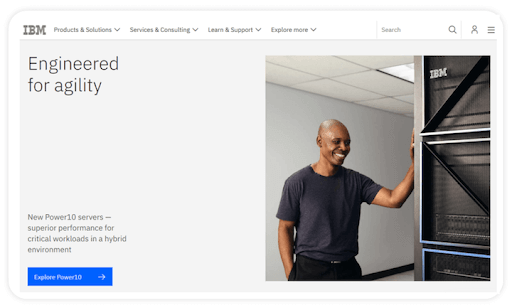
    IBM is a great example of a B2B company that has developed a customer centric website. The website loads fast and the company maintains a consistent design on all devices. It displays the same information on desktop and mobile devices as shown in the screenshots below:


    Screenshots of IBM’s Responsive Web Design

    • Mobile-Friendly Websites Have More Social Shares 

    Imagine a situation where your website has valuable content that visitors want to share, but they can’t find the share button.  Or a desktop user shares the link with a mobile user,  but your website is unresponsive?  You miss an opportunity to expand your market, drive traffic to your site, and potentially lose revenue. 

    Although search engines don’t consider it in search rankings, social media remains a critical pillar in any company’s marketing strategy. Social media pushes traffic to websites and complements SEO efforts. But you need a responsive website to reap these benefits. 

    Responsive web design makes it easy for users to seamlessly share content on all social media platforms and from all devices. Its primary goal is to give users a consistent website look and experience on all devices.  

    A great way to boost social shares on your website is to work with a mobile app development company in Delhi to ensure responsive design techniques are applied on your website. 

    These techniques include:

    • Strategic placement of share buttons on web pages 
    • Accessibility and functionality of the website on all devices 
    • Users access the same content on mobile and desktop devices
    • Users can share content with a single click

    Website visitors use social shares to promote your website and brand among their peers and followers. For companies that want to expand their audiences, this can mean more traffic and the opportunity to convert visitors into leads and customers. 

    • Responsive Websites Eliminate Duplicate Content

    With more people choosing to browse the internet through mobile devices, companies have resorted to developing two website versions –  mobile and non-mobile.  This approach makes their content more accessible, but it increases the risk of duplicate content. 

    The presence of two URLs carrying duplicate content confuses search engine bots. They can’t: 

    • Tell which version to track and index 
    • Determine which version to rank for different search queries 
    • Determine whether to absorb link metrics for both versions or just one 

    Although duplicate content does not attract search engine penalties, it leads to poor ranking of websites on search results. Responsive web design eliminates the need for duplicate content. It allows you to use one URL on all devices and adapts website content and layout to different screen sizes. 

    By emphasizing a single website version and ensuring content consistency across all devices, mobile-friendly websites offer users positive browsing experiences. 

    • Mobile Responsiveness Improves Local SEO 

    Local SEO focuses on optimizing your site to show up in local search results. You need to invest in local SEO because people search the internet from mobile devices, particularly when they’re searching for local companies in their localities. Statistics show 61% of mobile device users are likely to reach out to local companies that have responsive websites.  

    Additionally, 75% of mobile searches that reflect local intent produce offline visits within a day. You can leverage this opportunity by adopting a mobile responsive design for your website. This, coupled with the integration of local keywords in your web content can push it up on local search results. 

    Opt for conversational, long-tail keywords and utilize search intent through the use of phrases such as ‘open now’ and ‘near me’. By applying these local SEO strategies, you make your company website more visible and accessible to customers who search for your products or services in your area. 

    Here are some tips to maximize local SEO benefits from a responsive website:

    • Optimize your website for voice search
    • Develop and optimize a Google Business Profile 
    • Request for customer reviews 
    • Research and optimize local keywords 
    • Create location pages 
    • Connect your content to local issues, news or events 

    Last Words

    In a world where the majority of people would rather search the internet from mobile devices than desktop computers, having a mobile-friendly website is a necessity. Mobile responsiveness is among the key factors search engines consider when ranking search results. 

    Poor search engine ranking can make your website less visible online. It also undermines your efforts to improve brand awareness, attract and nurture leads, and boost conversion rates. Responsive web design helps in fixing these challenges. 

    By ensuring that your web pages load fast, eliminating duplicate content, and allowing users to share content with ease, responsive websites complement your SEO efforts.  Create a mobile responsive website to unlock the SEO benefits discussed above.

  • How to Create a Winning E-commerce Website Design with Best Practices

    How to Create a Winning E-commerce Website Design with Best Practices

    With the e-commerce trend growing quickly, businesses are facing a lot of competition. It can be a bit difficult to grab the attention of potential customers and generate higher revenue. This is where having an interactive and responsive e-commerce website can set you apart. Consumers are likely to browse through the platform and complete their user journeys as well if the online platform is well-designed and easily accessible on any device. 

    If you are wondering how you can achieve the desired results, here are some of the best practices that can help you create a winning e-commerce website design. 

    Keep UX First 

    Now, this is one of the first things that you need to keep in mind. What can help people differentiate your e-commerce website from similar ones in the industry? User experience or UX. So, when creating a website, incorporate features like immersive scrolling and hero images with clear CTAs that people can interact with on the home page. 

    This will improve user experience and help build customer loyalty in the long run too. It is important to think of all the features such as professional product photos, easy to navigate layout and brief checkout process that focus on UX. 

    Highlight Bestsellers on Home Page 

    While a lot of potential customers are just browsing through, many do not have anything specific in their minds. By featuring your bestselling products on the home page, you can help people discover your e-commerce store and increase conversions too. If a visitor likes what they see, they might purchase a product instantly or return back later. 

    So, add a section below the hero image that features the bestsellers or include a category that takes people directly to the products. This way, you can instantly show people what your e-store has to offer and hook them in before they bounce off. 

    Include Product Categories 

    This is a crucial aspect of good web design and you need to consider this very carefully. While a lot of e-commerce website already have product categories, it’s a good idea to make this clear. Visitors should be able to find specific products easily so you should divide them by categories. For instance, if you are selling sneakers, you can categorize them by style, collection, new arrival and features. 

    So, shoes that are specifically designed for athletes can have a separate category and new ones can have their own too. This also makes it easier for you to find out what your audience prefers and likes. The products that get more engagement and views can be promoted to potential customers as well. 

    You can include different items in your email marketing campaign and draw the attention of a wider audience. Once you know which products are popular with people, you can start segmenting your email list and pitch them to people who may have forgotten about your website or are waiting for new offers. 

    Add Real Reviews on Home Page 

    It is always a good idea to establish credibility and earn the trust of people from the beginning. This is where real reviews and testimonials on the e-commerce website can make a huge difference. Including them on the home page is one of the best practices that you can apply when creating a winning e-commerce website design. You can add a section towards the end of the page or find space in the middle as well. 

    Make sure that the reviews are from real customers and convince visitors to act. You can include the ones that talk about product features or prices so people can get a clear idea before making a purchase. Reviews or testimonials also work like recommendations and could make your e-commerce website appear trustworthy. 

    Include Links to Socials 

    In the end, you need to add links to your social media pages so people can check out more products and become familiar with your brand. It’s important to link your Instagram, Facebook, Twitter and LinkedIn if you have a presence there, to make it easier for people to reach out and find more information as well. Your social media pages are also an extension of your brand and feature elements like your logo design, brand colors and brand voice. 

    When visitors are directed to any platform, they can get an insight into your company values, purpose or mission. This also makes it easier for people to access your website on mobile and browse through easily. You can also consider developing an app for your e-commerce platform. It’s a good idea to look for a mobile app development company in Delhi for instance to get a user-friendly app that generates more downloads. 

    Final Thoughts 

    These are some of the best practices that you need to keep in mind when creating a winning e-commerce website design. Think of how you can make your online store different from other websites and keep visitors on the page for a longer time. In case you are confused about where to start, you can follow the key practices mentioned above and create an appealing e-commerce website that grabs the attention of potential customers from the first look.