Author: admin

  • How Much Does It Cost To Create An App?

    How Much Does It Cost To Create An App?

    Developing an application gives your business a new platform to serve your customers. It sounds exciting and endeavors your thoughts. But there are some complexities with this process if you are new to the process. One of the major complexity is how much does it cost to make an app? How does someone differentiate the cost of the application? How to create a well-performed application with a lower budget? And Which mobile app development company has to choose?

    But no one can give you the exact cost to make an app until they are not introduced enough with your business nature, features you want to configure in your application, your budget, user flows, your targeted niche, etc.

    What Effects Mobile Application Costs?

    • Features and Functionalities configured in the application.
    • Visualization of the application
    • A platform where you want to launch the application
    • Backend infrastructure
    • Region and the structure of a development team
    • Time is taken in the development

    # How Much Does It Cost To Create An App – Cost BreakDown With Basic Features

    Features Description Approx Time Approximated Cost
    Login Login with email
    Login with social media
    Log out option
    Log in from other devices
    Two-way authentication
    Forgot Password option
    28-42 hours $1120 – $1700
    Advance Search Basic search bar with suggestions 13-18 hours $500 – $800
    File Uploading Upload photo
    Upload Video
    Video preview option
    Add music option
    20-30 hours $1800 – $2500
    Basic Messaging Online/offline status
    Typing status
    Last seen status
    Read/Sent status
    File attachments
    Media sharing
    160-170 hours $6200 – $6500
    Profile Editings Image change
    Edit Bio
    Profile management
    47-62 hours $40 – $50
    Push Notifications To make platform more engaging 8-14 hours $1000 – $1200
    Advance Analytics Revenue Analytics
    Marketing Campaigns
    25-40 hours $1500 – $2200
    Payment Gateways Establish different payment gateways to receive payments 50-60 hours $2000 – $3000

    How Much Does It Cost To Create An App – Cost Breakdown With Basic Functions

    Functions Description Time Required Cost
    Map Detect user’s location
    Search on the app
    Detect optimized route to pick and delivery
    75 – 111 hours $3000 – $4000
    Streaming Start broadcast
    Stop broadcast
    Switch between broadcasts
    90 – 140 hours $3600 – $5500
    Calls Audio calls
    Video calls
    Access of contact list
    257 – 365 hours $10000 – $14600

    Customization Of Visual Designs

    Creating an engaging user interface is indeed complicated. It takes time and time leads to an increase in the expenses. The quality of screen visualization helps in retaining the users on the platform. Customizing your visual design is a bit complicated but it can give you better results.

    Platforms

    The platform on which you want to launch your application matters most. Deciding to launch an application is the best but choosing the platform where to launch the application matters.

    If you’re launching an app application on iOS and the app store you have to watch out that you can get access to all iOS-based devices but you have to pay fees on yearly basis to them. iOS applications took less time in development in comparison to Android applications.

    On the other hand, there are 2.5 billion Android phone users in the world. Which is greater than the number of iOS applications. By developing android applications you’re targeting more than 50% of the world’s population. Google play store charges one-time fees for launching any application on the play store. It tools time in the development but helps in targeting more customers.

    Backend infrastructure In Mobile App Development

    In mobile application development backend is an operating system that allows the developer to connect the application with API. APIs help in providing data exchange between an app and a database. Admin panel is a really helpful app management tool to keep the track of the revenue, sales, etc.

    App Maintenance Cost

    Developing an application and launching it on the platform is not enough there’s a maintenance cost of the application after launching it on the platform.

    Maintenance costs Including

    • Buf Fixing
    • Improve stability and performance
    • Code optimization
    • Adding support for the latest operating system versions
    • Developing new features

    Mobile App Development

    When you’re developing an application not only the average or estimate of developing the application matters if you don’t have any team to work on it. Probably if you don’t have any team to work on it you’re thinking to hire someone to work on it. In the market, there is a large number of IT companies there. You can choose the leading app development company in Dubai.

    Location Of The Development Team

    The location of the development team matters most when it comes to the cost to create an app. App development companies charge according to the region they belong to.

    The cost crate an app is different in America from India.

    Hourly Rates

    How much time the application would be taken in the development process? matters most. Hourly rates of the developers and the mobile app development company in Dubai could be varied according to their region or specialty in the field.

    Members Of Development Team To Discriminate Cost To Create An App

    The development team also charges the cost to create an app that works fluently. The development team is the one that is responsible for the delivery of the whole project on time and efficiently.

    Business Analyst

    If you’re working with an outsourcing agency they have a business analysis to find out the business requirements and identify tech before proceeding with developmental costs. The business analyst is the one who performs the first step in the process of sett out the developmental cost.

    • Gathering requirements
    • Identifying tech and business problems
    • Do competitor analysis
    • Defining project value
    • Writing project specification

    All this is the frame of the planning phase. The planning phase is the requirement to avoid the extra expenses in the development cost.

    UI/UX Designer

    Beautiful design is the thing that a user wants these days. A better user interface encourages the users to use the application with a better experience. If the user interface is stressful for the user’s eyes ut may cause the loss of users to you.

    UI/UX designer responsibilities

    • Analysis of similar applications.
    • Analysis of users’ preferences.
    • Use lighting and background which is less stressful for the users’ eyes.
    • Creation of wireframes.
    • Creation of final design.

    Mobile App Developer

    A mobile app designer is the one who is working on the application development. Choosing the platform where you want to launch the application after that the mobile application designer is the one who is working on it. Developing the application according to specifications given by the user matters most. The developer to works on the Android operating system is different from the developer who works on the iOS operating system.

    Mobile App Designer Responsibilities

    • Follow the latest technology trends to work on the application development
    • Execute features to make the application more user-friendly
    • Work on the specifications of the user.

    Quality Assurance Designer

    The quality assurance engineer checks the page compatibility. They check the page load speed, performance of the application, and other application-related factors.

    Project Manager

    Project managers comply with the whole team. They keep an eye on the whole team.

    Project Manager’s responsibilities

    • To deliver the product on time.
    • Get a meeting with the client.
    • Made changes in the application according to the client’s preferences.
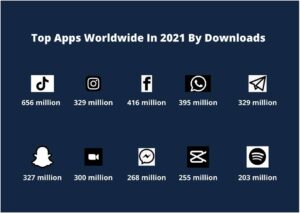
     

    top apps worldwide in 2021 by downloads

    Factors That Determine The Cost To Create An App

    Other than this some factors influence the cost to create an app. These factors are given below:

    Basic App

    Basic applications whose existence affects the user indirectly. Calculators, clocks, and small game applications are the basic applications whose existence effect the user indirectly. These are the solutions that do not require network connection aro backend development. These applications take time of 1 month to get completed.

    The cost to create a basic app is $6,000 – $10,000  

    Data-Driven App

    Applications that store the data are data-driven. Calendars, maps, and weather solutions all these three applications store the data for years. The user can easily find out the what is the day on a particular date 40 years ago. All this data is stored in the application and it requires time to code these types of applications. These applications were launched as a byproduct in the market.

    The cost to create a data-driven app is $10,000 – $15000

    Apps with user authentication and personalized data

    These applications have the user’s data. Where users have to log in with their details to log in to the application. These applications share the adat over the connected devices. These applications are more sophisticated when it comes to the host user-driven data with security.

    Authentication app development cost is $20,000 – $60,000

    Social Network App

    Social media applications. The well-known application name on the youngster’s smartphones – Facebook, Instagram, Linkedin, etc. These social media applications are well-known names in the social media market. These applications have to handle the millions of interactions and chats and allow users to share their pictures and videos across the devices.

    Social network app development cost is $15,000 – $60,000

    E-commerce app

    E-commerce applications are Alibaba, Amazon, and Flipkart. They require an extended list of features like login, product listing, catalogs, social interactions, descriptions, feedback, push notifications, and payment gateways all these features manipulate the cost to create an app.

    E-commerce app development cost is $6,000 – $80,000

    On-Demand Service App

    Talabat, Zomato, and e-commerce applications all these applications are proving on-demand services. These applications connect directly with the users and provide them the on-demand service at their doorstep when they want.

    On-demand service app development cost is $8,000 – $1,00,000


    Multiservice Marketplace App Development

    Marketplace applications are the ones where the user can avail of the services of every industry on a single platform. Gojek is one of the multiservice marketplaces where the user can order online food, grocery, e-commerce, home services, and so on.

    Multiservice Marketplace App Development Cost is $15,000 – $1,00,000.

    Travel App

    Trip Advisor is one of the travel applications that provide the users the services to explore the hotels online and check out the cost of the rooms, cottages, and so on. These applications incorporate the features of e-commerce applications and on-demand applications.

    Travel App Development Cost is $5,000 – $40,000

    Cost To Create An App – Clone App Development

    • Uber: Uber is a well ride-hailing service provider company. It was launched in 2009. And now it covers half of the market with its services. The cost to create an uber like app depends upon some factors like the features you are including, the region where you’re launching the application, and all the above-mentioned factors.
    • Postmates: Postmates is the name of a food delivery business that delivers the food at the doorsteps of the customers. It’s an on-demand application whose service the users can avail of with just a few clicks over the screen. The estimated cost to build this application is around $65k.
    • Instagram: A photo and video sharing application. It stores the data of the users and helps them to interconnect with international users. While allowing them to chat, video call, audio call, and post pictures. The estimated cost to create this is $50k. Rest depends upon the factors we discussed above.
    Wrapping Up!

    When calculating the cost of producing a future app, companies first must take into account the design team and the app’s complexity, as both have a substantial impact on the overall cost. Given the high increasing adoption of both iOS and Android, businesses wishing to go mobile should consider designing an app both for platforms and devices. In crux, we can say that the cost to create an application can’t be determined by anyone until the outsourcing company is not clear about your requirement what you want, what type of features have to include in the application, and the technology tacks used in the application, UI/UX design and all the above-mentioned factors influencing the cost to create an app.


  • How Mobile Games Make Money – An Overview

    How Mobile Games Make Money – An Overview

    An Overview

    The history of mobile gaming is a relatively short one, but it’s already making huge waves in the world of entertainment. The first mobile games were developed in the early 2000s, but they didn’t really take off until 2009 when Apple introduced its App Store for iPhone. At that point, mobile gaming became an industry on par with console and PC gaming—and one that was even more lucrative than either of both.

    Firstly, mobile games are popular because they’re accessible: you can play them anywhere, at any time. They’re also easy to develop and distribute thanks to the rise of app stores like Apple’s App Store and Google Play. They have become one of the most go-to platforms for developers looking to make money in mobile games. Plus, with more than 2 billion smartphones worldwide (and counting), there’s no shortage of potential players out there!

    The rise of mobile gaming has changed the way people play games forever. With a variety of devices and platforms, it has never been this easy to access games that you can play anywhere, anytime. In this article, we’ll go over how mobile games make money and how this revenue can help developers increase profits even further through strategic advertising campaigns that target specific demographics. This is based on location data collected from users’ phones (which may include age range).

    Pay-to-Win

    In a Pay-to-Win type of game, you’re competing in a complex environment with other people for in-game rewards. Usually, these games have a large upfront cost, so during your first few weeks after signing up, you’ll be incentivized to pay more to keep up with players who’ve been around longer. The idea is that the game will keep producing new content and challenges that require the player to go through more rounds of spending money to continue playing.

    The most well-known example of this style of game is probably Clash of Clans (2012), which was one of the most lucrative mobile games ever created and generated over $1 billion annually at its peak. In this game, players build a village and train an army to attack other villages run by other players. As they progress through increasingly difficult levels, they’re able to unlock upgrades that improve their army and weapons.

    However, these upgrades are time-limited. If you want them all completed sooner than later, it’s in your best interest to spend real money on extra resources or speed boosts. Otherwise, you’ll have to wait for months before your troops gain another level or before you can afford another upgrade.

    Gacha or Mystery Boxes

    Gacha or mystery boxes are a monetization technique where players spend in-game currency for a chance to win an item of value. Players can spend real money to buy in-game currency, or earn the currency by playing the game. In some games, this is the only way to obtain hard-to-find items that may be necessary to progress in the gameplay. While the mechanics of gachapon vary from game to game, most games include some type of gacha system.

    The term comes from Japanese vending machines called gachapon (or “gashapon”) that dispense capsule toys at random. Gacha has been compared to loot boxes and randomized rewards from video games and is also commonly referred to as “loot box” or “pay-to-win” systems by players and critics.

    Ads

    Ads are a popular way for mobile app development company in Delhi to monetize their games. The most common type of ads in mobile games is full-screen video ads, incentivized video ads, interstitial ads, and banner ads.

    Full-screen video ads

    Full-screen video ads are displayed after the user has reached a certain point in the game. For example, they can be shown after every few levels have been cleared or at the start of a new level. They usually last between 5–30 seconds and give users an option to skip after a couple of seconds if they want to.

    Incentivized video ads

    Incentivized video ads are displayed when players need something like coins or gems for performing an action in the game. Players can watch these videos to get rewards and move forward in their gameplay.

    Interstitial Ads

    Interstitial Ads appear during natural transitions such as taking users from one level to another or from one screen to another within the app. They take up most of your device’s screen space but do not affect gameplay as reward videos do. Users don’t necessarily have to interact with them but can click through them if they want to see what’s being promoted. They can click on it for more information about that particular offer/service, or download it if it is an app being advertised.

    Subscriptions

    Subscriptions are a recurring monthly fee that players pay in exchange for something, and they’re common in games that offer a lot of content. A subscription might allow you to play a game for free or give you easy access to newer content.

    Since mobile games have shorter development cycles than console and PC games, they need new content more frequently to keep customers interested. As such, subscriptions are very popular with mobile games.

    Grind-to-Win

    This is the basis for all GTW (grind-to-win) games. GTW games are designed to give you regular positives, so you don’t get bored, but also to make you feel like the game will never end. These games are usually based on two elements—collecting and leveling up. In these games, you constantly collect new items or characters that have different levels of rarity and power. You can then either combine them to create new items/characters or use them in some other way to level up your main character. Below are two examples of popular mobile games and their methods of generating revenue.

    Candy Crush Saga

    Candy Crush Saga requires players to match three or more similarly colored candies vertically or horizontally to advance through a series of stages. Each stage has a different objective that must be completed within a certain number of moves. The goal is simple: keep playing until all the objectives on a stage are complete, and then move forward one stage at a time until you reach the end game.

    Candy Crush Saga

    When you advance past enough stages without paying for an upgrade (like extra lives), these games will often drop an ad into your game session where they try to sell you something like extra lives or more moves per round. Then, after seeing enough ads without buying anything, they’ll usually stop asking altogether and just let you continue playing at your own pace from there on out!

    Subway Surfers

    Subway Surfers is a mobile game developed by Kiloo and SYBO Games. It is an arcade running game that has had over 1 billion downloads since its release in 2012. The game is free to play, but it makes money through in-app purchases (IAPs).

    The main way Subway Surfers generates revenue is through IAPs. In the game, users can purchase coins that they can use to unlock new characters, boards, and hoverboards. Players can also purchase power-ups like shields and jetpacks, which help them avoid obstacles while running on the tracks.

    Subway SurfersUsers who do not want to spend money on these items can earn them by completing special missions that require players to collect coins or complete certain tasks. These missions often take up a lot of time and effort, so many users choose to pay instead of completing these missions manually.
    Subway Surfers has other ways of generating revenue as well. It sells merchandise such as t-shirts featuring their characters (like Jake) or branded products like headphones with characters. While this may seem like a fun game that costs nothing to play, it actually generates revenue through several different methods.

    Firstly, there are in-game purchases available through the use of coins collected by playing the game. These in-game purchases range from power-ups like hoverboards or jetpacks to clothing items such as hats or sunglasses for your character. Players can also purchase coins directly through their phone’s app store account or by using real money within the game itself.

    Secondly, Subway Surfers has partnered with several brands to create branded content within the game itself (e.g., “Zombie Cheats” for Burger King). This type of advertising is typically placed at key points during gameplay. It is where players are likely to see it so that they can be reminded about upcoming events or promotions set up by these companies.

    In-App Purchases

    As mentioned before, in-app purchases (IAP) are another way for a developer to make money from a free game. IAP are used to buy virtual goods like extra levels, additional characters, or power-ups that allow players to progress through the game more quickly. Since Apple and Google charge developers 30% of the amount paid by users when they buy items through the app store, developers have to take this fee into account when setting prices for their in-app purchases.

    Freemium Marketing

    Freemium marketing is the most common method of revenue generation used by mobile game developers. It’s a system that provides basic content or functionality for free but charges a fee for advanced content or functionality. This model is often applied to gaming apps, where gamers play for free until they reach certain levels of proficiency. At that point, gamers must pay to unlock more advanced skills and capabilities.

    In addition to game-playing apps, this business model has also been used by video streaming services such as Netflix and Hulu; software developers like Adobe and Microsoft; and music service providers such as Spotify and iTunes. These companies offer the ability to download a limited number of songs or videos each month at no charge. Once you reach your quota limit, you can either pay for unlimited access or wait another month for the free downloads to be replenished again.

    Mobile games are mostly free & revenue comes from in-game purchases

    You might be surprised to learn that the most popular mobile games today are free-to-play. So, how do these games make money? It’s easy–through your time and in-app purchases.

    Let’s say you downloaded a free game on your phone when you were bored. No big commitment, right? But once you get into it, you’re hooked—and have been playing it for at least three hours now. No harm done, right? It’s for free anyway.

    This occurrence isn’t unusual. According to a statistic cited in Forbes magazine, the average smartphone user spends at least eight hours every week playing mobile games. That comes out to nearly 500 hours a year! And while many of these people don’t pay upfront for their game downloads, they could end up paying later in other ways. One, by sacrificing some of their time or even purchasing virtual goods within the game itself.

    Undoubtedly, in-app purchases are a major part of the mobile gaming economy as users spend billions on them each year. The appeal of such purchases is simple. They can get immediate access to things like extra lives or boosts to help them advance faster through the levels. Some games even charge players for virtual currency that can only be used within the game’s world. More advanced players often want these types of items badly enough to pay money for them.

    Playing Mobile Games on PC

    If you’re looking to play your favorite mobile games on your PC, there are a few options to choose from. The first is to install an emulator that allows you to play games from different platforms on your computer. As with most things, there are both free and paid emulators available. So, it’s up to you whether or not this route is worth it for you.

    You can also play Android games on PC by visiting specialized sites. These sites come with their own unique system that allows you to play mobile games on PC without emulators.

    The Future of Video Games

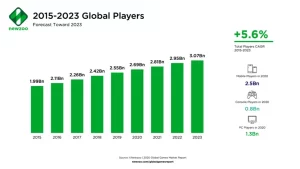
    Video Games, especially mobile games, are big businesses. A recent report from the research firm Newzoo estimates that by 2023, the number of players will balloon to 3.07 billion. And video game revenue will surpass the $200 billion mark. With that in mind, let’s take a look at what makes mobile games such an attractive option for players and developers alike.The Future of Video Games

    First off, it’s important to remember that mobile games aren’t just played on your phone. The vast majority of gaming happens on PCs, where the screen is much larger and more conducive to playing longer games. In fact, many console versions of popular games are actually ported over from their mobile counterparts because of how much easier it is for players to play them when they’re not hunched over their phones trying not to drop them!

    Secondly, there’s no doubt that mobile gaming has changed the way we interact with computers in general. Playing games on our phones has made us generally more comfortable interacting with technology—whether it be through social media or apps. It makes us feel like we’re interacting with real people instead of machines.

    In a nutshell, it is fair to say that mobile gaming is going to be the trend for many years to come. This makes video game development one of the most sought-out professions not only today, but no doubt also in the future.

  • Guide To Launch Your Mobile App in 2022

    Guide To Launch Your Mobile App in 2022

    The development of mobile apps for business is becoming extremely common if you wish to launch mobile apps for your business. Using your own mobile app is a way to increase sales as traffic will be increased and you can reach your target audience. As mobile apps are considered a revenue generator and all the barriers coming in the mobile app launching are more challenging.

    You can connect with a mobile app development company in Jaipur and they will assist you in building suitable apps for your business. The cost of the development of mobile apps is pretty huge so the launch is required to be planned more systematically and vastly otherwise only building an app won’t be sufficient enough. It’s not the only work to launch, after that you need to know the techniques to make your app sticky.

    Process To Launch A Mobile App-

    Perform Market Research-

    Based on the recent report which came in 2020, it has been noticed that a huge number of apps are available on the Apple app store. And this number does not even summarise all android apps or windows apps in the store. This means if you are planning to launch a mobile app then you already have tons of competition in the market.

    Therefore, it is mandatory for you to conduct market research so that you can make an application which is different from the prevailing apps. First, you need to know in which particular areas your competitors’ apps are falling apart and then you can use them as an advantage for your application.

    You are also supposed to do prime research about your target users so that you can optimize your budget according to that. Although secondary research will give you more insight as that will be based on experience.

    Understanding Meaning Of Success-

    If you are looking to build a successful business app then you have to first define the meaning of success for you. You need to set a smart approach that is specific, measurable, achievable and time-oriented. In the mobile app case, success can be measured with active users or active installation of apps. Through this you can identify retention rate, that is how many users installed your app and did not uninstall it later.

    You can set some benchmarks as most apps which are free have a higher active installation rate. The average rating of an app on app stores is a common bet

    Choose Cross-Platform And Chrome Version For App- In this era, it’s hard enough to stick to one platform if you wish to reach a vast amount of users. Therefore, it is necessary to launch apps on multiple platforms to attract a larger user database. It’s not only a technique to grab larger users, it is also a cost-effective method for the long term. You can also build a browser version of your mobile app which makes use of the app in real-time.

    Use Your Social Media Accounts-

    Social media is a platform where everyone is present and more than this you can not get a vast approach to grab the attention of users to make them sign up for your app in future after launch. Before launching your app make sure that you link the link of your app in all your social media accounts stating its benefits and user- experiences. The main goal is not to generate traffic, the aim is to get as many downloads in real-time as possible.

    Use social network sites which are most popular among people rather than new social media sites. The social sites which have a high visual network will be an ideal place to represent your app by mobile app developers including excellent recommendations for Ui/UX components. Create a customised buzz before launch which will ask people to sign up for alerts which will come up at the time of launching.

    Build Right Content-

    Make content showing all the steps to go through to use your app. Content can be formed in different types such as blog posts, press releases and website content. Content is a way to communicate with your potential customers and it should bring them close to your app features and benefits.

    You are required to schedule your content before the day of the launch of your app. The work does not end with the launch, after launch you need to check regularly on content that still conveys the same message you wish for. During the launch week, you should check the content periodically including the reviews and feedback.

    Prepare A Demo-

    At first, you need to prepare a video which will show how your app should be used. It can be easily done by using a video recorder and visual audio user interface. In that video, you should explain what your app does and how it is useful for user life and business. There are various mobile apps out there and differentiating them from your competitors is the main task in your video difference should be visible too.

    Opt Your App Store-

    At first, you should choose a single app store where you wish to launch your app. It will result in getting higher ratings and concentration of users towards the app. After launch, there will be periodic requirements for some changes so if one store has your app, the cost will be less.

    The most used and well-known app stores are the app store and the apple app store. So you can choose one to launch your app at first and after its stability, you can launch on another platform.

    Final Words-

    To launch your app with the right approach you need to connect with top mobile app development services and you will achieve your objective smoothly. Use the above steps so that you can successfully launch your mobile app in the current scenario. Build an app which works smoothly and does not give a long haul to your users resulting in delivering a great user experience.

  • How Do You Make Sure Your Websites and Applications are Accessible to Users?

    How Do You Make Sure Your Websites and Applications are Accessible to Users?

    Every website owner’s dream is to attract potential visitors and improve the experience. Making a site or app accessible for everyone makes perfect sense to a business of any size. Accessibility is an essential factor of the design process and focuses on user experience and making the site functional for a wide range of individuals. Internet users benefit from various things like accessible design. A perfectly accessible website is suitable for visitors with varying mobility, visual, intellectual, and hearing abilities. If you are a website owner, you should pay attention to different steps, prevent mistakes and make a site welcome to everyone.

    Why Website And Application Accessibility is A High Priority:

    Improve accessibility on a site offers a business lot of benefits. It is crucial to enhance the audience base and keep them for a long time. Whether more visitors use the site, you have a potential user base. It will help you go ahead of competitors. Overall usability and design determine that a website is more accessible. Website owners wish to manage a site that works well on any desktop, mobile, or tablet platform. You can look at ways to ensure that site is accessible.

    Keyboard-Friendly:

    It is essential to make sure that the website is accessible to everyone. It may work without a mouse. Many assistive technologies help owners keep websites or application keyboard friendly and manage them as an essential element in a website. Users get close to significant features like links, pages, content, and others through the keyboard.

    It is the best way of navigating the site and lets visitors switch to different areas on a page. The feature allows users to access buttons, forms, and links. The website or application owner’s goal is to ensure that content and navigation can access through a tab.

    Content Accessible Easily:

    After making the site keyboard-friendly, you need to know that all content on the page is reachable. If you have any issue with content accessible, you can immediately hire a reputable website development service provider and perform an audit to take a step. You need to be aware of something different in your site and engage users to read them.

    • You should implement tags and add content that defines the page.
    • Dynamic content allows users and devices to understand changes in the site.
    • It is better for navigation and will enable visitors to skip to specific content directly.
    • Attractive content improves user engagement and interest in locating every item. 
    • A tag makes a site or app flexible and efficient and supports business gains an impressive outcome.

    Alt Text To All Images:

    Enter alternative tag is a crucial thing in site and application. Business owners enter the alternative tag for the image. It serves as a replacement for an image whether it fails to load. Alt tags are also described as alt attributes, alt text, and descriptions. It is easy for the reader to read the image. Site owners use it in the relevant field to illustrate an image and bring context to users.

    Alt text function enhances site SEO and allows the search engine to crawl information. It is necessary to include a descriptive summary on every image. Using a keyword on an image brings perfect sense to the site or app.

    Structure Content With Headers:

    An important task to make a website and application accessible is to structure content with the help of a header. You can use the header properly in content and attract an audience. It will make content easy to understand and manage the flow.

    • Clear headers let readers interpret the page and offer in-page navigation.
    • It is an excellent option to increase heading levels in content.
    • Website owners use proper heading on every page that follows subheadings.
    • You must order everything correctly on the page and make them visible and accessible.

    Keeps Form For Accessibility:

    The form is an essential addition to many websites and applications. Professionals carefully design sites by considering relevant elements and ensuring each field label. A business owner’s goal is to place a label next to the respective field. Visitors can match the label to an option or field.

    You should manage the site with relevant information and instruction. In that way, visitors understand information and revisit the site. Developers use the perfect tool to create forms and plugins for increasing accessibility. It makes your job better.

    Facilitate Resizable Text:

    Resizable text is an essential feature of a website. Browsers and devices allow owners to resize text that suits visually impaired visitors. Whether you fail to build a website or app with such a feature, resizing text breaks design and makes it challenging to work with the site.

    • It is good practice for site owners to prevent crucial issues like specifying the text size with pixels. 
    • Using relative size will facilitate text to scale based on screen size and content.
    • Site owners must turn on user scalability on a site and allow visitors to resize the text.
    • If your site fulfills such criteria, you can test the font size by enhancing the zoom level in the browser. 
    • You can perform audits regularly to check any issues on a site and solve them quickly.

    Prevent Automatic Navigation And Media:

    An automatic media file is a significant defect in the site. It annoys users when loading pages and is the biggest issue of accessibility. It is necessary to turn off unwanted media files and helps users use the site without obstacles. Visitors may confuse when sudden medial play. Website owners avoid keeping unwanted elements and make the site accessible.

    You can access the right service provider today and check essential things to manage the accessible site. JDM Web Technologies is the best partner for you to diagnose and overcome the flaw in design and content and optimize for accessibility.

    Get in touch with a professional team and gain the right solution to keep a record of success. The business will attain great height and reach more customers.

    Also Click here for – Mobile App Development Company in Ahmedabad

  • Top Backend Frameworks in 2022: What, Why, Guide

    Top Backend Frameworks in 2022: What, Why, Guide

    Summary: A thorough article offering details about the top backend development frameworks a developer must use for software projects in 2022.

    Backend Frameworks in 2022: What, Why, Guide

    While developing any software, curating an alluring frontend is essential to furnishing a robust backend.

    Backend is responsible for handling user requests, processing them, and providing relevant output to the users.

    And to have a strong logic power, you must utilize an advanced backend framework.

    In 2022, every user has its demand, and each one uses a different device, operating system, and platform to access the business solution.

    To maintain the software performance and Quality of Service, you must focus on selecting a reliable backend framework.

    So, let’s move further and go through top-notch backend development frameworks 2022.

    A Precise List: Best Backend Development Frameworks 2022

    Express.js

    Express JS is the most minimalist and high-performing backend framework for NodeJS applications.

    It extends the features of a NodeJS app and optimizes its flexibility to adhere to all the business requirements and provide more features. Moreover, it helps to quickly enable the HTTP utilities, allowing seamless communication between different APIs.

    Besides fast request execution, Express JS leverages the developer to utilize some popular frameworks based on it, which comprise of:

    • Feathers
    • ItemsAPI
    • Poet
    • Sails
    • Express Gateway
    • LoopBack and many more

    Besides fast request executionFurthermore, the utilization of Express JS is increasing day by day, and an average of 26000 apps are running on it.

    Why consider Express JS Backend Development

    • Allows furnishing backends by creating HTML-based templates.
    • Its modular architecture leads to create low code and easy-to-maintain backends.
    • You can define routes using the dynamic URLs through its built-in HTTP methods.
    • It helps reduce the development cost, as you can use it for full-stack development purposes.
    • You can craft all types of software with it, including single-page applications, dynamic apps, and hybrid applications.

    Laravel

    Everyone knows about PHP’s swiftness and stability for large-scale web-based applications.

    And, by using Laravel, you can assure it for your business software, as it is a PHP-based backend framework, offering simple, sleek, and elegant code syntax.

    Many industry experts highly prefer Laravel due to its compatibility with JavaScript frontend frameworks, making the application more responsive and enhancing user conversion and engagement.

    In addition, you can also use it as an API for desktop, mobile, and web-based applications.

    You can effortlessly connect MySQL, Postgres, SQLite, and SQL Server with it to run query-based commands, smoothly storing, modifying, and organizing vital information.

    LaravelOn the global base, Laravel Backend Development demand is increasing, and an average of 60000 websites are using it as the primary backend technology.

    Why consider Laravel Backend Development

    • It offers a queue system for executing time-consuming operations in the background and maintaining the speed for other procedures.
    • Through its built-in Laravel Echo mechanism, you can provide a real-time app experience to all the end-users.
    • As per security concerns, you can enable an authentication system, allowing legitimate users to access app resources.
    • You can avail the advantages of Forge, Vapor, Breeze, Cashier, Dusk, and many more PHP-based packages with it.
    • It has a great community, supporting its up-gradation and alignment with the latest technology trends.

    Ruby on Rails

    To build scalable server-side applications, Ruby on Rails is one of the best technologies you should opt for.

    It is available under the MIT license, providing an MVC architecture advantage, helping the developers to focus on each software layer precisely.

    Not only backends, but you can also build frontends using the same framework, enhancing the app compatibility to render HTML templates, WebSocket maintenance, and assuring data security.

    In addition, through its Active Records, you can establish multiple models between databases, enabling callbacks, data encryption, and SQL query execution.

    Why consider Ruby on Rails Backend Development

    • It allows defining how a URL must connect with a controller through domain routing.
    • Its Action Controllers automatically detect the incoming parameters and process them to provide an accurate response using HTML or JSON.
    • Its easy-to-configure and maintain structure ensures a cost-effective and on-time project completion.
    • By default, you will get all the vital security mechanisms inactive state.
    • The code is easy to read, helping developers and testers quickly resolve errors and exceptions, if any.

    Django

    For rapid and stable web backend development purposes, many specialists consider Django the perfect choice in 2022.

    It is based on Python programming language and is available freely to everyone across online repositories. And you can easily customize it according to your business needs because of its open-source nature.

    In addition, you can implement it with any client-side technology, such as HTML, JSON, XML, etc.

    Moreover, you can rely on Django’s secure ecosystem, helping developers to patch loopholes and automatically analyze the application to prevent unlawful activities.

    Why consider Django Backend Development

    • By default, it enables relevant security systems to mitigate SQL injection, cross-site request forgery, cross-site scripting, and clickjacking cyber-attacks.
    • Every part of its architecture works independently, aiding in handling extensive user traffic without degrading the performance.
    • You can write its code using patterns, leading to reusing the components to save time and development costs.
    • It is highly portable, leveraging to run across devices and on any operating system, including Windows, Linux, Android, macOS, etc.
    • Its CDN connectivity ensures a stable link, encouraging the building of a top-notch content management system.

    Flask

    Flask is a microframework built on the fundamentals of Python language and WSGI toolkit.

    In 2022, you can use it to fabricate a simple application core and add database extensions to store, process, and organize any data.

    If you are familiar with the Python syntax, then implementing Flask is a cup of tea for you. You have to import it into your code, and you are ready to create some enormously top-notch applications.

    Maybe it’s a microframework, but it can seamlessly manage large files and process them without generating any errors.

    Why consider Flask Backend Development

    • You can use its template engine for implementing the same interface to multiple web pages.
    • It has an in-built development server, providing a rapid debugging mechanism to remove bugs and errors.
    • You can perform a centralized configuration for enhancing the app routing.
    • It allows for integrating SQL-based databases and running queries to process essential database operations.
    • It doesn’t use ORM, which makes the application faster.

    ASP.NET

    ASP.NET is the most popular, utilized, and advanced backend framework, dominating the development industry for many recent years.

    ASP.NET offers a variety of modules to build different types of applications and web services.

    In addition, you can easily furnish real-time applications with it by writing C# code and implementing Blazor functionalities.

    It is the fastest web development framework, potentially handling 7.01 Million requests per second.

    ASP.NETWhy consider ASP.NET Backend Development

    • You will get dedicated support from Microsoft for all your ASP.NET applications.
    • It processes all the components on Windows Server before displaying it on the interface, ensuring to provide the right content to the end-user.
    • Microsoft frequently releases its updates, making it secure and free from bugs.
    • It has an in-built caching mechanism, reducing database cost and putting less load on the server, improving computational resource usage.
    • You can produce your code using the language of your choice, including c#, VB, J#, etc.
    Wrapping Up

    Backend is an essential part of every application, and you must select the most reliable framework to develop it.

    In 2022, Ruby on Rails, ASP.NET, Django, Flask, Laravel, and Express JS will dominate the backend development domain. For having a cutting-edge solution with the ability to manage an enormous number of requests, you can rely on any of these backend frameworks.

    Every framework offers a different set of features, and you must go through it before selecting it for your project.

    Also click here- Mobile App Development Company in Bangalore

  • How To Choose the Best Mobile App Development Company

    How To Choose the Best Mobile App Development Company

    The growth of mobile apps is changing the course of doing business. Apps enhance the customer experience and enable users to get quick business details and stay updated with brands or upcoming offers.

    Mobile apps are one of the greatest sources of giving exposure to the brand.

    The mobile app industry is bigger than ever, and a study indicates that apps were downloaded 230 billion times in 2021.

    The question that arises here is, how to choose a Mobile App Development Agency to meet your business expectations.

    Here is a complete guide for choosing the best mobile app development agency.

    Why Develop a Mobile App for Your Business?

    Today, the majority of the companies use mobile apps to target their potential audience and generate higher ROI. A study by Forbes mentioned that 3.8 trillion hours were recorded on mobile apps during 2021.

    The main advantage of mobile apps is, businesses can interact directly with their intended users. Another salient feature of mobile app development for businesses is brand awareness & recognition, and it creates a loyal customer base.

    Another area where businesses can leverage mobile app development is marketing. By integrating features like push notifications, business owners can make this direct approach to marketing possible.

    7 Tips on How to Choose the Best App Development Company

    ●    Define Your App Requirements

    The first step in finding a suitable mobile app development company is to figure out your app requirements. You can begin by describing the basic functionality of your mobile app and its core objectives.

    While defining the app requirements, ensure to include the app’s user flow for each type of user and how they will interact with the app.

    Once you (as a business owner) explain your app ideas, the mobile app development agency will be able to build the app as per your expectations. They can gain more appropriate information related to the relevant app features to enhance the user experience.

    As a result, determining the app requirements help in establishing a foundation of app vision, scope, and overall cost.

    ●    Conduct In-Depth Research

    After defining the app requirements, it is time to do market research. You can look out several B2B (business-to-business) directories, like LinkedIn Business, Clutch Review, and Global Sources.

    Businesses (like you) looking for a high-rated developing agency can visit these websites that showcase the top IT industries performing excellent app development services.

    You can ask a mobile app development agency the following questions before deciding whether or not to work with them.

    1. How do you handle projects and pipelines?
    2. Does your developer have prior experience in app building?
    3. What testing methods do your app developers use?
    4. How do you stand out from the crowd?
    5. Do they have expertise in working for different industry niches or verticals?

    Thus, be sure to research the company thoroughly before you come into any agreement.

    ●    Assess the Portfolio

    If you want to make the right choice for a mobile app development company, it is essential to check their portfolios. While assessing the company’s portfolio, try to keep an eye on the app with the same industry as yours to know whether the company will be able to meet your expectations or not.

    In other words, the company portfolio will help you with project themes, technical & UI/UX expertise, business domain, etc. While looking at the company portfolio, think about the project quality and how the company will fit the best with what you desire for your mobile app.

    Also, you will get a basic idea of what and how the app development company will meet your expectations.

    ●    Study Company’s Terms & Policies

    It is imperative to read the company’s terms & policies in order to assure that you are investing in the right app development company. When business owners spend time reading the terms and conditions of the company, they will get to learn more about the business they are about to deal with.

    Business owners will also get to know what strategies & methods the company uses in making the app highly secure. They can even ask the mobile app development company to sign a non-disclosure agreement (NDA) to maintain the privacy & confidentiality of shared ideas and goals.

    Apart from it, businesses can discuss the proprietorship rights to own a high-end mobile app before beginning the app development procedure.

    ●    Identify Project Management Methodology

    Once you read the company’s portfolio, it is time to determine what project management methodology process the app development company follows.

    As a business owner, you need to find out whether the company is following an agile methodology for building a high-performing app at a faster speed or not.

    Also, ensure that the app development team keeps you in the loop throughout the development process, including the discovery phase, app prototyping, and testing before the app deployment and launch.

    ●    Ask for App Testing

    No user would like to download a mobile app with bugs or glitches. Thus, it is the responsibility of every business owner to ensure that the mobile app is error-free and delivers an excellent user experience.

    You can ask the Mobile App Development Company Dubai what app testing strategies they use and how they will do beta testing to secure the app from any malicious activity.

    Also, it is imperative to test the app on multiple devices, and if any bugs are discovered, check how rapidly the QA team will troubleshoot the issue.

    ●    Provides Post-Delivery Support

    If you want your mobile app to be on the user’s phone for a longer period, ensure to keep your app in the best state. Thus, choose a mobile app development company that provides post-app launch maintenance & support.

    With its help, your app will likely have fewer risks of bugs or glitches. You can also sign a long-term agreement with the app development company to offer you timely app maintenance and support in keeping the app up & running.

    Wrapping Up


    You should look for a mobile app development company that understands your business requirements properly and can meet your expectations.

    You can consider following the above mentioned tips while choosing the best app development company to help you achieve your desired goals and give you a competitive edge.

    Picking the right app development company can help you achieve your desired goals and make your business successful. So, choose wisely.

  • What Are the Advantages of Blockchain in the Field of Healthcare?

    What Are the Advantages of Blockchain in the Field of Healthcare?

    Blockchain is one of the most trending topics in the world right now. Multiple studies have indicated that the implementation of blockchain technology can save money, improve efficiency, and grow all-around performance for diverse industries.

    Blockchain in healthcare presents a significant prospect in creating secure, easily accessible, and trustworthy health information systems.


    According to MarketsandMarkets research, the worldwide healthcare blockchain market will reach $829M by 2023 from  $53.9M in 2018, at a CAGR of 72.8%.


    Blockchain has already started to affect by restructuring the data management system that acts as the foundation for all healthcare services.


    Before we move ahead with the advantages of Blockchain, let’s look at the technology and its potential.

    What is Blockchain?

    Blockchain is a decentralized distributed ledger of all the transactions across a peer-to-peer network. It records transactions using intricate algorithms and encryptions in a database made up of chained blocks. The new made-up block is chained to the previous block to make a chronological record.


    Blockchain has no central authority, and transaction records are stored and distributed to all the participants involved. Its decentralized character makes the transactions secure, tamper-proof, irrevocable, and effortlessly accessible to everyone in the system.

    Potential of Blockchain In The Field Of Healthcare

    Blockchain for healthcare can resolve many issues like data security using patient information. The healthcare industry yields massive data such as laboratory test results, clinical trials, medical records, bills, remote monitoring, etc. These crucial data are stored in multiple separated databases.


    Blockchain development services can utilize the data to enhance the quality of maintenance by facilitating the sharing of medical records, safeguarding sensitive data from cybercriminals, and providing patients more control over their data.


    For example, a Blockchain development company can combine patients’ medical and prescription records from various websites and providers to develop a single, up-to-date history that doctors can access when treating a patient.

    Advantages of Blockchain in the Healthcare Sector

    1.   Enhance Patient’s Electronic Health Records

    Electronic health records are essential as they provide a comprehensive, authentic, and accessible history of every patient’s medical treatment. It records patient health information in a digital format that numerous healthcare providers store.


    However, the health information system is not secure, and there are chances of the sensitive personal data held in EHRs being leaked. The healthcare provider that made the record maintains direct access to an individual’s EHRs data. These data are operated inconsistently by them.


    Blockchain resolves these imperfections by connecting EHRs and sharing ownership of the records with the concerned parties with additional security and authentication features.


    2.   Improve Medical Research Procedure Using Blockchain

    COVID-19 has drastically impacted the healthcare industry. The pandemic has also affected medical research procedures and clinical trials. Clinical trials are the basis for discovering new medicines, vaccines, treatments, and cures for life-threatening diseases.


    The healthcare industry can use blockchain-based methods in medical research to improve the performance of clinical trials of new medicines. The built-in security of Blockchain gives assurance that the data cannot be changed or accessed by unauthorized entities.


    Patients have full authority over their data and its distribution among healthcare providers and insurance companies. Blockchain provides robust security that safeguards participants’ intellectual property rights by averting their research from being leaked.


    3.   Tracking Drug Authenticity In Real-Time

    Blockchain offers a reliable solution to ensure drug authenticity and traceability. It can store drug-related information at every stage of its lifecycle. Supervising and handling the movement of drugs and other medical stocks can be easily trackable in real-time. Enterprises can also recognize counterfeit medicines and expired medical products using blockchain app development services.


    Medicine consumers will also assure the authenticity of bought products by scanning the QR code and scrutinizing the data about the manufacturer and other appropriate supply chain distributors. The implementation of blockchain technology will eliminate the distribution of fake drugs.

    4.   Boost Healthcare Cybersecurity

    Healthcare service providers always remain a primary target of cybercriminals. According to the data gathered by Protenus, cyberattacks on hospitals grew during the COVID-19.


    • 40+ Million patient records were stolen in 758 incidents in 2021. Among them, 8M records were leaked by insiders.


    The built-in encryption and various security features of Blockchain can boost healthcare security. Decentralized storage decreases the harm that a single data breach can impose. Patients can easily unlock their health records and control their private information using cryptographic master keys. The global use of Blockchain must follow HIPAA needs when using decentralized storage.

    5.   Transparency in Updating Medical Supply Chain

    We all have seen a shortage of essential medical equipment and medicine during the COVID-19 pandemic. It emphasized the vulnerability of healthcare providers and the need to update the medical supply chain.


    A mobile app development company in India can develop robust, intuitive, and secured blockchain apps to manage supply chains in the following ways-


    • Process planning
    • Information flows
    • Manage and update inventory
    • Decrease operating cost


    Blockchain technology can also forecast the demands of medical supplies and prevent fraud by incorporating all the related data production, distribution, and warehousing information in a single immutable record that is stored securely.

    6.   Payments Via Cryptocurrency

    Several blockchain use cases are related to cryptocurrency payments in the healthcare industry. For example, Blockchain can help receive medical assistance and pays for them with cryptocurrency. Hospitals are also accepting donations using cryptocurrency.


    Aveon Health is a Family Medicine & Diabetes Care medical group that acknowledges the benefits of using Bitcoin. People can send and receive Bitcoins electronically using wallet software for medical diagnosis and medicines.

    Wrapping Up


    Blockchain technology could change the healthcare industry from centralized, detached, and unarranged to decentralized and distributed global systems. The technology could immensely enhance healthcare facilities’ delivery and reduce organizational inefficiencies.


    The worldwide implementation of blockchain technology in healthcare will provide patients with more authority over their data, enhance the accuracy and security of electronic health records, and make healthcare services more convenient.


    A blockchain-based health information system has the opportunity to unlock several potentials. Mobile app developers can build healthcare apps to scale business efficiently and reduce intermediaries.

  • 2022 Top Cross-Platform Mobile App Development Frameworks

    2022 Top Cross-Platform Mobile App Development Frameworks

    “Cross-platform mobile apps are the future of digital commerce.”

    The pandemic resulted in a seismic shift to online shopping in 2020. With digitalization, businesses cannot avoid building an app. And, unless you have a lot of cash on hand, you’ll need a mobile app development solution that can produce high-quality results on a limited budget. Cross-platform apps are the perfect solution for those who wish to run their apps across multiple operating systems. They can run on Android, iOS, Windows, and more.


    Multi-platform apps are very powerful. Cost reductions and faster time to market are two primary benefits of cross-platform apps for business owners. But the good news doesn’t end there. Cross-platform apps have a significantly wider market reach because they can be downloaded and used by anybody, anywhere, on any smartphone.


    Cross-platform mobile app development allows you to create apps that are compatible with all major platforms, providing you access to the world’s 6.64 billion smartphone users. Isn’t it lovely?


    The benefits don’t stop there. Cross-platform apps are extremely cost-effective. Native app development would require two development teams, two codebases, and double the number of updates and maintenance. You’ll need to maintain both teams on retainer to ensure that upgrades are delivered on time and that maintenance is top-notch. It can be expensive to have two development teams.


    These reasons have made cross-platform app development a favorite among entrepreneurs, startups, small and medium businesses, and anyone seeking high-quality apps at an affordable price. But what exactly cross-platform app development framework means? This blog is specially tailored to clarify all your queries.


    What Does Cross-Platform Mobile App Development Framework Mean?

    If you’ve decided to develop multiplatform apps for your company, you need to research the right technologies to make it happen. Choosing an app development framework is one of the first decisions you will need to make.


    Application frameworks are software frameworks that developers use to create mobile applications. You can use this library to create any type of application.


    Cross-platform mobile app development frameworks are designed to let developers create programs that may share the same codebase and run on any platform. Here are some of the most popular 2022 cross-platform app development frameworks.


    Types of Cross-Platform App Development Frameworks

    • Flutter

    As of December 2021, there were approximately 90,000 Flutter apps on Google Play, up from 50,000 in 2020. This shows how popular Flutter will be in 2022. Globally, 42 percent of developers use Flutter, according to Statista. As of April 2020, Google says 500,000 developers are using Flutter. Undoubtedly, the number has increased in 2022, growing 10% month-over-month in March.


    Flutter started out as an open-source mobile UI framework that allowed developers to construct cross-platform apps with a single codebase and native user interfaces for each device. React Native was its direct rival. As a result, the program looks and feels just like a native app, offering users a high-performance app at half the cost of a native app.


    • React Native

    The second most popular cross-platform app development framework is Facebook’s react-native. Facebook built React Native as an internal hackathon project to be used in the creation of Facebook products. When Facebook engineers recognized how unique the framework they had created was, they decided to open source it. React Native is now used by 38% of developers all over the world. Some of the world’s most well-known organizations, such as Facebook, Microsoft, and Uber, have employed React Native in development projects.


    React Native’s native UI components enable developers to create a user experience that is personalized to the user’s needs and platform choices. These UI components are similar to Lego blocks in that they can be easily customized and performed natively.


    • Ionic

    Ionic is an open-source user interface toolkit that allows developers to create hybrid apps that look and work like native apps. It’s based on Angular JS and uses HTML, CSS, and JavaScript to construct a variety of mobile apps, including corporate apps, Progressive Web apps, mobile and desktop apps, and more.


    Many ready-to-use components are among Ionic’s best features. Hundreds of APIs, various plugins for native functionality, the ability to tailor code for a variety of platforms, and a passionate community


    • Xamarin

    Xamarin is an open-source cross-platform framework that may be used to create programs for Android, iOS, Windows, and other platforms. It was first released in 2011. Developers may reuse up to 90% of code using Xamarin, lowering development costs and speeding up time to market, giving your organization a substantial competitive advantage.


    As everyone knows, Xamarin is relatively straightforward to learn and use. net and C# may be learned rapidly. Developers may quickly alter the app and add native functionality thanks to its straightforward connection with native libraries.


    • PhoneGap

    PhoneGap was founded in 2005 and acquired by Adobe in 2011. It was one of the first cross-platform players. While many loyal users continue to utilize PhoneGap Build for cross-platform app development, Adobe will stop supporting it on October 1, 2020. As a result, no PhoneGap updates will be sent to you.


    Choose one of the four frameworks for cross-platform app development from the list below for any new app development projects you want to start in 2022.


    Wrapping Up

    In 2022, the most popular cross-platform mobile app development frameworks will be Flutter and React Native, followed by Ionic and Xamarin. Cross-platform app development is unquestionably here to stay due to the significant time, money, and convenience benefits it provides. Cross-platform apps can be created in half the time it takes to create native apps and can be deployed across all platforms at the same time.


    The framework you select for multi-platform app development has a major impact on how your app looks and feels in the end, as well as how your clients interact with it. So, if you need assistance determining which framework is appropriate for your business, all you have to do is employ the best cross-platform app development team that can match your needs.

  • The Top 10 Software Development Technologies

    The Top 10 Software Development Technologies

    How would you describe the software development industry in one sentence? It’s vibrant, it’s exciting, and it’s changing all the time. In fact, it changes faster than most industries. So what are the Top software development technologies? Let’s take a look at the list and find out…

    Top Software Development Technologies

    1) Cloud Computing Technologies

    Cloud computing is one of top ten Technologies in 2022. Cloud technology is a model for enabling ubiquitous, convenient, on-demand network access to a shared pool of configurable computing resources (e.g., networks, servers, storage, applications and services) that can be rapidly provisioned and released with minimal management effort or service provider interaction. To make it easy for you we have listed some popular cloud computing technologies: Cloud Foundry, OpenStack, Apache Hadoop etc.

    2) Low Code Development

    Low Code Development (sometimes known as Rapid Application Development) is an approach to application development in which business processes and rules are defined visually, by dragging and dropping icons onto a canvas. Low Code Development allows businesses to keep their custom applications under lock and key, increasing security. Low Code Development tools typically generate source code that can be accessed by end users – but never reveals it’s workings or underlying secrets. This is because many of these apps are built on proprietary platforms that may not be made available beyond select partners or clients.

    3) Automated Code Reviews

    No matter how many times a person reviews code, errors will still slip through. Automated code review is one way to address that problem. One of its biggest benefits is that it frees up more time for people to work on other tasks, like actually building out new features. It also helps boost code quality and can minimize project risks. For example, automated code review tools can tell you which areas of your application are most vulnerable to security threats or show where there’s a higher likelihood of experiencing performance issues due to an abundance of duplicate or redundant code. Ultimately, though, an automated tool is only as good as its algorithm.

    4) Legacy System Migration

    Systems and data remain in use for a long time because they are too expensive or difficult to replace. Legacy systems pose problems, especially when it comes to migrating legacy systems to new environments with different hardware and computing platforms. Today, there are numerous software development tools and services that have been designed to address these challenges. Legacy system migration may be one of your most important jobs as a developer and should be one of your highest priorities.

    5) Blockchain Beyond Cryptocurrency

    The cryptocurrency craze has created lots of buzz around blockchain technology. The idea behind blockchain is certainly interesting—and creating buzz and excitement—but it’s important to remember that cryptocurrencies are just one application of blockchain technology. Blockchain was invented to serve as a decentralized database, enabling safe and secure transactions over an untrusted network. It’s been around for a while but only recently caught mainstream attention after being used in some high-profile cryptocurrencies, such as Bitcoin and Ethereum. With all its hype and press, what exactly is blockchain? What problems does it solve? And most importantly, can it be useful beyond cryptocurrency? Keep reading to find out!

    6) Internet of Things

    IoT describes a network of smart devices that collect and exchange data. The Internet of Things (IoT) is much more than just smartwatches, smartphones, or connected thermostats. It’s about bringing all things to life through technology — objects that can talk to each other without human input. As business executives find ways to capitalize on IoT in their organizations, most realize that IoT isn’t a one-time implementation but an ongoing business process. The benefits may be real and significant—but so are security concerns.

    7) AR & VR

    Virtual Reality is an artificial environment that can be explored and interacted with through a headset, such as Facebook’s Oculus Rift. VR immerses users in virtual environments that can be natural (such as landscapes) or surreal (such as worlds based on video games). Augmented Reality layers digital information over top of an image of your physical surroundings, like Pokemon Go. Developers are exploring other potential uses for AR and VR: Microsoft is working on mixed reality headsets; they would allow people to interact with both real and digital objects. For instance, you could put a virtual character inside your home while still being able to see—and grab—your coffee table.

    8) Machine Learning

    Developing apps for just about any device under the sun, machine learning has taken over a large portion of companies that deal with digital technology in some capacity. From personal assistants like Siri to Google’s search algorithms to Amazon’s ordering bots, AI is at play in many of our daily routines. Add machine learning into that equation and you can see how quickly things get complicated. Machine learning refers to programs which create computer programs by analyzing massive amounts of data and, as a result, learning patterns and making predictions based on those patterns. This isn’t a new idea, but advancements in cloud computing have made it increasingly easy for small companies to adopt machine-learning technology.

    9) Artificial Intelligence

    AI is a technology that allows machines to do tasks usually requiring human intelligence, such as visual perception, speech recognition, decision-making, and translation between languages. Over time, AI systems will become better at picking up on subtle patterns in ways that allow them to accomplish more complex tasks. While today’s AI focuses mostly on advanced math and statistics to accomplish its work, researchers are beginning to explore other forms of artificial intelligence like brain-machine interfaces and deep learning. Soon we may be communicating with machines not just by speaking but by thinking.

    10) DevOps Observability Tools

    DevOps observability tools are designed to give DevOps teams an easier way to monitor their applications and services. Observability tools enable continuous tracking of applications from design to deployment and assist with capacity planning, performance troubleshooting, and other problems that may arise in production environments. These are some of the top DevOps observability tools used today: Observable, Prometheus, Heapster, Kiali, and -Graphana.

    Conclusion

    Software development is an iterative process that requires ongoing innovation. The technologies and programming languages listed above are just a few of many, and which ones you choose to implement depends on your specific project requirements. To get started with software development, look to hire software developers in India who can implement these technologies and processes into your product or service.

  • Importance of Ewallet App Development to ensure the Privacy of Consumers

    Importance of Ewallet App Development to ensure the Privacy of Consumers

    As per statistics, as many as 47% of people in United States Of America have experienced some sort of financial identity theft. In addition, the report states that the total amount lost to financial theft had increased by 42%, becoming a total of $712.4 billion.

    These numbers are worrying. And the fact that the financial industry is becoming a big target of fraud only adds to the problem. So, what is the solution? Well, the answer is technology. Confused? Let us explain.

    We are talking about Fintech and the eWallet app. You see, as with everything financial industry is also transitioning to modern technology. And one of the highlighting solutions is the Ewallet mobile app.

    Therefore, in this blog, we shall be discussing everything related to eWallet and consumer privacy. So, let’s start by looking at, what is an Ewallet app exactly:

    What is Ewallet App?

    So, what is e-wallet? As the number suggests, this is the term that refers to the electronic wallet. However, this should not be confused with a bank account as they are both drastically different.

    eWallet App allows you to keep money in the app itself through which you can easily pay to merchants, shops, online,  and so on. This can be easily done with QR code scanning. In addition, you can also transfer the funds to friends through the app.

    Moreover, the eWallet app like Google Pay allows you to recharge your mobile phone, pay the bills, and top up DTH services, among other things. While there are many other things to the Ewallet app, you get the gist of it.

    Why Privacy is a Big Concern?

    Now that we know what an eWallet app is, let’s discuss why privacy is a big concern. While this phrase explains itself, there is still some talking to be done about it.

    You see, since modern technology has been introduced to us, time and time again we have been made to choose between privacy and convenience. With more modern features and automation, the border of privacy is growing thinner and thinner.

    As of today, people have even come to doubt even the security of mobile payments. As the number of financial identity threat and frauds are increasing day by day.

    Moreover, the information you might lose with the loss of privacy can be something that you don’t want to share with anyone. This includes your bank details, the amount of money you are spending, your address, and even your behavior pattern.

    Another fact that adds to the problem is, that you don’t know where this data is going and who is using it. This is the reason why privacy is a big concern in today’s time. And this begs the question, how do you fight this?

    The answer to this is the eWallet App. Let’s see, how these fintech mobile app development solutions can help ensure consumer privacy.

    How Ewallet Mobile App Ensures Consumer Privacy

    While there are some risks of e-wallets just like everything else, they can be easily foreshadowed by the advantages. If eWallet app development is done right, it can ensure top-level privacy and security for the consumers.

    Let’s look at some of the eWallet system design and features that make it secure:

    • Security through Tokenization

    It goes without saying that it is important for eWallet applications to provide secure online payment gateways, enabling fast and secure payment. Because as we already read, there are many threats to the privacy of the users these days.

    Now, no one wants to compromise their personal information, which is the main point of this blog. And this can be confirmed by adding tokenization technology to the App. Ewallet research paper shows that there are many benefits of adding this tech to the fintech solutions.

    Let’s see how this technology works. Here, you need to verify that you are the rightful user before making a transaction. Now, this is done by sending an OTP to your registered mobile number or email address.

    It is only after putting in the OTP that the transaction will be initiated, making the whole process quite secure.

    • Double Step Verification

    Double step verification or dual step verification is one of the main features of the eWallet mobile app. As the name suggests, this feature adds to the level of security. The first layer can be an offline or physical layer meaning a pin code or biometric verification.

    As for the second layer, it is usually email ID or phone number enabled OTP verification. Meaning when you try to login or make a payment, an OTP will be sent to your phone. You can say that double-step verification involves regular security with added tokenization.

    This is something that comes in quite handy when you want to make a secure payment. While there issecure payment gateway integration, this feature reduces the chance of fraud significantly. This is how an eWallet enables high-level security and protects consumer privacy.

    • Transparent operations

    Another advantage that you get with eWallet applications is that they provide a high level of transparency to the consumers. This is one of the points that add to the e-wallet security and makes it safe for the user.

    Here, you can look at your past transaction, look at the status of the same, and check your bank account transactions, among other things. Moreover, you can add the money to your in-app wallet making faster and safer payments.

    And as we all know, transparency only adds to the feeling of safety and overall privacy of the consumer.

    • AI Fraud Detection

    Artificial Intelligence mobile solutions have been around for a while. And one of the advantages that AI offers is that it can adapt and learn from the ongoing situation. As such, one of the top applications of AI & ML solutions is that they can be used for fraud dedication.

    While this doesn’t sound like much, the AI fraud detection system has been a big part of the eWallet mobile application development process. This has helped many big financial institutions, as well as average consumers, protect themselves against fraud and financial identity theft.

    This is yet another technology embedded in eWallet application development that ensures it is safe and the privacy of the consumer is not compromised.

    Conclusion

    Privacy is one of the largest concerns across modern technology. But it becomes 10 times more concerning when it comes to Fintech apps like eWallet. Now, in this blog, we show how the problem can easily be solved with the right application of Ewallet solutions development. So, if you want to create such an app, it is recommended that you consult and hire Mobile app Developers.